


RNAi function, diversity, and loss in the fungal kingdom
- PMID: 24173579
- PMCID: PMC3874831
- DOI: 10.1007/s10577-013-9388-2
RNAi function, diversity, and loss in the fungal kingdom
Abstract
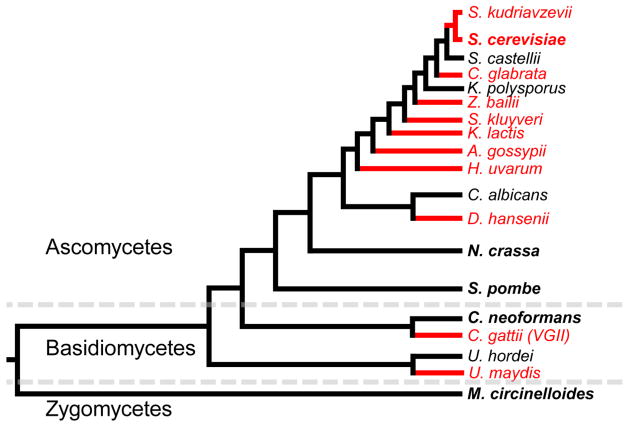
RNAi is conserved and has been studied in a broad cross-section of the fungal kingdom, including Neurospora crassa, Schizosaccharomyces pombe, Cryptococcus neoformans, and Mucor circinelloides. And yet well known species, including the model yeast Saccharomyces cerevisiae and the plant pathogen Ustilago maydis, have lost RNAi, providing insights and opportunities to illuminate benefits conferred both by the presence of RNAi and its loss. Some of the earliest studies of RNAi were conducted in Neurospora, contemporaneously with the elucidation of RNAi in Caenorhabditis elegans. RNAi is a key epigenetic mechanism for maintaining genomic stability and integrity, as well as to defend against viruses, and given its ubiquity was likely present in the last eukaryotic common ancestor. In this review, we describe the diversity of RNAi mechanisms found in the fungi, highlighting recent work in Neurospora, S. pombe, and Cryptococcus. Finally, we consider frequent, independent losses of RNAi in diverse fungal lineages and both review and speculate on evolutionary forces that may drive the losses or result therefrom.
Figures
References
-
- ARAMAYO R, METZENBERG RL. Meiotic transvection in fungi. Cell. 1996;86:103–13. - PubMed
-
- CALO S, NICOLAS FE, VILA A, TORRES-MARTINEZ S, RUIZ-VAZQUEZ RM. Two distinct RNA-dependent RNA polymerases are required for initiation and amplification of RNA silencing in the basal fungus Mucor circinelloides. Mol Microbiol. 2012;83:379–94. - PubMed
Publication types
MeSH terms
Grants and funding
LinkOut - more resources
Full Text Sources
Other Literature Sources
Molecular Biology Databases
