Variability in diaphragm motion during normal breathing, assessed with B-mode ultrasound
- PMID: 24175600
- PMCID: PMC4000456
- DOI: 10.2519/jospt.2013.4931
Variability in diaphragm motion during normal breathing, assessed with B-mode ultrasound
Abstract
Study design: Clinical measurement, cross-sectional.
Objectives: To establish a set of normal values for diaphragm thickening with tidal breathing in healthy subjects.
Background: Normal values for diaphragm contractility, as imaged sonographically, have not been described, despite the known role of the diaphragm in contributing to spinal stability. If the normal range of diaphragm contractility can be defined in a reliable manner, ultrasound has the potential to be used clinically and in research as a biofeedback tool to enhance diaphragm activation/contractility.
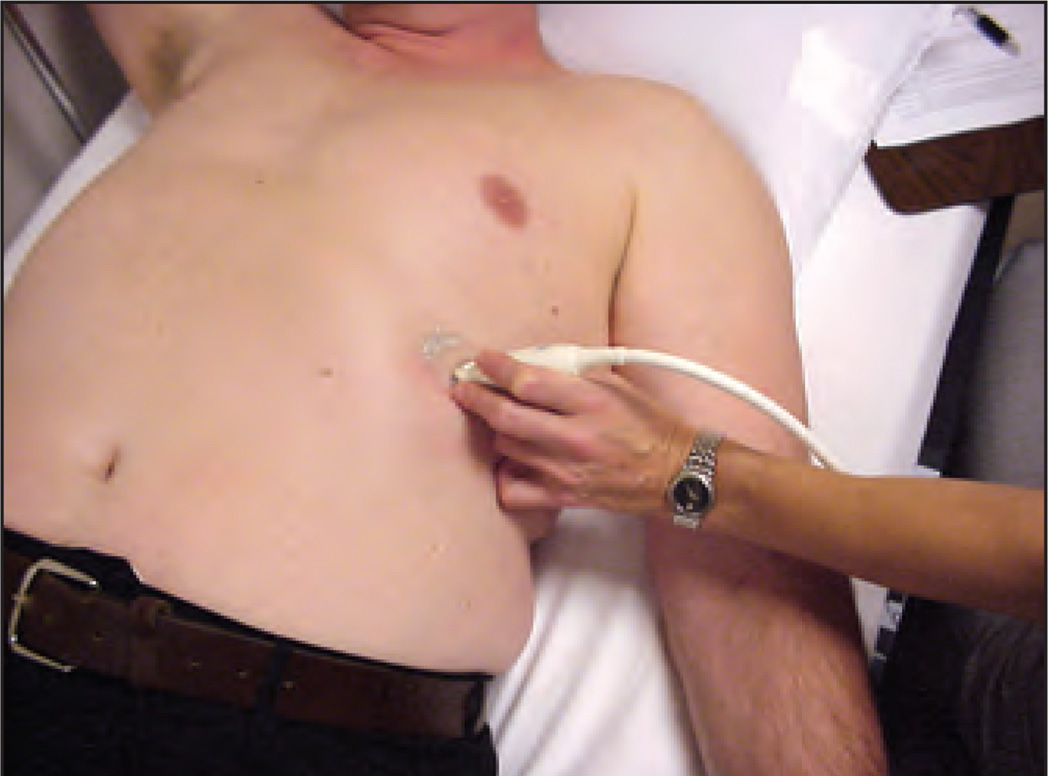
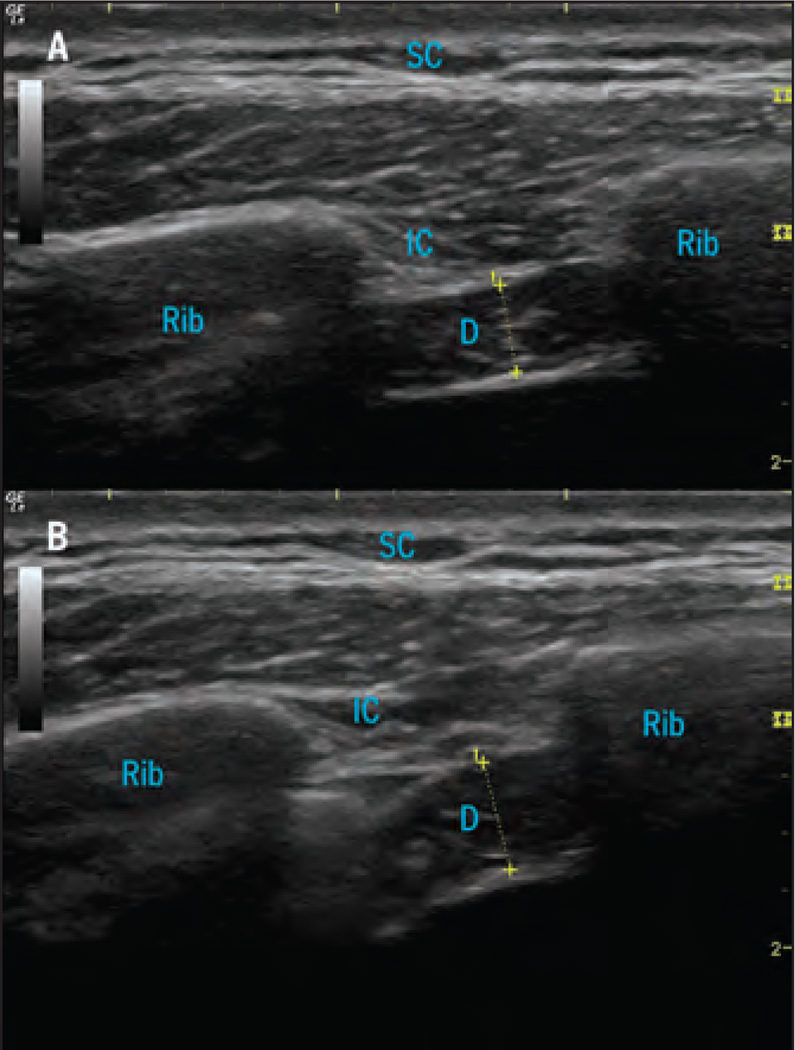
Methods: B-mode ultrasound was performed on 150 healthy subjects to visualize and measure hemi-diaphragm thickness on each side at resting inspiration and expiration. Primary outcome measures were hemi-diaphragm thickness and thickening ratio, stratified for age, gender, and body mass index. Interrater and intrarater reliability were also measured.
Results: Normal thickness of the diaphragm at rest ranged from 0.12 to 1.18 cm, with slightly greater thickness in men but no effect of age. Average ± SD change in thickness from resting expiration to resting inspiration was 20.0% ± 15.5% on the right and 23.5% ± 24.4% on the left; however, almost one third of healthy subjects had no to minimal diaphragm thickening with tidal breathing.
Conclusion: There is wide variability in the degree of diaphragm contractility during quiet breathing. B-mode ultrasound appears to be a reliable means of determining the contractility of the diaphragm, an important muscle in spinal stability. Further studies are needed to validate this imaging modality as a clinical tool in the neuromuscular re-education of the diaphragm to improve spinal stability in both healthy subjects and in patients with low back pain.
Figures
References
-
- Ayoub J, Cohendy R, Dauzat M, et al. Non-invasive quantification of diaphragm kinetics using M-mode sonography. Can J Anaesth. 1997;44:739–744. http://dx.doi.org/10.1007/BF03013389. - DOI - PubMed
-
- Ayoub J, Metge L, Dauzat M, et al. Diaphragm kinetics coupled with spirometry. M-mode ultrasonographic and fluoroscopic study preliminary results. J Radiol. 1997;78:563–568. - PubMed
-
- Blaney F, English CS, Sawyer T. Sonographic measurement of diaphragmatic displacement during tidal breathing manoeuvres – a reliability study. Aust J Physiother. 1999;45:41–43. - PubMed
-
- Boon AJ, Alsharif KI, Harper CM, Smith J. Ultrasound-guided needle EMG of the diaphragm: technique description and case report. Muscle Nerve. 2008;38:1623–1626. http://dx.doi.org/10.1002/mus.21187. - DOI - PubMed
Publication types
MeSH terms
Grants and funding
LinkOut - more resources
Full Text Sources
Other Literature Sources