


The influence of a low glycemic index dietary intervention on maternal dietary intake, glycemic index and gestational weight gain during pregnancy: a randomized controlled trial
- PMID: 24175958
- PMCID: PMC4176103
- DOI: 10.1186/1475-2891-12-140
The influence of a low glycemic index dietary intervention on maternal dietary intake, glycemic index and gestational weight gain during pregnancy: a randomized controlled trial
Abstract
Background: Maternal diet is known to impact pregnancy outcome. Following a low glycemic index (GI) diet during pregnancy has been shown to improve maternal glycemia and reduce infant birthweight and may be associated with a higher fibre intake. We assessed the impact of a low GI dietary intervention on maternal GI, nutritional intake and gestational weight gain (GWG) during pregnancy. Compliance and acceptability of the low GI diet was also examined.
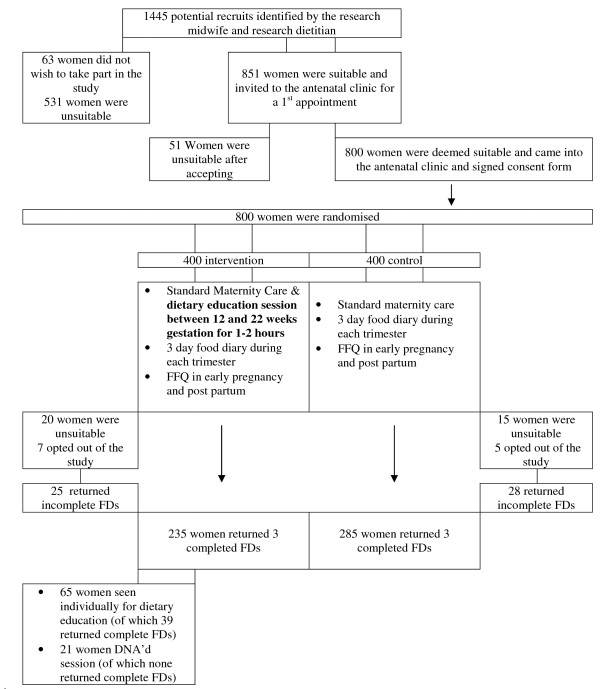
Method: Eight hundred women were randomised in early pregnancy to receive low GI and healthy eating dietary advice or to receive standard maternity care. The intervention group received dietary advice at a group education session before 22 weeks gestation. All women completed a 3 day food diary during each trimester of pregnancy. Two hundred and thirty five women from the intervention arm and 285 women from the control arm returned complete 3x3d FDs and were included in the present analysis.
Results: Maternal GI was significantly reduced in the intervention group at trimester 2 and 3. The numbers of women within the lowest quartile of GI increased from 37% in trimester 1 to 52% in trimester 3 (P < 0.001) among the intervention group. The intervention group had significantly lower energy intake (P < 0.05), higher protein (% TE) (P < 0.01) and higher dietary fibre intake (P < 0.01) post intervention. Consumption of food groups with known high GI values were significantly reduced among the intervention group. Women in the intervention low GI group were less likely to exceed the Institute of Medicine's GWG goals.
Conclusion: A dietary intervention in early pregnancy had a positive influence on maternal GI, food and nutrient intakes and GWG. Following a low GI diet may be particularly beneficial for women at risk of exceeding the GWG goals for pregnancy.
Figures
References
-
- Hanley B, Dijane J, Fewtrell M, Grynberg A, Hummel S, Junien C. et al. Metabolic imprinting, programming and epigenetics – a review of present priorities and future opportunities. Br J Nutr. 2010;104(Suppl 1):S1–S25. - PubMed
-
- Jenkins DJ, Wolever TM, Taylor RH, Barker H, Fielden H, Baldwin JM. et al. Glycemic index of foods: a physiological basis for carbohydrate exchange. Am J Clin Nutr. 1981;34:362–366. - PubMed
Publication types
MeSH terms
Substances
Associated data
LinkOut - more resources
Full Text Sources
Other Literature Sources
Medical
