


Early adolescent relationship predictors of emerging adult outcomes: youth with and without type 1 diabetes
- PMID: 24178509
- PMCID: PMC4007398
- DOI: 10.1007/s12160-013-9552-0
Early adolescent relationship predictors of emerging adult outcomes: youth with and without type 1 diabetes
Abstract
Background: Emerging adulthood is a high-risk period for mental health problems and risk behaviors for youth generally and for physical health problems among those with type 1 diabetes.
Purpose: The purpose of this study was to examine whether adolescents' relationships with parents and friends predict health and risk behaviors during emerging adulthood.
Method: Youth with and without diabetes were enrolled at average age 12 and followed for 7 years. Parent and friend relationship variables, measured during adolescence, were used to predict emerging adulthood outcomes: depression, risk behavior, and, for those with diabetes, diabetes outcomes.
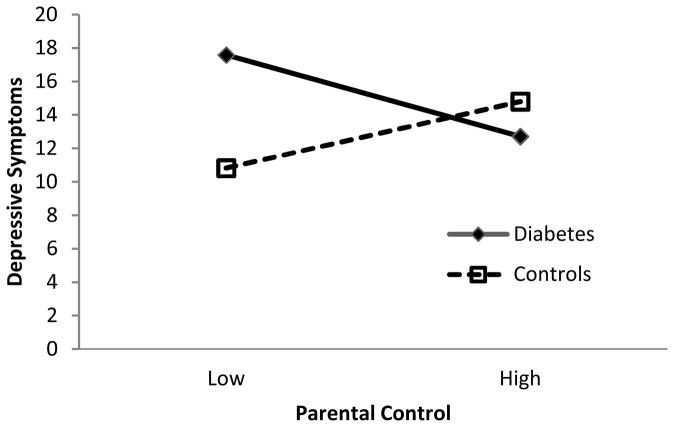
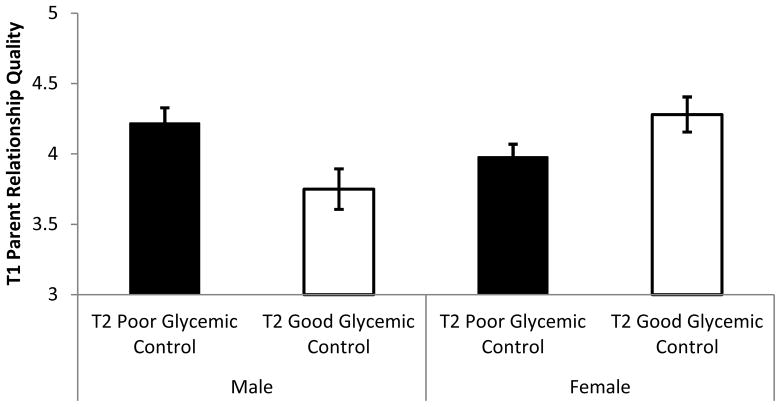
Results: Parent relationship quality predicted decreased depressive symptoms and, for those with diabetes, decreased alcohol use. Parent control predicted increased smoking, reduced college attendance, and, for control participants, increased depressive symptoms. For those with diabetes, parent control predicted decreased depressive symptoms and better self-care. Friend relationship variables predicted few outcomes.
Conclusions: Adolescent parent relationships remain an important influence on emerging adults' lives.
Conflict of interest statement
Figures
Comment in
-
Early adolescent predictors of health in emerging adulthood: a comment on Helgeson et al.Ann Behav Med. 2014 Jun;47(3):255-6. doi: 10.1007/s12160-013-9564-9. Ann Behav Med. 2014. PMID: 24254461 Free PMC article. No abstract available.
References
-
- Arnett JJ. Emerging adulthood: A theory of development from the late teens through the twenties. Am Psychol. 2000;55:469–480. - PubMed
-
- Arnett JJ. Emerging adulthood: The winding road from the late teens through the twenties. New York: Oxford University Press; 2004.
-
- Substance Abuse and Mental Health Services Administration. [Accessibility verified April 8, 2013];Results from the 2010 national survey on drug use and health: Summary of national findings. 2011 Available at http://www.samhsa.gov/data/nsduh/2k10nsduh/2k10results.htm.
-
- Kessler RC, Mickelson KD, Walters EE, Zhao S, Hamilton L. Age and depression in the MIDUS survey. In: Brim OG, Ryff CD, Kessler RC, editors. How healthy are we? A national study of well-being at midlife. Chicago, IL: University of Chicago Press; 2004. pp. 227–251.
Publication types
MeSH terms
Grants and funding
LinkOut - more resources
Full Text Sources
Other Literature Sources
Medical
