


Diffuse reduction of white matter connectivity in cerebral palsy with specific vulnerability of long range fiber tracts
- PMID: 24179798
- PMCID: PMC3777769
- DOI: 10.1016/j.nicl.2013.03.006
Diffuse reduction of white matter connectivity in cerebral palsy with specific vulnerability of long range fiber tracts
Abstract
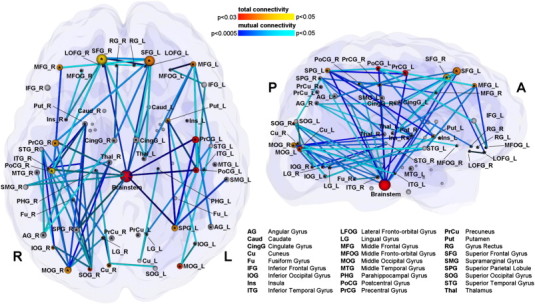
Cerebral palsy (CP) is a heterogeneous group of non-progressive motor disorders caused by injury to the developing fetal or infant brain. Although the defining feature of CP is motor impairment, numerous other neurodevelopmental disabilities are associated with CP and contribute greatly to its morbidity. The relationship between brain structure and neurodevelopmental outcomes in CP is complex, and current evidence suggests that motor and developmental outcomes are related to the spatial pattern and extent of brain injury. Given that multiple disabilities are frequently associated with CP, and that there is increasing burden of neurodevelopmental disability with increasing motor severity, global white matter (WM) connectivity was examined in a cohort of 17 children with bilateral CP to test the hypothesis that increased global WM damage will be seen in the group of severely affected (Gross Motor Function Classification Scale (GMFCS) level of IV) as compared to moderately affected (GMFCS of II or III) individuals. Diffusion tensor tractography was performed and the resulting fibers between anatomically defined brain regions were quantified and analyzed in relation to GMFCS levels. Overall, a reduction in total WM connectivity throughout the brain in severe versus moderate CP was observed, including but not limited to regions associated with the sensorimotor system. Our results also show a diffuse and significant reduction in global inter-regional connectivity between severity groups, represented by inter-regional fiber count, throughout the brain. Furthermore, it was also observed that there is a significant difference (p = 0.02) in long-range connectivity in patients with severe CP as compared to those with moderate CP, whereas short-range connectivity was similar between groups. This new finding, which has not been previously reported in the CP literature, demonstrates that CP may involve distributed, network-level structural disruptions.
Keywords: Cerebral palsy; Diffusion tensor imaging; Network disruption; Structural connectome; Tractography.
Figures



References
-
- Bax M., Goldstein M., Rosenbaum P., Leviton A., Paneth N., Dan B., Jacobsson B., Damiano D., Executive Committee for the Definition of Cerebral, P. Proposed definition and classification of cerebral palsy, April 2005. Developmental Medicine and Child Neurology. 2005;47:571–576. - PubMed
-
- Bayley N. 3rd edition. Pearson Assessments; San Antonio, TX: 2005. Bayley Scales of Infant and Toddler Development. - PubMed
-
- Benini R., Dagenais L., Shevell M.I. Normal imaging in patients with cerebral palsy: what does it tell us? Journal of Pediatrics. 2013;162:369–374. - PubMed
-
- Chang M.C., Jang S.H., Yoe S.S., Lee E., Kim S., Lee D.G., Son S.M. Diffusion tensor imaging demonstrated radiologic differences between diplegic and quadriplegic cerebral palsy. Neuroscience Letters. 2012;512:53–58. - PubMed
-
- Clark S.L., Hankins G.D. Temporal and demographic trends in cerebral palsy—fact and fiction. American Journal of Obstetrics and Gynecology. 2003;188:628–633. - PubMed
Grants and funding
LinkOut - more resources
Full Text Sources
Other Literature Sources
Miscellaneous
