Assessment of interferon-related biomarkers in Aicardi-Goutières syndrome associated with mutations in TREX1, RNASEH2A, RNASEH2B, RNASEH2C, SAMHD1, and ADAR: a case-control study
- PMID: 24183309
- PMCID: PMC4349523
- DOI: 10.1016/S1474-4422(13)70258-8
Assessment of interferon-related biomarkers in Aicardi-Goutières syndrome associated with mutations in TREX1, RNASEH2A, RNASEH2B, RNASEH2C, SAMHD1, and ADAR: a case-control study
Abstract
Background: Aicardi-Goutières syndrome (AGS) is an inflammatory disorder caused by mutations in any of six genes (TREX1, RNASEH2A, RNASEH2B, RNASEH2C, SAMHD1, and ADAR). The disease is severe and effective treatments are urgently needed. We investigated the status of interferon-related biomarkers in patients with AGS with a view to future use in diagnosis and clinical trials.
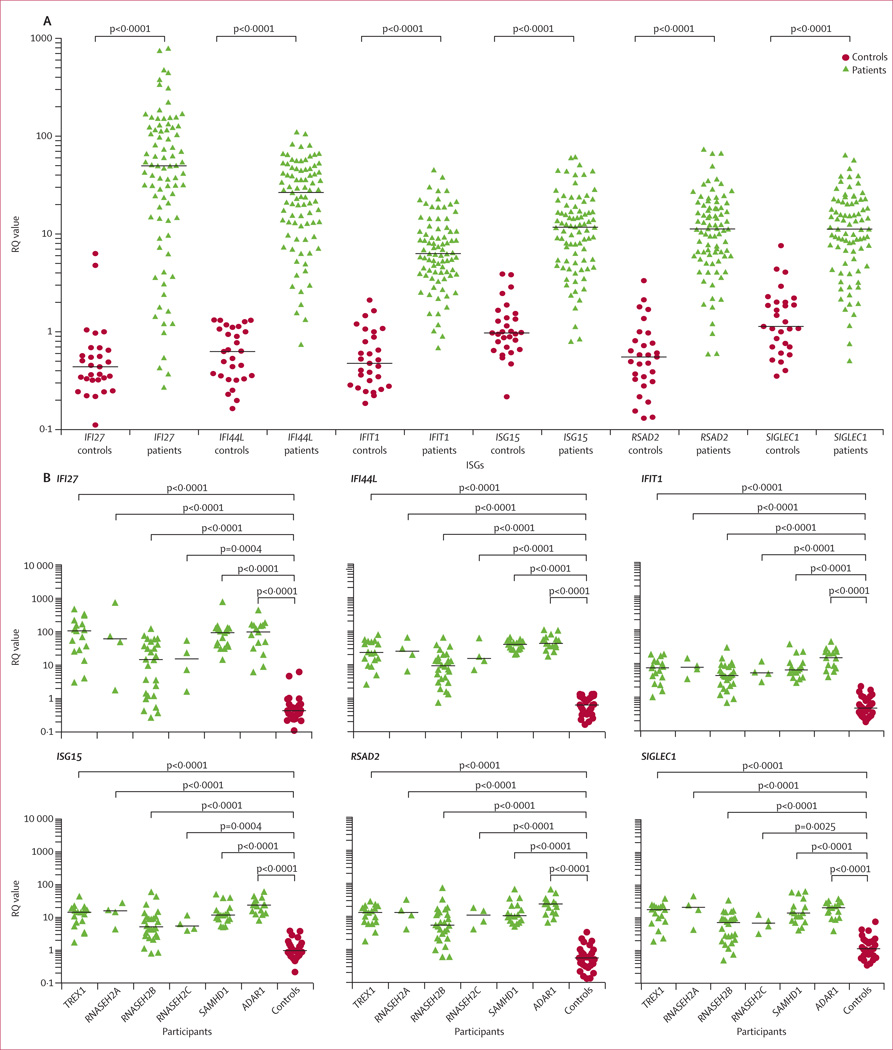
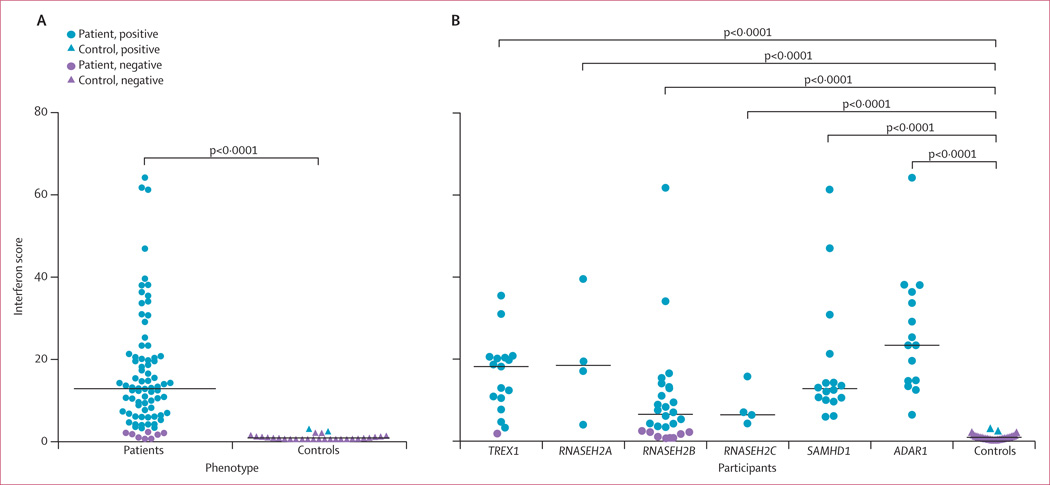
Methods: In this case-control study, samples were collected prospectively from patients with mutation-proven AGS. The expression of six interferon-stimulated genes (ISGs) was measured by quantitative PCR, and the median fold change, when compared with the median of healthy controls, was used to create an interferon score for each patient. Scores higher than the mean of controls plus two SD (>2·466) were designated as positive. Additionally, we collated historical data for interferon activity, measured with a viral cytopathic assay, in CSF and serum from mutation-positive patients with AGS. We also undertook neutralisation assays of interferon activity in serum, and looked for the presence of autoantibodies against a panel of interferon proteins.
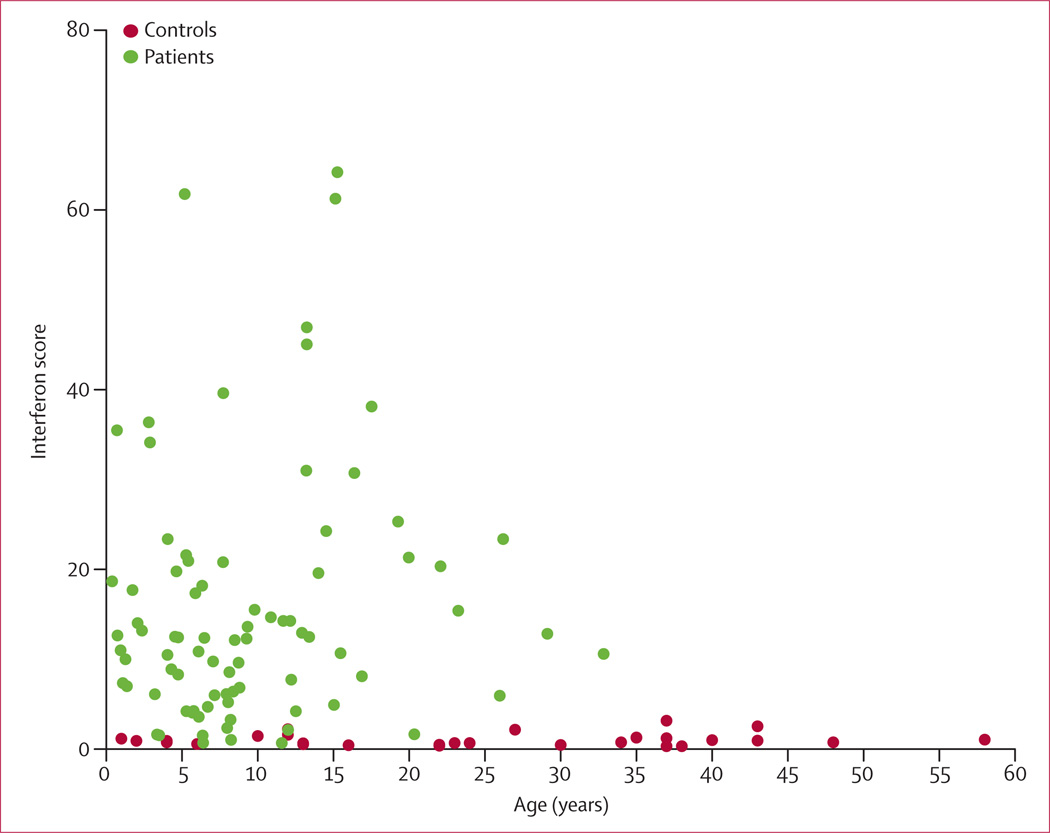
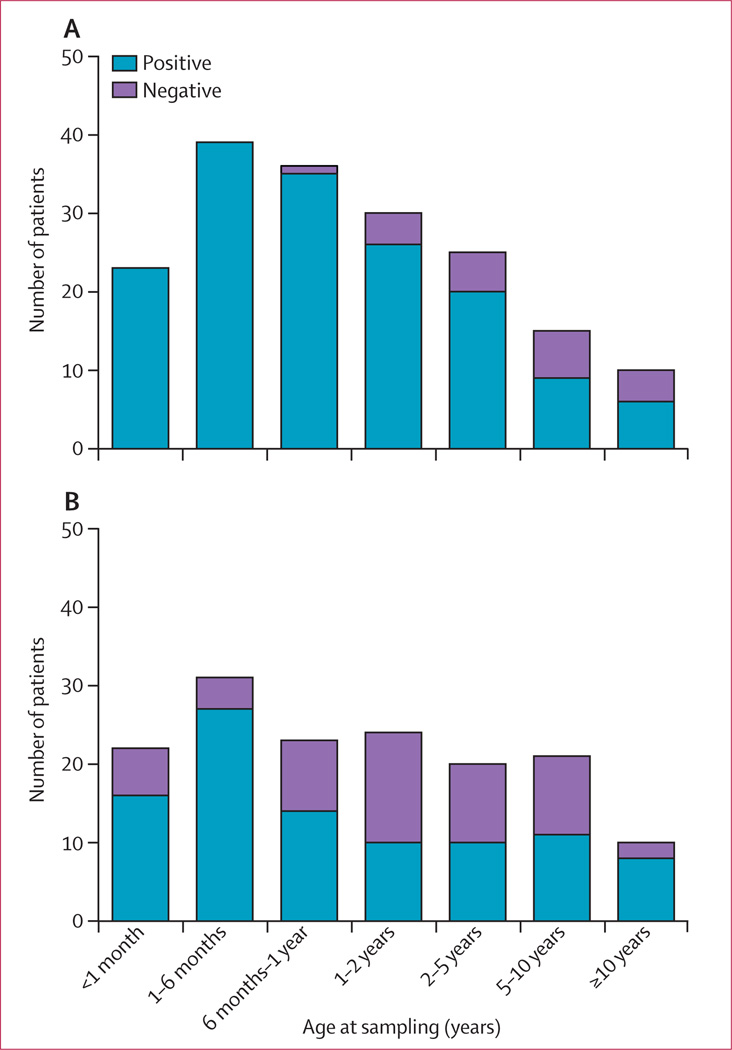
Findings: 74 (90%) of 82 patients had a positive interferon score (median 12·90, IQR 6·14-20·41) compared with two (7%) of 29 controls (median 0·93, IQR 0·57-1·30). Of the eight patients with a negative interferon score, seven had mutations in RNASEH2B (seven [27%] of all 26 patients with mutations in this gene). Repeat sampling in 16 patients was consistent for the presence or absence of an interferon signature on 39 of 41 occasions. Interferon activity (tested in 147 patients) was negatively correlated with age (CSF, r=-0·604; serum, r=-0·289), and was higher in CSF than in serum in 104 of 136 paired samples. Neutralisation assays suggested that measurable antiviral activity was related to interferon α production. We did not record significantly increased concentrations of autoantibodies to interferon subtypes in patients with AGS, or an association between the presence of autoantibodies and interferon score or serum interferon activity.
Interpretation: AGS is consistently associated with an interferon signature, which is apparently sustained over time and can thus be used to differentiate patients with AGS from controls. If future studies show that interferon status is a reactive biomarker, the measurement of an interferon score might prove useful in the assessment of treatment efficacy in clinical trials.
Funding: European Union's Seventh Framework Programme; European Research Council.
Copyright © 2013 Elsevier Ltd. All rights reserved.
Conflict of interest statement
We declare that we have no conflicts of interest.
Figures
Comment in
-
Characterisation of Aicardi-Goutières syndrome.Lancet Neurol. 2013 Dec;12(12):1131-2. doi: 10.1016/S1474-4422(13)70262-X. Epub 2013 Oct 30. Lancet Neurol. 2013. PMID: 24183310 No abstract available.
References
-
- Aicardi J, Goutieres F. A progressive familial encephalopathy in infancy with calcifications of the basal ganglia and chronic cerebrospinal fluid lymphocytosis. Ann Neurol. 1984;15:49–54. - PubMed
-
- Crow YJ, Hayward BE, Parmar R, et al. Mutations in the gene encoding the 3’-5’ DNA exonuclease TREX1 cause Aicardi-Goutieres syndrome at the AGS1 locus. Nat Genet. 2006;38:917–920. - PubMed
-
- Crow YJ, Leitch A, Hayward BE, et al. Mutations in genes encoding ribonuclease H2 subunits cause Aicardi-Goutieres syndrome and mimic congenital viral brain infection. Nat Genet. 2006;38:910–916. - PubMed
Publication types
MeSH terms
Substances
Supplementary concepts
Grants and funding
LinkOut - more resources
Full Text Sources
Other Literature Sources
Medical
Molecular Biology Databases
Miscellaneous