


HLA class I alleles are associated with peptide-binding repertoires of different size, affinity, and immunogenicity
- PMID: 24190657
- PMCID: PMC3872965
- DOI: 10.4049/jimmunol.1302101
HLA class I alleles are associated with peptide-binding repertoires of different size, affinity, and immunogenicity
Abstract
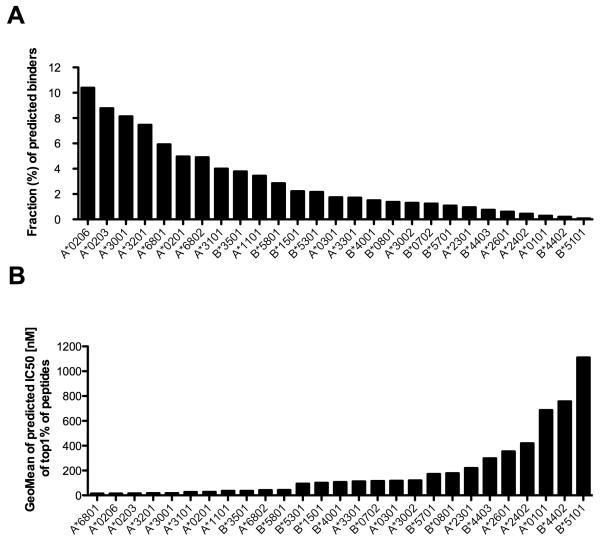
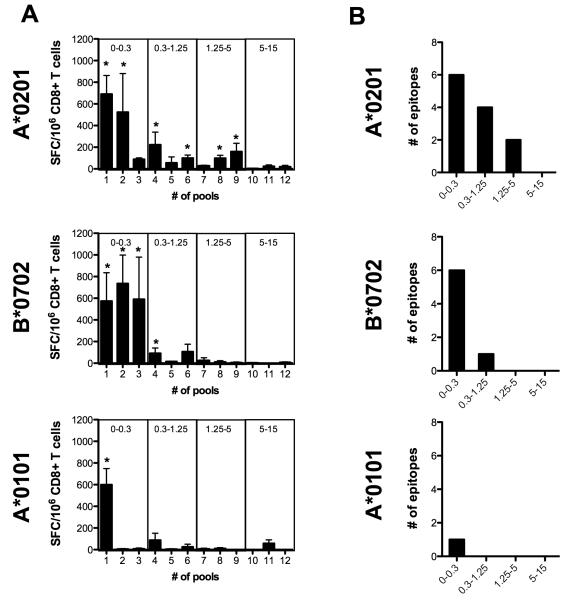
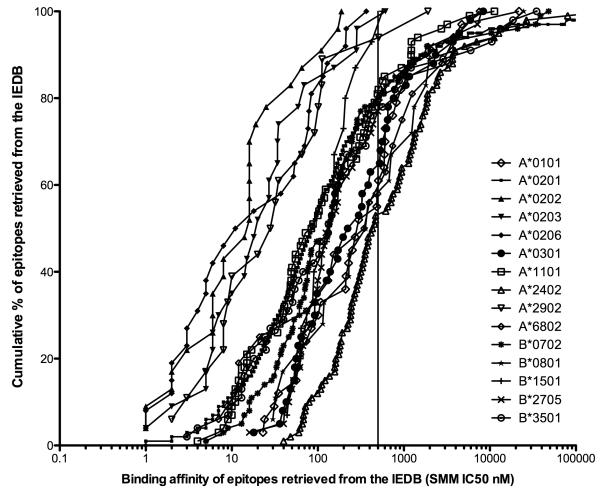
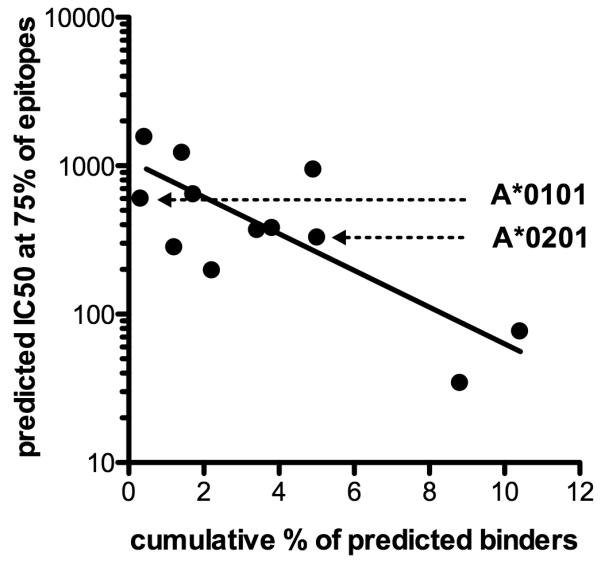
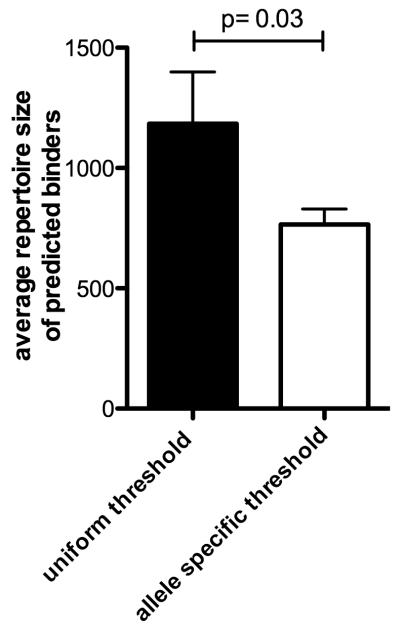
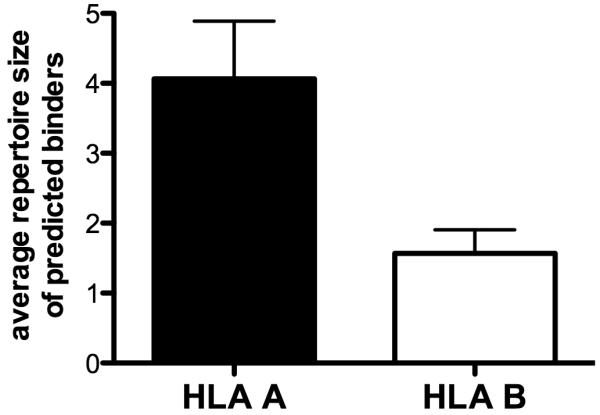
Prediction of HLA binding affinity is widely used to identify candidate T cell epitopes, and an affinity of 500 nM is routinely used as a threshold for peptide selection. However, the fraction (percentage) of peptides predicted to bind with affinities of 500 nM varies by allele. For example, of a large collection of ~30,000 dengue virus-derived peptides only 0.3% were predicted to bind HLA A*0101, whereas nearly 5% were predicted for A*0201. This striking difference could not be ascribed to variation in accuracy of the algorithms used, as predicted values closely correlated with affinity measured in vitro with purified HLA molecules. These data raised the question whether different alleles would also vary in terms of epitope repertoire size, defined as the number of associated epitopes or, alternatively, whether alleles vary drastically in terms of the affinity threshold associated with immunogenicity. To address this issue, strains of HLA transgenic mice with wide (A*0201), intermediate (B*0702), or narrow (A*0101) repertoires were immunized with peptides of varying binding affinity and relative percentile ranking. The results show that absolute binding capacity is a better predictor of immunogenicity, and analysis of epitopes from the Immune Epitope Database revealed that predictive efficacy is increased using allele-specific affinity thresholds. Finally, we investigated the genetic and structural basis of the phenomenon. Although no stringent correlate was defined, on average HLA B alleles are associated with significantly narrower repertoires than are HLA A alleles.
Figures
References
-
- Murphy K. Janeway’s Immunobiology. 8th Ed. Garland Science; New York: 2011.
-
- Yewdell JW, Bennink JR. Immunodominance in major histocompatibility complex class I-restricted T lymphocyte responses. Annu. Rev. Immunol. 1999;17:51–88. - PubMed
-
- Yewdell JW. Confronting Complexity: Real-World Immunodominance in Antiviral CD8+ T Cell Responses. Immunity. 2006;25:533–543. - PubMed
-
- Assarsson E, Sidney J, Oseroff C, Pasquetto V, Bui H, Frahm N, Brander C, Peters B, Grey H, Sette A. A quantitative analysis of the variables affecting the repertoire of T cell specificities recognized after vaccinia virus infection. The Journal of Immunology. 2007;178:7890–7901. - PubMed
-
- Sette A, Vitiello A, Reherman B, Fowler P, Nayersina R, Kast WM, Melief C, Oseroff C, Yuan L, Ruppert J. The relationship between class I binding affinity and immunogenicity of potential cytotoxic T cell epitopes. The Journal of Immunology. 1994;153:5586–5592. - PubMed
Publication types
MeSH terms
Substances
Grants and funding
LinkOut - more resources
Full Text Sources
Other Literature Sources
Research Materials
