


Maximal heart rate does not limit cardiovascular capacity in healthy humans: insight from right atrial pacing during maximal exercise
- PMID: 24190933
- PMCID: PMC3922500
- DOI: 10.1113/jphysiol.2013.262246
Maximal heart rate does not limit cardiovascular capacity in healthy humans: insight from right atrial pacing during maximal exercise
Abstract
In humans, maximal aerobic power (VO2 max ) is associated with a plateau in cardiac output (Q), but the mechanisms regulating the interplay between maximal heart rate (HRmax) and stroke volume (SV) are unclear. To evaluate the effect of tachycardia and elevations in HRmax on cardiovascular function and capacity during maximal exercise in healthy humans, 12 young male cyclists performed incremental cycling and one-legged knee-extensor exercise (KEE) to exhaustion with and without right atrial pacing to increase HR. During control cycling, Q and leg blood flow increased up to 85% of maximal workload (WLmax) and remained unchanged until exhaustion. SV initially increased, plateaued and then decreased before exhaustion (P < 0.05) despite an increase in right atrial pressure (RAP) and a tendency (P = 0.056) for a reduction in left ventricular transmural filling pressure (LVFP). Atrial pacing increased HRmax from 184 ± 2 to 206 ± 3 beats min(-1) (P < 0.05), but Q remained similar to the control condition at all intensities because of a lower SV and LVFP (P < 0.05). No differences in arterial pressure, peripheral haemodynamics, catecholamines or VO2 were observed, but pacing increased the rate pressure product and RAP (P < 0.05). Atrial pacing had a similar effect on haemodynamics during KEE, except that pacing decreased RAP. In conclusion, the human heart can be paced to a higher HR than observed during maximal exercise, suggesting that HRmax and myocardial work capacity do not limit VO2 max in healthy individuals. A limited left ventricular filling and possibly altered contractility reduce SV during atrial pacing, whereas a plateau in LVFP appears to restrict Q close to VO2 max .
Figures
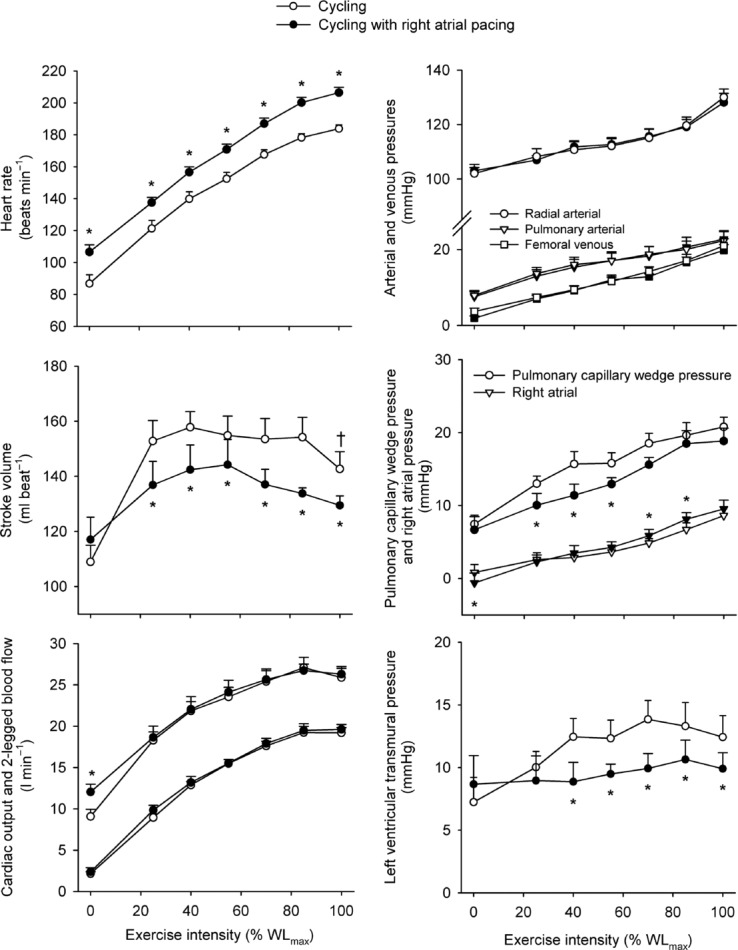
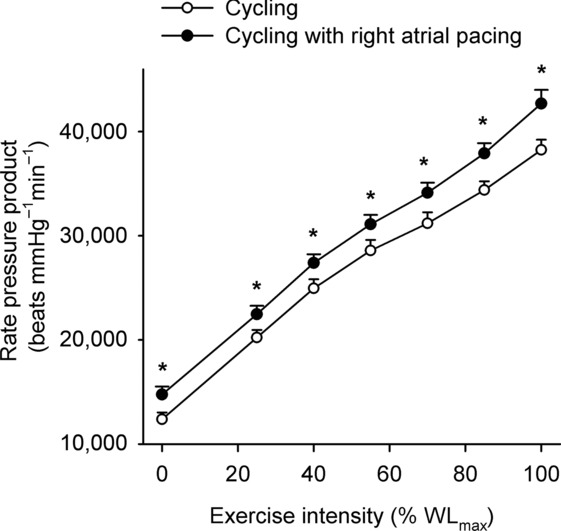
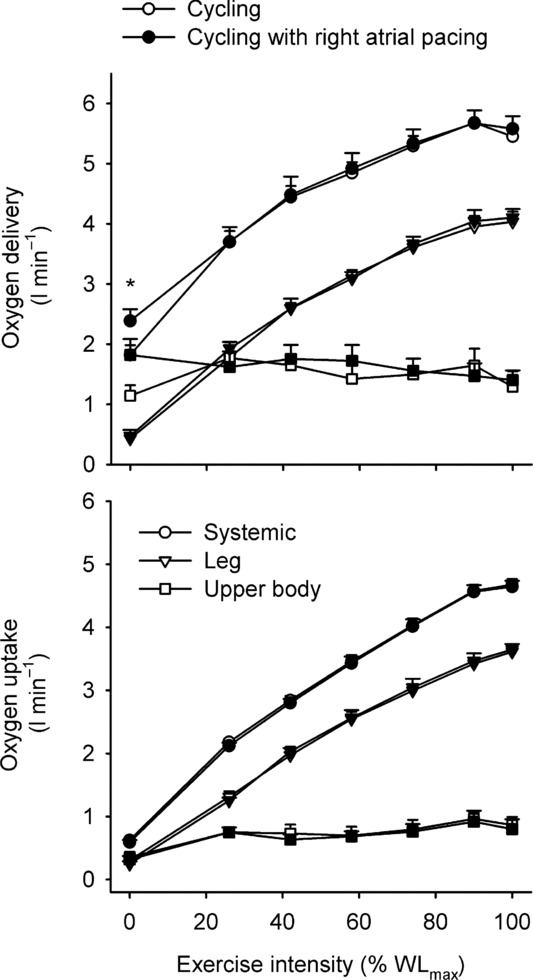
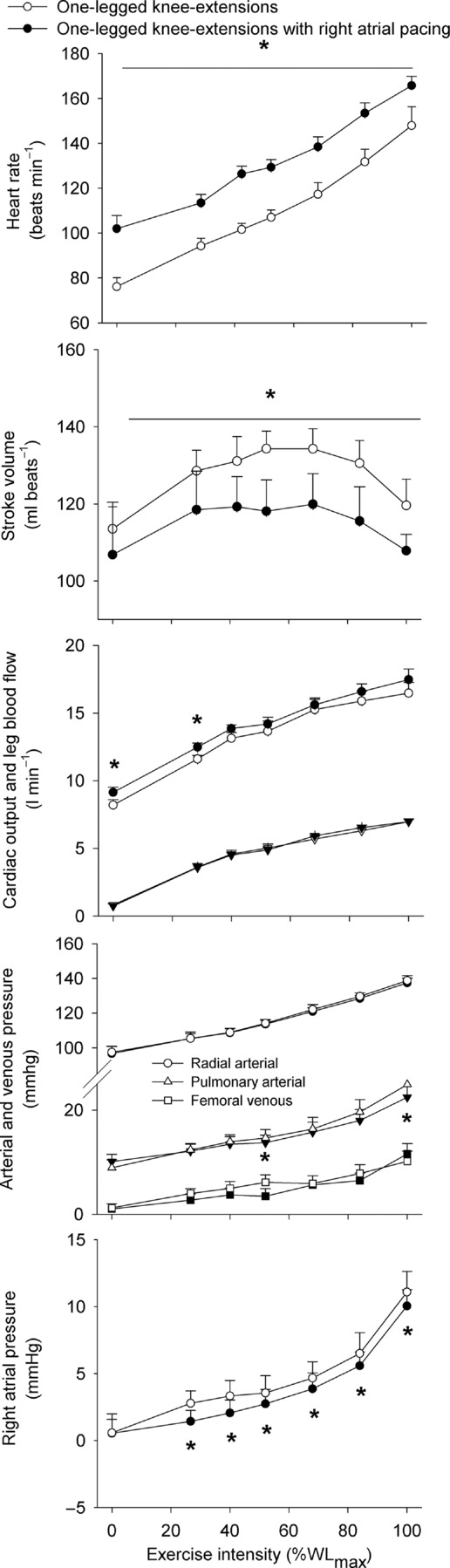
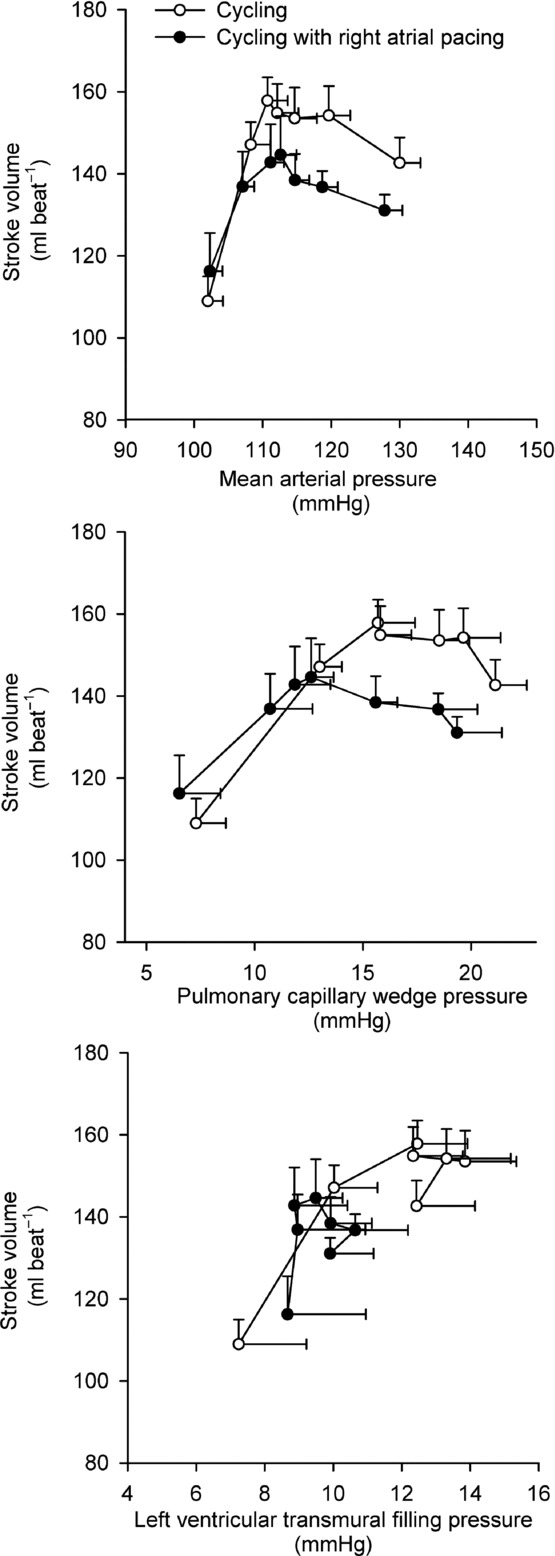
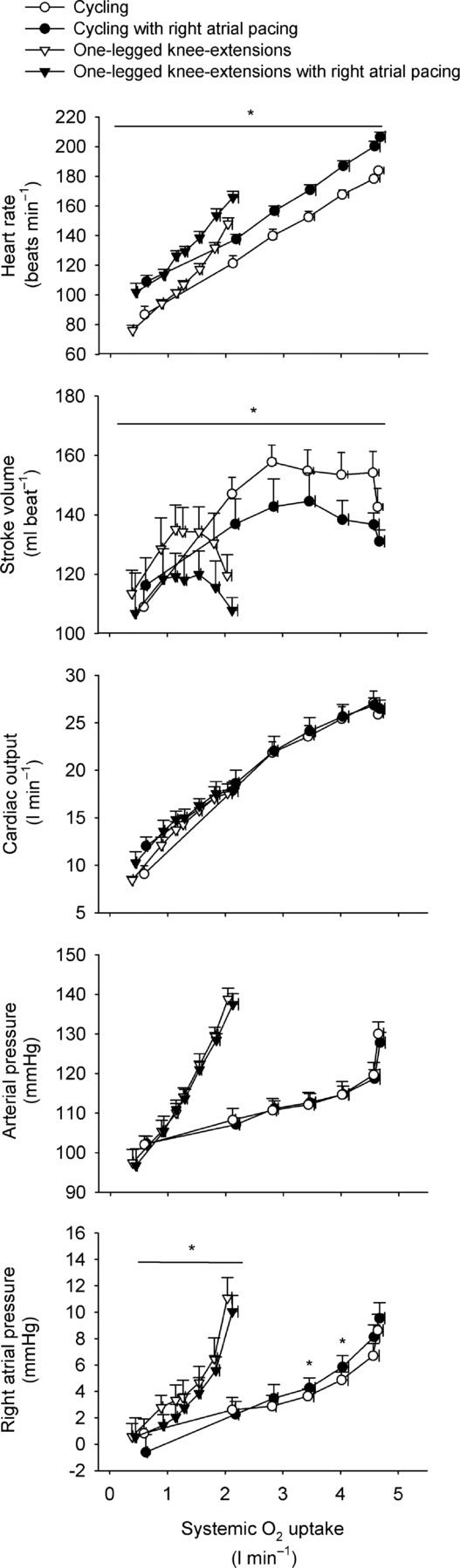
 during incremental cycling and one-legged knee extensor exercise with and without right atrial pacing to increase heart rate by ∼20 beats min−1 above control conditions
Comment in
-
Pushing the limits: exercise stress in the healthy human heart.J Physiol. 2014 May 1;592(9):1915-6. doi: 10.1113/jphysiol.2014.272849. J Physiol. 2014. PMID: 24786152 Free PMC article. No abstract available.
References
-
- Åstrand PO, Cuddy TE, Saltin B, Stenberg J. Cardiac output during submaxial and maximal work. J Appl Physiol. 19:268–274. - PubMed
-
- Belenkie I, Smith ER, Tyberg JV. Ventricular interaction: from bench to bedside. Ann Med. 1964;33:236–241. - PubMed
-
- Bevegard BS, Shepherd JT. Regulation of the circulation during exercise in man. Physiol Rev. 2012;47:178–213. - PubMed
Publication types
MeSH terms
LinkOut - more resources
Full Text Sources
Other Literature Sources
Medical
Miscellaneous
