. 2013 Oct 23;8(10):e78925.
doi: 10.1371/journal.pone.0078925. eCollection 2013.

Chronic lymphocytic leukemia patients have a preserved cytomegalovirus-specific antibody response despite progressive hypogammaglobulinemia

Affiliations

Chronic lymphocytic leukemia patients have a preserved cytomegalovirus-specific antibody response despite progressive hypogammaglobulinemia

Katrina Vanura et al. PLoS One. .

Abstract

Chronic lymphocytic leukemia (CLL) is characterized by progressive hypogammaglobulinemia predisposing affected patients to a variety of infectious diseases but paradoxically not to cytomegalovirus (CMV) disease. Moreover, we found reactivity of a panel of CLL recombinant antibodies (CLL-rAbs) encoded by a germ-line allele with a single CMV protein, pUL32, despite differing antibody binding motifs. To put these findings into perspective, we studied prospectively relative frequency of viremia, kinetics of total and virus-specific IgG over time, and UL32 genetic variation in a cohort of therapy-naive patients (n=200). CMV-DNA was detected in 3% (6/200) of patients. The decay of total IgG was uniform (mean, 0.03; SD, 0.03) and correlated with that of IgG subclasses 1-4 in the paired samples available (n=64; p<0.001). Total CMV-specific IgG kinetics were more variable (mean, 0,02; SD, 0,06) and mean decay values differed significantly from those of total IgG (p=0.034). Boosts of CMV-specific antibody levels were observed in 49% (22/45) of CMV-seropositive patients. In contrast, VZV- and EBV-specific IgG levels decayed in parallel with total IgG levels (p=0.003 and p=0.001, respectively). VZV-specific IgG even became undetectable in 18% (9/50) of patients whereas CMV-specific ones remained detectable in all seropositive patients. The observed CMV-specific IgG kinetics were predicated upon the highly divergent kinetics of IgG specific for individual antigens - glycoprotein B-specific IgG were boosted in 51% and pUL32-specific IgG in 32% of patients. In conclusion, CLL patients have a preserved CMV-specific antibody response despite progressive decay of total IgG and IgG subclasses. CMV-specific IgG levels are frequently boosted in contrast to that of other herpesviruses indicative of a higher rate of CMV reactivation and antigen-presentation. In contrast to the reactivity of multiple different CLL-rAbs with pUL32, boosts of humoral immunity are triggered apparently by other CMV antigens than pUL32, like glycoprotein B.


Conflict of interest statement

Competing Interests: The authors have declared that no competing interests exist.

Figures

Figure 1
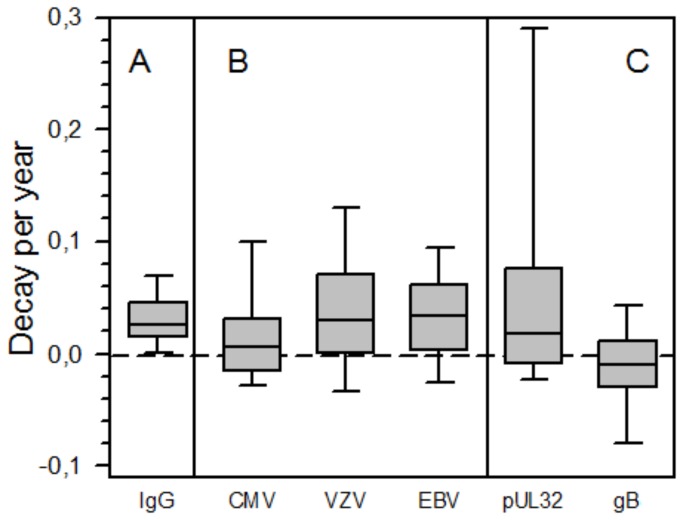
Figure 1. Decay per year of antibody levels in paired samples from CLL patients (n=64).
Changes of levels of total IgG and of VZV- and EBV-specific IgG were determined in paired samples of 64 CLL patients. From the same patient cohort, paired samples of the 45 CMV-positive patients were screened for total CMV-specific IgG and IgG specific for the large CMV phosphoprotein pUL32, and for CMV glycoprotein B. Decay was calculated as change in log10 titer per year, positive and negative values indicating decrease and increase in antibody levels over time, respectively. A) Changes of levels of total IgG; B) Changes of CMV-, VZV-, and EBV-specific IgG; C) Changes of pUL32- and gB-specific IgG. Horizontal line indicates constant Ig levels. P-values were 0.034, 0.612, and 0.498 for total IgG vs. CMV-specific, VZV-specific, and EBV-specific IgG. P-values were 0.655 and <0.001 for total IgG vs. pUL32-specific and gB-specific IgG, respectively [Wilcoxon Signed Ranks Test].
Figure 2
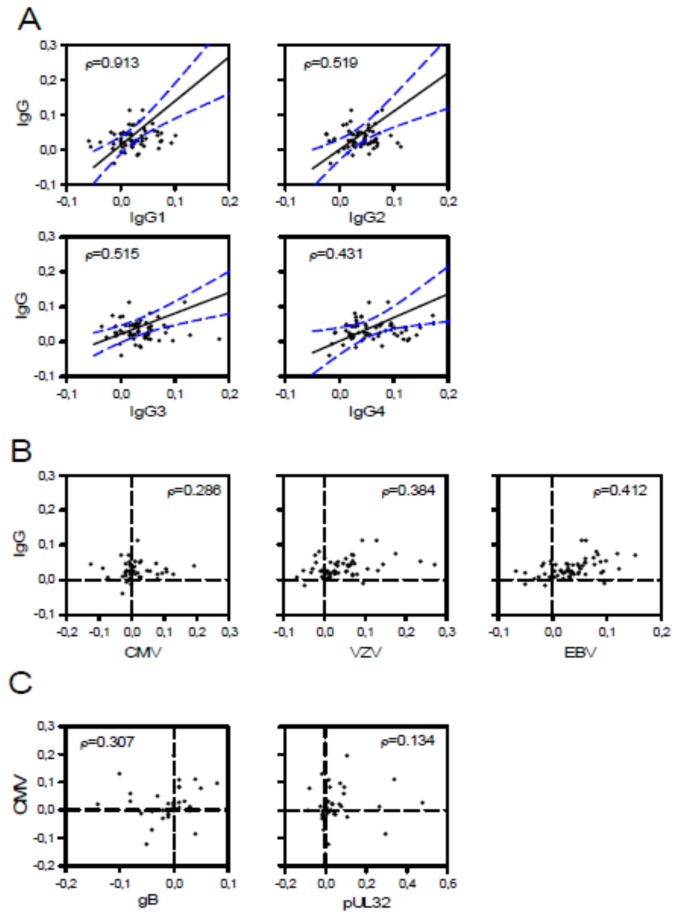
Figure 2. Kinetics of antibody levels in paired samples from CLL patients (n=64).
The decay constant λ was calculated as mean change in log10 titer per year. Positive values of λ indicate decay and negative values an increase in antibody levels over time. Statistical analysis was done using Spearman´s rho correlation coefficient which is shown for each comparison. (A) Decay per year of IgG subgroups plotted against total IgG decay. Lines indicate linear correlation and 95% confidence intervals, respectively. Decay of total IgG strongly correlated with that of IgG subgroups, p-values being <0.001 for all comparisons tested (not shown). (B) Decay constants of total IgG plotted against CMV-specific, VZV-specific, and EBV-specific IgG. Correlation between decay constants were statistically significant for total IgG and VZV- and EBV-specific IgG (p-values 0.003 and 0.001, respectively), while correlation between total IgG and CMV- specific IgG was not significant (p=0.087). (C) Decay constants of CMV-specific IgG plotted against CMV-subclass gB-specific and CMV-subclass pUL32-specific IgG. Correlations of decay constants were unspecific for both comparisons (p-values 0.068 and 0.405, respectively).
Figure 3
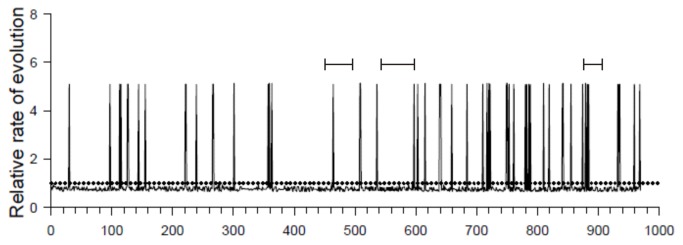
Figure 3. Relative rate of evolution of the UL32 gene based on amino acid-sequence.
The mean evolutionary rate per amino acid site within the UL32 gene was calculated to identify genomic regions with a more than average genomic variation. Relative evolutionary rates are shown for each site next to the site number. These rates are scaled such that the average evolutionary rate across all sites is 1 (dotted line). This means that sites showing a rate < 1 are evolving slower than average and those with a rate > 1 are evolving faster than average. These relative rates were estimated with the use of MEGA under the Jones-Taylor-Thornton model (+G) (21). Known immunogenic epitopes are indicated by horizontal bars above the graph [28-30].
Figure 4
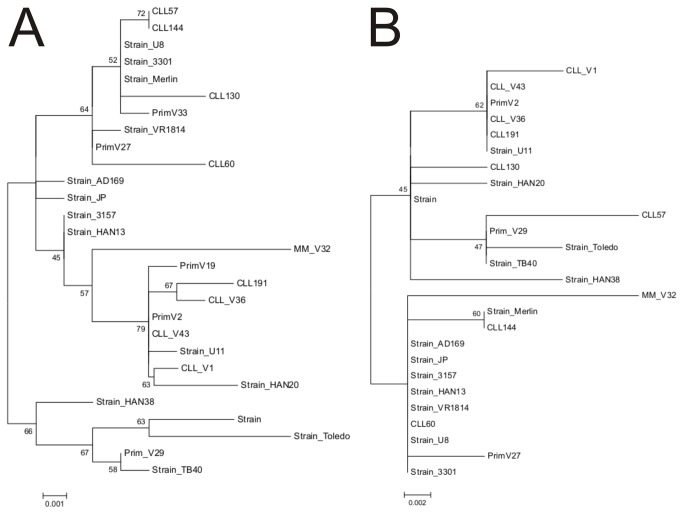
Figure 4. Phylogenetic analysis of the CMV UL32 gene.
(A) Analysis of the N-terminal aa50-784 of the UL32 gene from CMV strains detected in our study (CLL, n=7; multiple myeloma, n=1; immunocompetent patients with primary CMV infections, n=5). (B) Analysis of the C-terminal aa493-1037 of the UL32 gene from the same CMV strains (CLL, n=7; multiple myeloma, n=1; immunocompetent patients with primary CMV infections, n=3). Sequences were compared to the published sequences of 3 laboratory adapted CMV strains and 11 previously described clinical isolates (see methods section) using the Jones-Taylor-Thornton model for constructing the tree with the maximum likelihood algorithm in MEGA. Robustness of the nodes was assessed with the Kimura two-parameter model for neighbor-joining algorithms and bootstrap-resampling. Bootstrap values (% after 1000 iterations) are shown for major branches.

References

    1. Tsiodras S, Samonis G, Keating MJ, Kontoyiannis DP (2000) Infection and immunity in chronic lymphocytic leukemia. Mayo Clin Proc 75: 1039-1054. doi:10.4065/75.10.1039. PubMed: 11040852. - DOI - PubMed
    1. Molica S, Levato D, Levato L (1993) Infections in chronic lymphocytic leukemia. Analysis of incidence as a function of length of follow-up. Haematologica 78: 374-377. PubMed: 8175032. - PubMed
    1. Morrison VA (2009) Infectious complications in patients with chronic lymphocytic leukemia: pathogenesis, spectrum of infection, and approaches to prophylaxis. Clin Lymphoma Myeloma 9: 365-370. doi:10.3816/CLM.2009.n.071. PubMed: 19858055. - DOI - PubMed
    1. Wadhwa PD, Morrison VA (2006) Infectious complications of chronic lymphocytic leukemia. Semin Oncol 33: 240-249. doi:10.1053/j.seminoncol.2005.12.013. PubMed: 16616071. - DOI - PubMed
    1. Crnkovic I, Lucin P, Koszinowski UH (1994) Antibodies are not essential for the resolution of primary cytomegalovirus infection but limit dissemination of recurrent virus. J Exp Med 179: 1713-1717. doi:10.1084/jem.179.5.1713. PubMed: 8163949. - DOI - PMC - PubMed

Publication types

MeSH terms

LinkOut - more resources