


Mathematical models for translational and clinical oncology
- PMID: 24195863
- PMCID: PMC3828625
- DOI: 10.1186/2043-9113-3-23
Mathematical models for translational and clinical oncology
Abstract
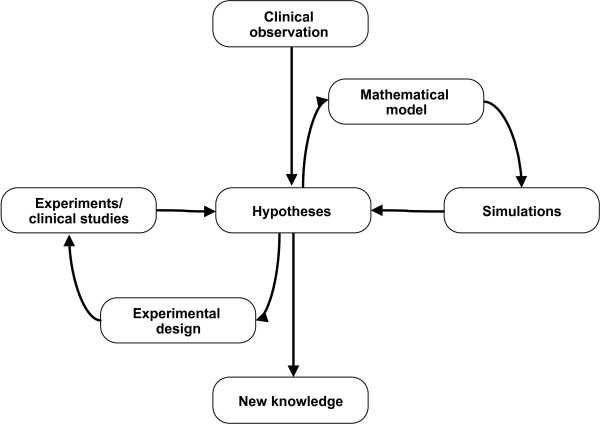
In the context of translational and clinical oncology, mathematical models can provide novel insights into tumor-related processes and can support clinical oncologists in the design of the treatment regime, dosage, schedule, toxicity and drug-sensitivity. In this review we present an overview of mathematical models in this field beginning with carcinogenesis and proceeding to the different cancer treatments. By doing so we intended to highlight recent developments and emphasize the power of such theoretical work.We first highlight mathematical models for translational oncology comprising epidemiologic and statistical models, mechanistic models for carcinogenesis and tumor growth, as well as evolutionary dynamics models which can help to describe and overcome a major problem in the clinic: therapy resistance. Next we review models for clinical oncology with a special emphasis on therapy including chemotherapy, targeted therapy, radiotherapy, immunotherapy and interaction of cancer cells with the immune system.As evident from the published studies, mathematical modeling and computational simulation provided valuable insights into the molecular mechanisms of cancer, and can help to improve diagnosis and prognosis of the disease, and pinpoint novel therapeutic targets.
Figures
References
Grants and funding
LinkOut - more resources
Full Text Sources
Other Literature Sources
