


Attention to eyes is present but in decline in 2-6-month-old infants later diagnosed with autism
- PMID: 24196715
- PMCID: PMC4035120
- DOI: 10.1038/nature12715
Attention to eyes is present but in decline in 2-6-month-old infants later diagnosed with autism
Abstract
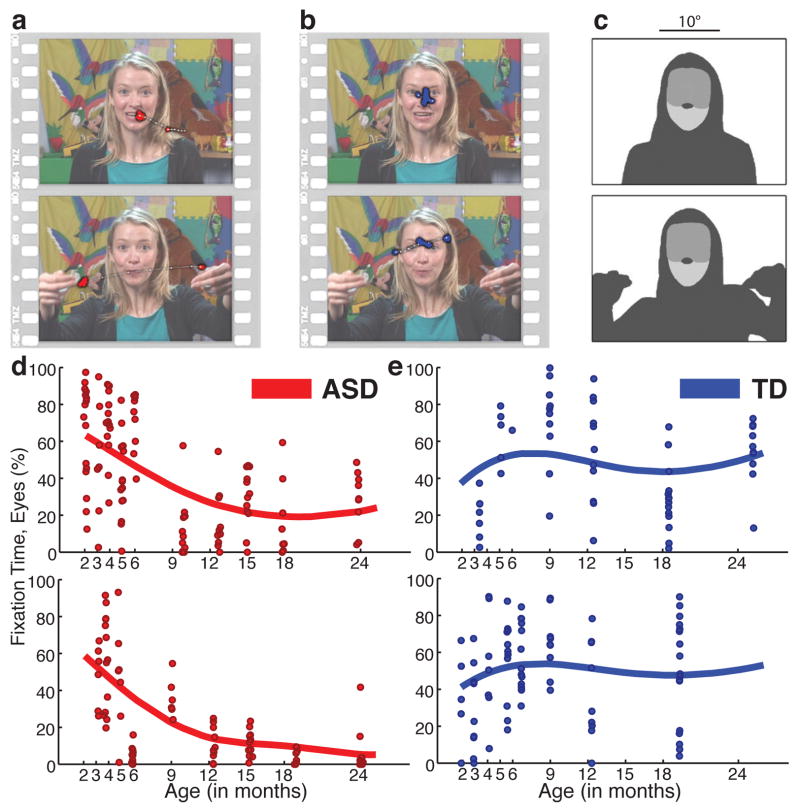
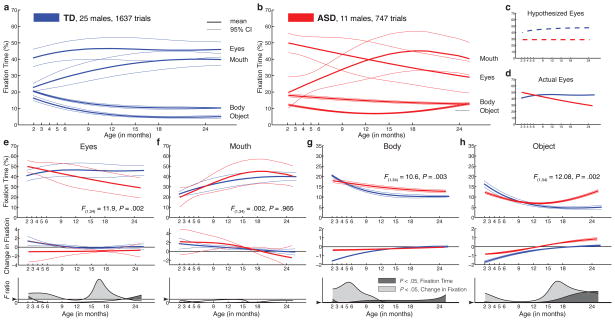
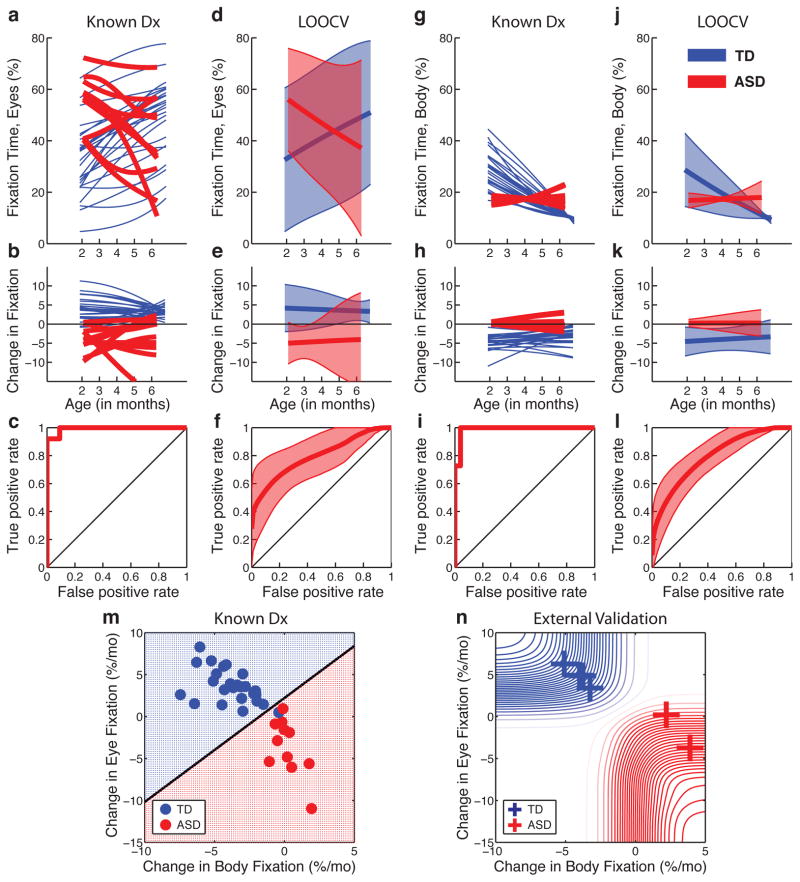
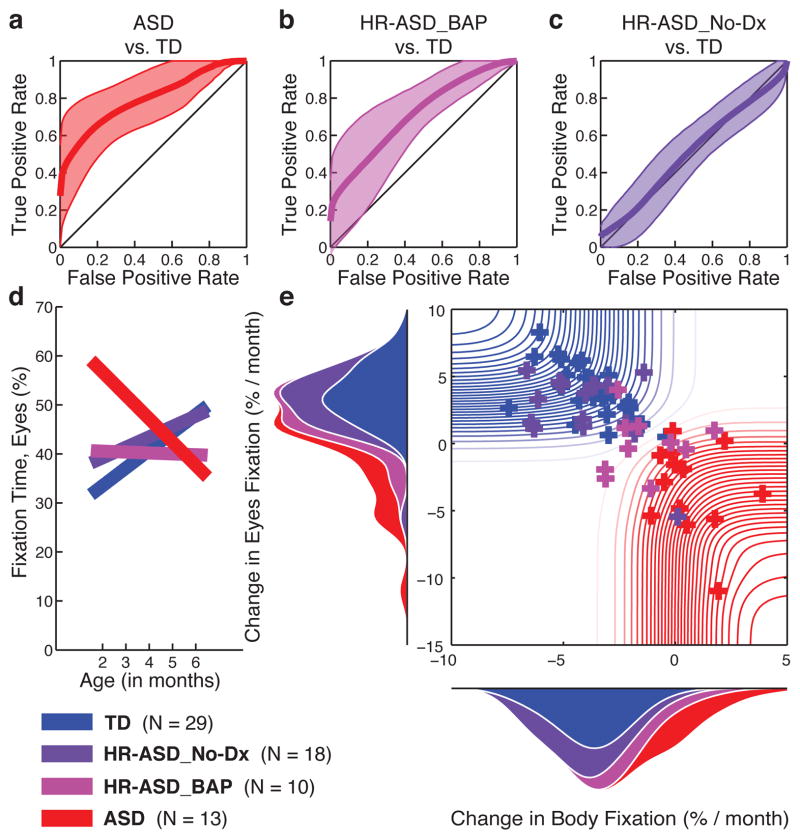
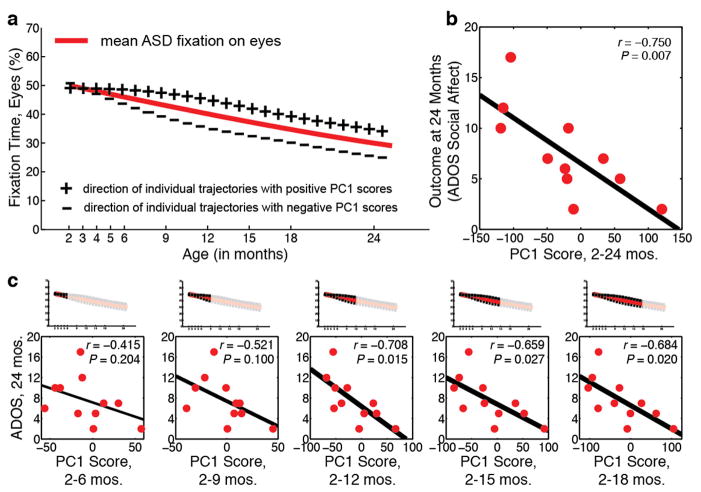
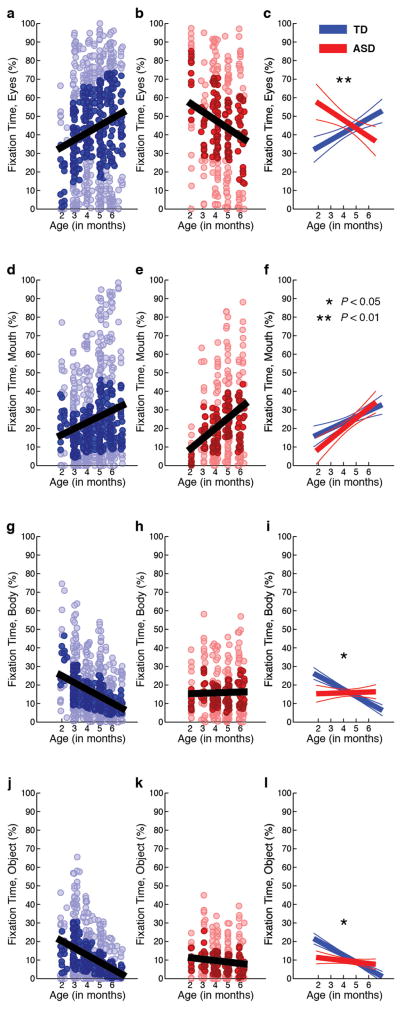
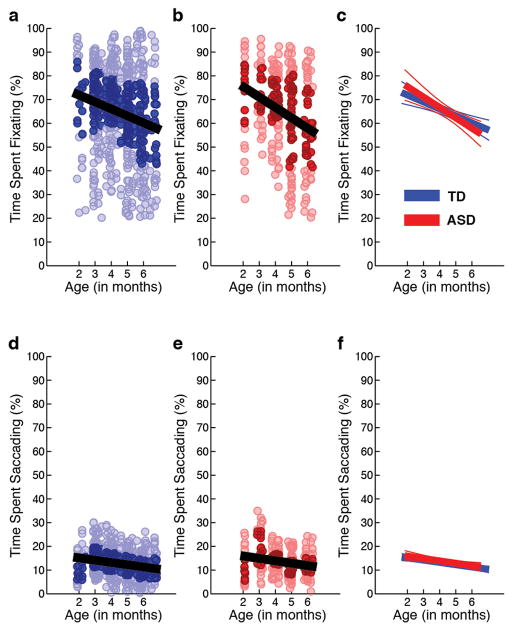
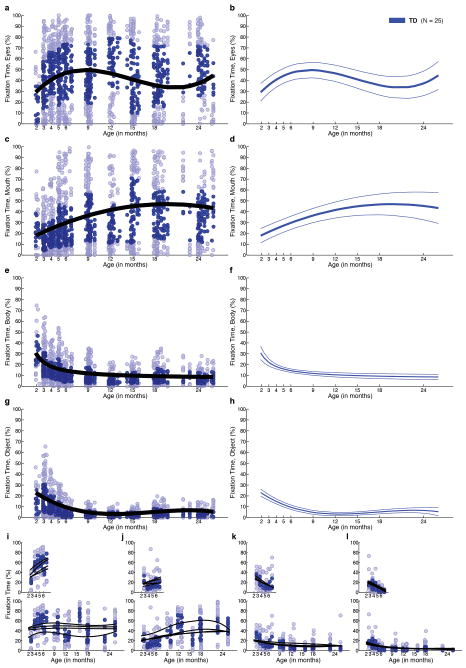
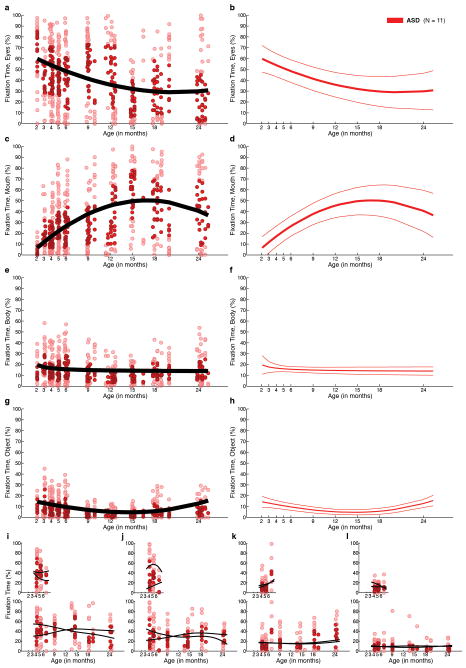
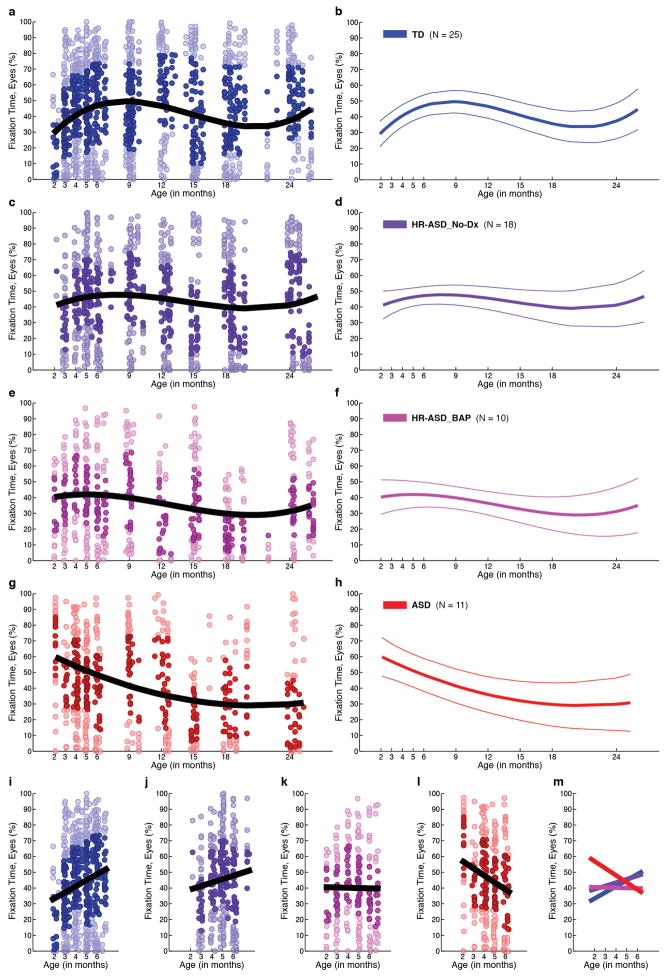
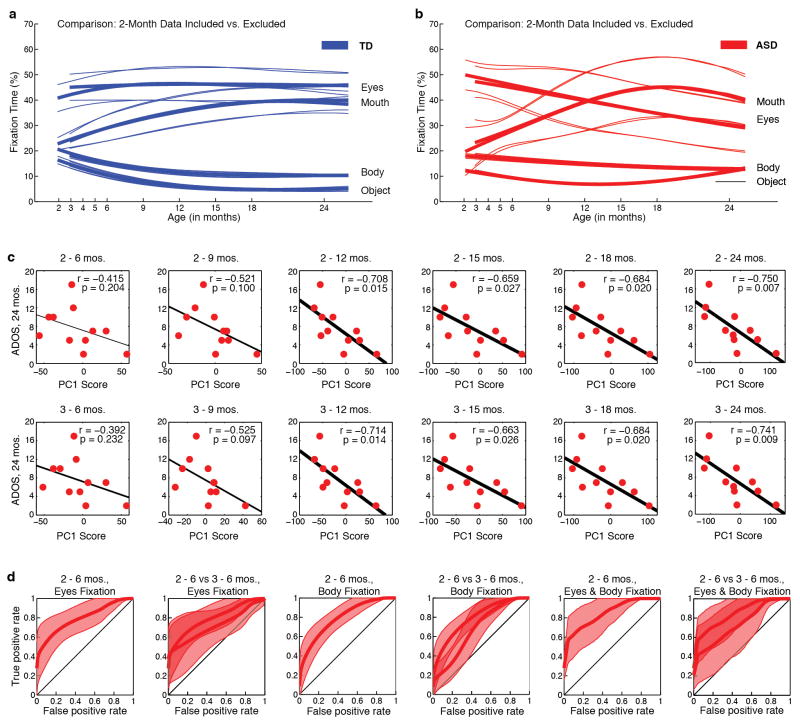
Deficits in eye contact have been a hallmark of autism since the condition's initial description. They are cited widely as a diagnostic feature and figure prominently in clinical instruments; however, the early onset of these deficits has not been known. Here we show in a prospective longitudinal study that infants later diagnosed with autism spectrum disorders (ASDs) exhibit mean decline in eye fixation from 2 to 6 months of age, a pattern not observed in infants who do not develop ASD. These observations mark the earliest known indicators of social disability in infancy, but also falsify a prior hypothesis: in the first months of life, this basic mechanism of social adaptive action--eye looking--is not immediately diminished in infants later diagnosed with ASD; instead, eye looking appears to begin at normative levels prior to decline. The timing of decline highlights a narrow developmental window and reveals the early derailment of processes that would otherwise have a key role in canalizing typical social development. Finally, the observation of this decline in eye fixation--rather than outright absence--offers a promising opportunity for early intervention that could build on the apparent preservation of mechanisms subserving reflexive initial orientation towards the eyes.
Conflict of interest statement
Figures
Comment in
-
Autism: demise of the innate social orienting hypothesis.Curr Biol. 2014 Jan 6;24(1):R30-R31. doi: 10.1016/j.cub.2013.11.021. Curr Biol. 2014. PMID: 24405675
-
When and how does autism begin?Trends Cogn Sci. 2014 Jun;18(6):272-3. doi: 10.1016/j.tics.2014.02.006. Epub 2014 Mar 12. Trends Cogn Sci. 2014. PMID: 24630165 Free PMC article.
References
-
- Grice SJ, et al. Neural correlates of eye-gaze detection in young children with autism. Cortex. 2005;21:342–353. - PubMed
-
- Jones W, Carr K, Klin A. Absence of preferential looking to the eyes of approaching adults predicts level of social disability in 2-year-olds with autism spectrum disorder. Arch Gen Psych. 2008;65(8):946–954. - PubMed
-
- Kanner L. Autistic disturbances of affective contact. Nerv Child. 1943;2:217–250. - PubMed
-
- Volkmar FR, Lord C, Bailey A, Schultz RT, Klin A. Autism and pervasive developmental disorders. J Child Psychol Psychiatry. 2004;45:1–36. - PubMed
-
- Lord C, Rutter M, DiLavore P, Risi S. ADOS Toddler Module: ADOS-T: Manual. Western Psychological Services; Los Angeles, CA: 2008.
Publication types
MeSH terms
Grants and funding
LinkOut - more resources
Full Text Sources
Other Literature Sources
Medical
