


Ultrasonic vocalizations: evidence for an affective opponent process during cocaine self-administration
- PMID: 24197178
- PMCID: PMC3989366
- DOI: 10.1007/s00213-013-3309-0
Ultrasonic vocalizations: evidence for an affective opponent process during cocaine self-administration
Abstract
Rationale: Preclinical models of cocaine addiction in the rodent have shown that cocaine induces both positive and negative affective states. These observations have led to the notion that the initial positive/euphoric state induced by cocaine administration may be followed by an opposing, negative process. In the rodent, one method for inferring positive and negative affective states involves measuring their ultrasonic vocalizations (USVs). Previous USV recordings from our laboratory suggested that the transition between positive and negative affect might involve decaying or sub-satiety levels of self-administered cocaine.
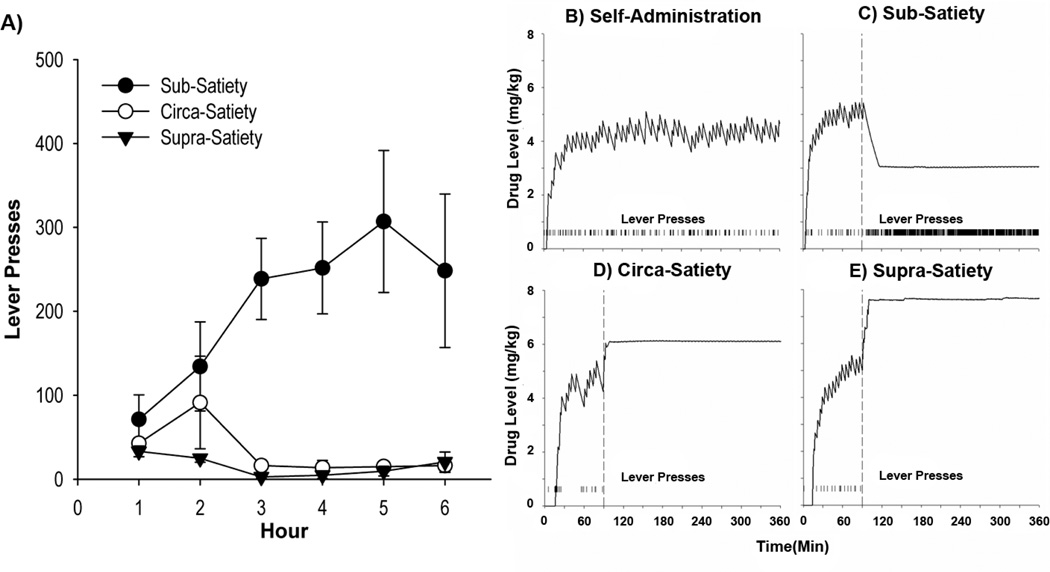
Objectives: In order to explicitly test the role of cocaine levels on these affective states, the present study examined USVs when calculated body levels of cocaine were clamped (i.e., held at a constant level via experimenter-controlled infusions) at, below, or above subjects' self-determined drug satiety thresholds.
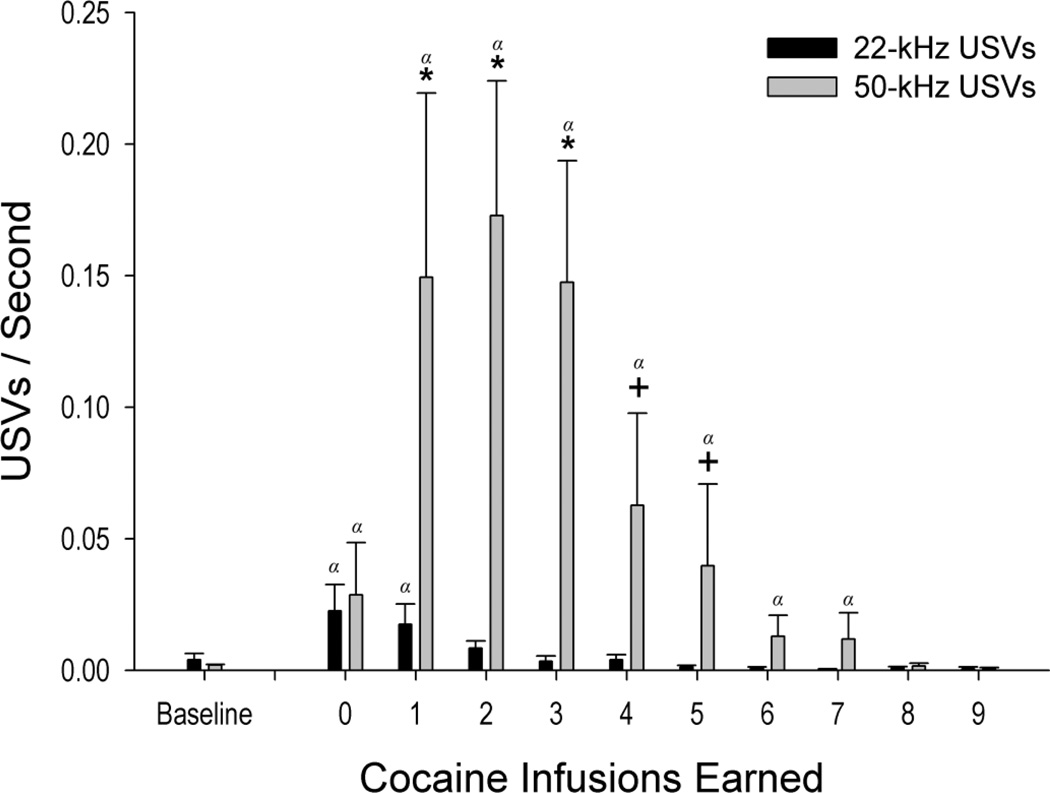
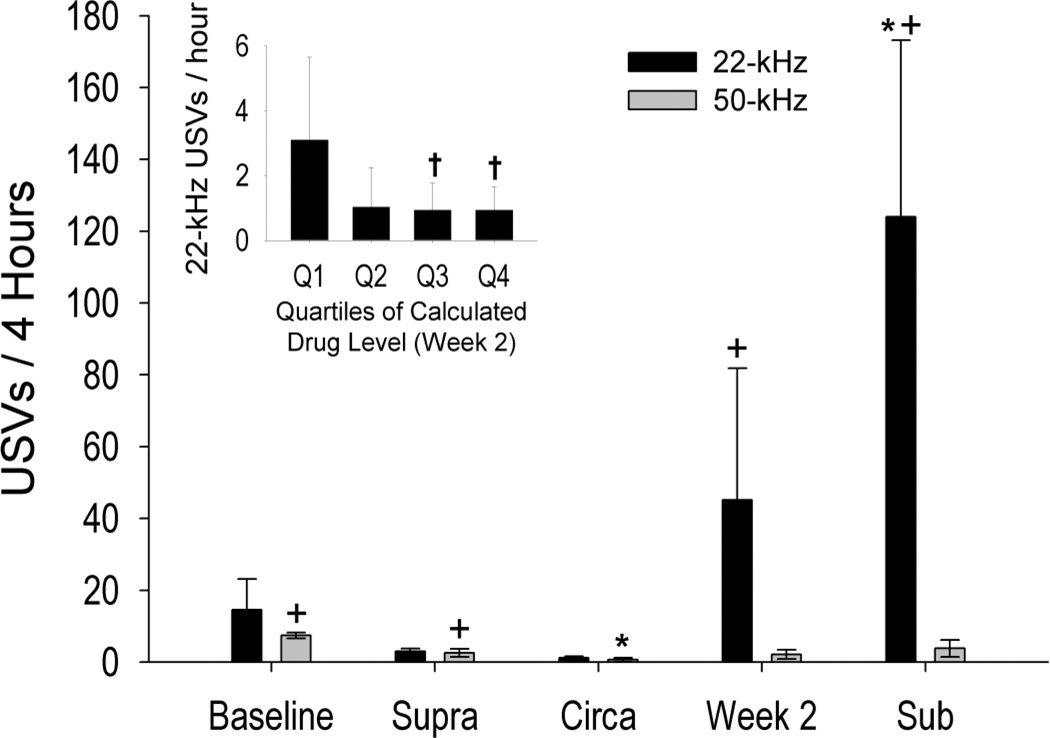
Results: USVs indicated that (1) positive affect was predominantly observed during the drug loading period, but declined quickly to near zero during maintenance and exhibited little relation to calculated drug level, and (2) in contrast, negative affect was observed at sub-satiety cocaine levels, but was relatively absent when body levels of cocaine were clamped at or above subjects' satiety thresholds.
Conclusions: The results reinforce the opponent-process hypothesis of addiction and suggest that an understanding of the mechanisms underlying negative affect might serve to inform behavioral and pharmacological therapies.
Figures
References
-
- [NIDA] National Institute on Drug Abuse (US) Research monograph series. Rockville (MD): Department of health and human services (US); 1985. Cocaine use in America: Epidemiologic and clinical perspectives. DHHS Pub. No. (ADM) 90–1414.
-
- Barros HMT, Miczek KA. Withdrawal from oral cocaine in rats: ultrasonic vocalizations and tactile startle. Psychopharmacology. 1996;125:379–384. - PubMed
Publication types
MeSH terms
Substances
Grants and funding
LinkOut - more resources
Full Text Sources
Other Literature Sources
Medical
