


Cachexia vs obesity: where is the real unmet clinical need?
- PMID: 24197816
- PMCID: PMC3830007
- DOI: 10.1007/s13539-013-0124-8
Cachexia vs obesity: where is the real unmet clinical need?
Abstract
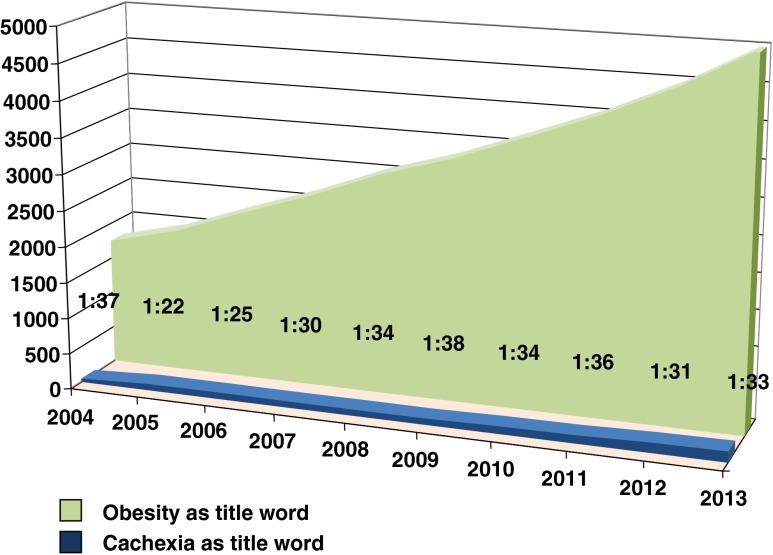
A striking discrepancy exists in the number of publications on obesity as compared to cachexia or wasting disorders. In PubMed, the number of entries that contain "cachexia" as a title word is only 1,825, whereas the number of entries for "obesity" in the title is 47,828, giving a ratio of 1:26 in favor of "obesity" publications. The difference in publication activities in these two fields has further broadened over the last years. Looking at guidance from national or international guidelines, PubMed analysis is even more depressing with 147 entries for obesity, but only four for cachexia. None of the latter provides guidance for the everyday care of cachectic patients. This publication activity is in stark contrast to the mortality impact of cachexia vs obesity at the time of diagnosis, which is at least 20 times higher for cachexia over the first 5 years. We assume, the mismatch is even bigger when it comes to public research support for these two medical conditions, which likely is a big part of the reason for this publication imbalance. Another reason may be that there is a perception bias in the research community, the public and hence also among healthcare providers and politicians as to what is important in medicine. We think, cachexia is at least as big an unmet need as is obesity. For shorter-term outcomes, cachexia is certainly a much bigger medical need than obesity. We hope that the current research efforts will change the situation for the better of our patients.
Figures
References
-
- www.pubmed.gov. Accessed 15 Oct 2013.
-
- American Gastroenterological Association American Gastroenterological Association medical position statement: guidelines for the management of malnutrition and cachexia, chronic diarrhea, and hepatobiliary disease in patients with human immunodeficiency virus infection. Gastroenterology. 1996;111:1722–1723. doi: 10.1016/S0016-5085(96)70039-2. - DOI - PubMed
-
- Krznarić Z, Juretić A, Samija M, Dintinjana RD, Vrdoljak E, Samarzija M, et al. Croatian guidelines for use of eicosapentaenoic acid and megestrol acetate in cancer cachexia syndrome. Lijec Vjesn. 2007;129:381–386. - PubMed
-
- www.scopus.com. Accessed 15 Oct 2013.
LinkOut - more resources
Full Text Sources
Other Literature Sources
