


Prevalence of Brugada-type ECG pattern and early ventricular repolarization pattern in Tunisian athletes
- PMID: 24198568
- PMCID: PMC3781880
- DOI: 10.2147/OAJSM.S19029
Prevalence of Brugada-type ECG pattern and early ventricular repolarization pattern in Tunisian athletes
Abstract
Introduction: No data regarding the prevalence of the Brugada-type electrocardiogram (ECG) pattern and the early ventricular repolarization pattern (ERP) in the North African population were available. The aims of this study were to determine the frequency of Brugada-type ECG pattern and ERP in Tunisia and to evaluate ECG descriptors of ventricular repolarization in a population of athletes.
Methods: Over a 2-year period, resting 12-lead ECG recordings were analyzed from athletes (n = 540; 348 males; age 18.3 ± 2.4 years). Brugada-type ECG pattern was defined as Type 1, 2, or 3, and ERP was characterized by an elevation of the J point in the inferior and/or lateral leads. The population was divided into three groups of athletes: ERP group; Brugada-type ECG pattern group; and control group, with neither ERP nor Brugada ECG pattern. Clinical and electrocardiographic parameters were compared among the study groups.
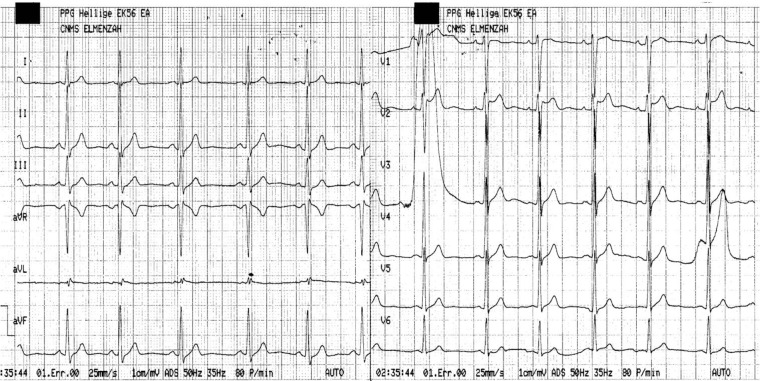
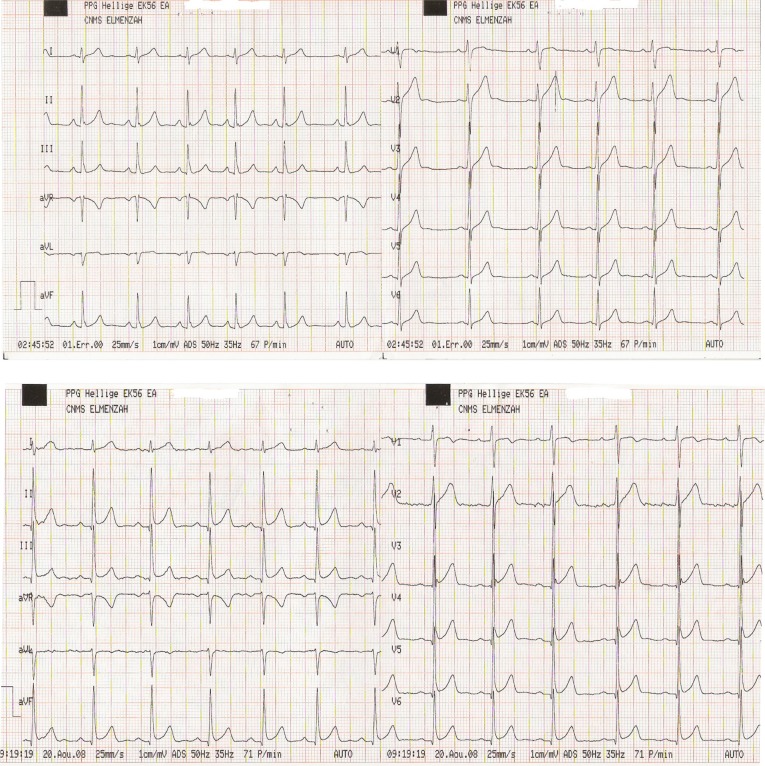
Results: Nine subjects (1.66%) had a Brugada-type ECG pattern. None of them had the coved-type, 3 (0.6%) had the Type 2, and 6 (1.1%) had the Type 3. All subjects were asymptomatic. A Brugada-type ECG pattern was observed in seven males. No female had the Type 2 Brugada ECG pattern. ECG parameters were similar among Brugada-type ECG pattern and control athletes. ERP (119 subjects, 22%) was obtained in 98 males. Heart rate was lower, the QRS duration shorter and QT and Tpeak-Tend intervals were longer in ERP than control groups.
Conclusion: The results indicate that the frequency of the Brugada-type ECG pattern and ERP were respectively 1.66% and 22.00% in athletes, being more prevalent in males. The ERP group experienced shorter QRS duration and longer Tpeak-Tend interval than in the control population.
Keywords: ERP athletes; J wave; T wave.
Figures
References
-
- Brugada P, Brugada J. Right bundle branch block, persistent ST segment elevation and sudden cardiac death: a distinct clinical and electrocardiographic syndrome. A multicenter report. J Am Coll Cardiol. 1992;20(6):1391–1396. - PubMed
-
- Brugada J, Brugada R, Brugada P. Right bundle-branch block and ST segment elevation in leads V1 through V3: a marker for sudden death in patients without demonstrable structural heart disease. Circulation. 1998;97(5):457–460. - PubMed
-
- Haissaguerre M, Derval N, Sacher F, et al. Sudden cardiac arrest associated with early repolarization. N Engl J Med. 2008;358(19):2016–2023. - PubMed
-
- Tikkanen JT, Anttonen O, Junttila MJ, et al. Long-term outcome associated with early repolarization on electrocardiography. N Engl J Med. 2009;361(26):2529–2537. - PubMed
LinkOut - more resources
Full Text Sources
