


Threats and knowledge gaps for ecosystem services provided by kelp forests: a northeast Atlantic perspective
- PMID: 24198956
- PMCID: PMC3810891
- DOI: 10.1002/ece3.774
Threats and knowledge gaps for ecosystem services provided by kelp forests: a northeast Atlantic perspective
Abstract
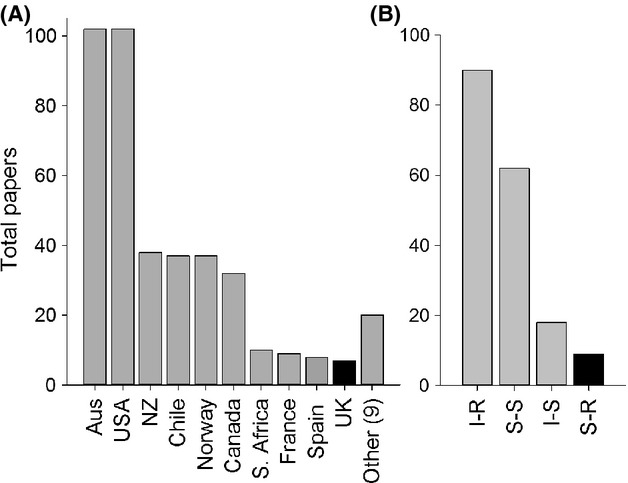
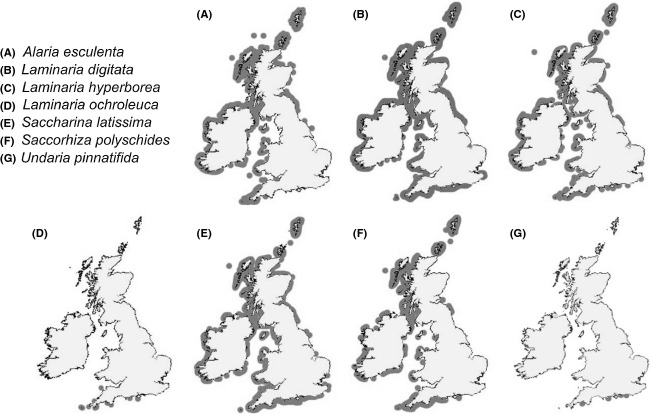
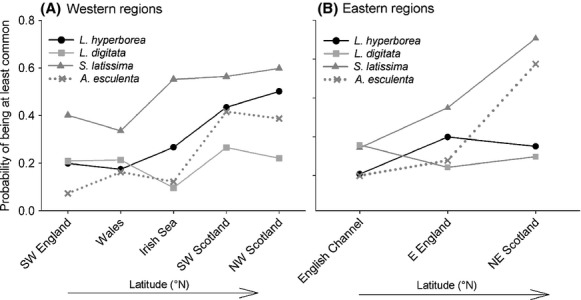
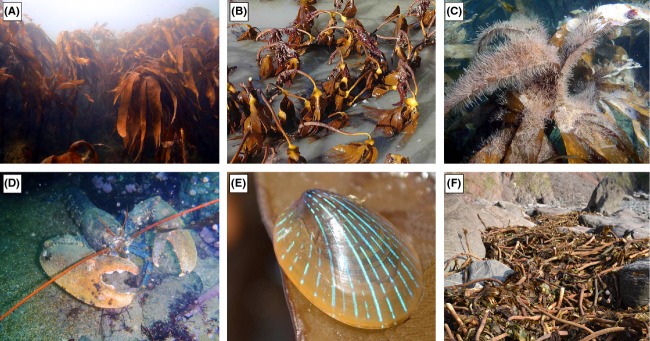
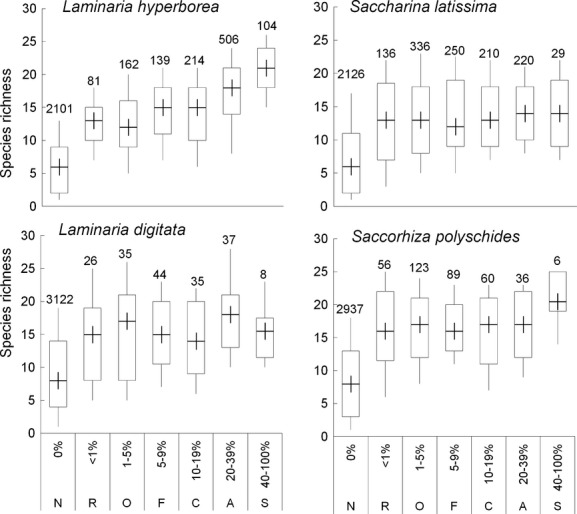
Kelp forests along temperate and polar coastlines represent some of most diverse and productive habitats on the Earth. Here, we synthesize information from >60 years of research on the structure and functioning of kelp forest habitats in European waters, with particular emphasis on the coasts of UK and Ireland, which represents an important biogeographic transition zone that is subjected to multiple threats and stressors. We collated existing data on kelp distribution and abundance and reanalyzed these data to describe the structure of kelp forests along a spatial gradient spanning more than 10° of latitude. We then examined ecological goods and services provided by kelp forests, including elevated secondary production, nutrient cycling, energy capture and flow, coastal defense, direct applications, and biodiversity repositories, before discussing current and future threats posed to kelp forests and identifying key knowledge gaps. Recent evidence unequivocally demonstrates that the structure of kelp forests in the NE Atlantic is changing in response to climate- and non-climate-related stressors, which will have major implications for the structure and functioning of coastal ecosystems. However, kelp-dominated habitats along much of the NE Atlantic coastline have been chronically understudied over recent decades in comparison with other regions such as Australasia and North America. The paucity of field-based research currently impedes our ability to conserve and manage these important ecosystems. Targeted observational and experimental research conducted over large spatial and temporal scales is urgently needed to address these knowledge gaps.
Keywords: Laminariales; kelp forests; marine biodiversity; subtidal benthic habitats; temperate reefs..
Figures
References
-
- Airoldi L, Beck MW. Loss, status and trends for coastal marine habitats of Europe. Oceanogr. Mar. Biol. Ann. Rev. 2007;35:345–405.
-
- Aldridge J, Forster J, van de Molen R. Wider ecological implications of macroalgae cultivation. The Crown Estate, Marine Estate Research Report. 2012:95.
-
- Balasse M, Tresset A, Dobney K, Ambrose SH. The use of isotope ratios to test for seaweed eating in sheep. J. Zool. 2005;266:283–291.
-
- Bearham D, Vanderklift MA, Gunson JR. Temperature and light explain spatial variation in growth and productivity of the kelp Ecklonia radiata. Mar. Ecol. Prog. Ser. 2013;476:59–70.
-
- Beaumont NJ, Austen MC, Atkins JP, Burdon D, Degraer S, Dentinho TP, et al. Identification, definition and quantification of goods and services provided by marine biodiversity: implications for the ecosystem approach. Mar. Pollut. Bull. 2007;54:253–265. - PubMed
Publication types
LinkOut - more resources
Full Text Sources
Other Literature Sources
