


Infants' experience-dependent processing of male and female faces: insights from eye tracking and event-related potentials
- PMID: 24200421
- PMCID: PMC3960339
- DOI: 10.1016/j.dcn.2013.09.005
Infants' experience-dependent processing of male and female faces: insights from eye tracking and event-related potentials
Abstract
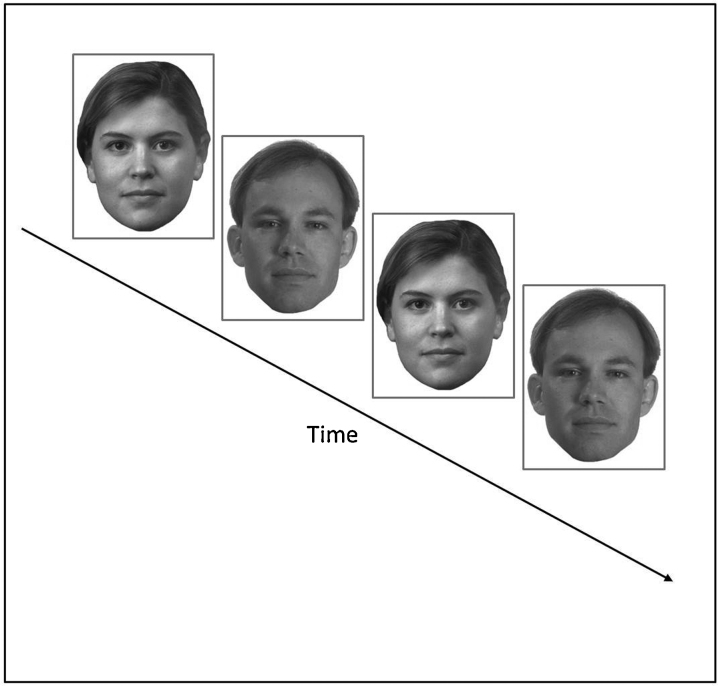
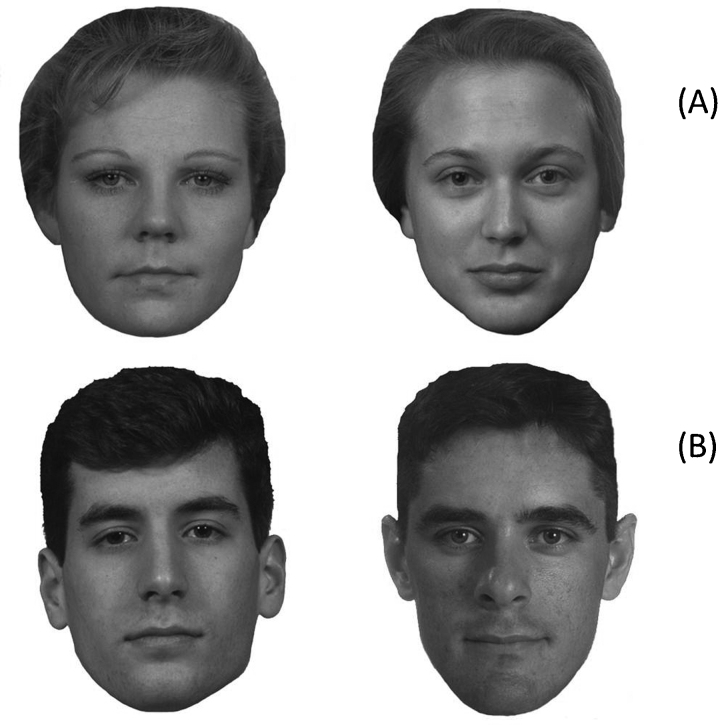
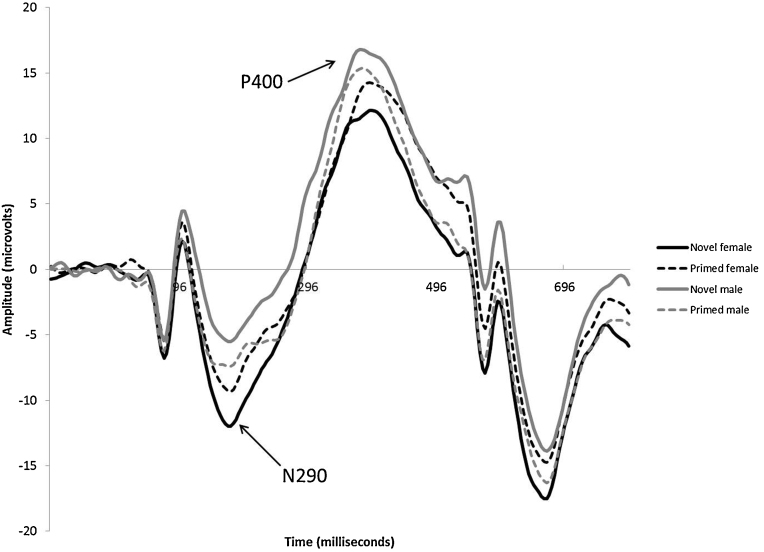
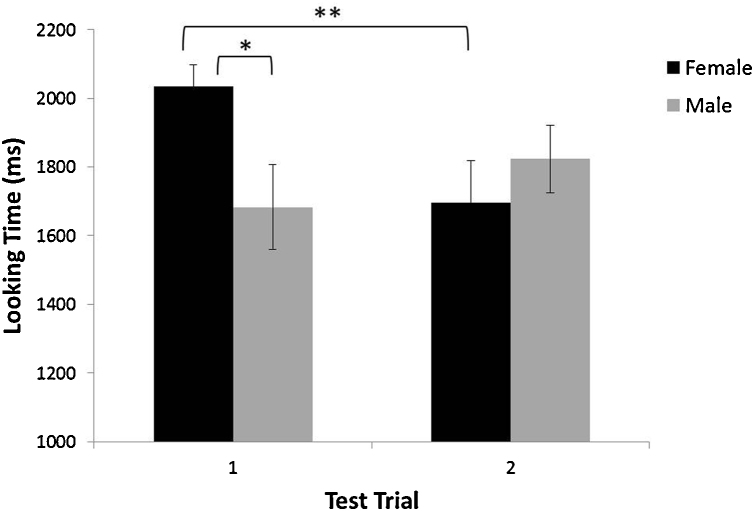
The goal of the present study was to investigate infants' processing of female and male faces. We used an event-related potential (ERP) priming task, as well as a visual-paired comparison (VPC) eye tracking task to explore how 7-month-old "female expert" infants differed in their responses to faces of different genders. Female faces elicited larger N290 amplitudes than male faces. Furthermore, infants showed a priming effect for female faces only, whereby the N290 was significantly more negative for novel females compared to primed female faces. The VPC experiment was designed to test whether infants could reliably discriminate between two female and two male faces. Analyses showed that infants were able to differentiate faces of both genders. The results of the present study suggest that 7-month olds with a large amount of female face experience show a processing advantage for forming a neural representation of female faces, compared to male faces. However, the enhanced neural sensitivity to the repetition of female faces is not due to the infants' inability to discriminate male faces. Instead, the combination of results from the two tasks suggests that the differential processing for female faces may be a signature of expert-level processing.
Keywords: Event-related potentials; Experience; Eye-tracking; Face processing; Infants.
Copyright © 2013 The Authors. Published by Elsevier Ltd.. All rights reserved.
Figures
References
-
- Bar-Haim Y., Ziv T., Lamy D., Hodes R.M. Nature and nurture in own-race face processing. Psychological Science: A Journal of the American Psychological Society/APS. 2006;17(2):159–163. - PubMed
-
- Barrera M.E., Maurer D. The recognition of mother's photographed face by the three-month-old infant. Child Development. 1981;52:114–118.
Publication types
MeSH terms
Grants and funding
LinkOut - more resources
Full Text Sources
Other Literature Sources
