


Automated identification of patients with a diagnosis of binge eating disorder from narrative electronic health records
- PMID: 24201026
- PMCID: PMC3957394
- DOI: 10.1136/amiajnl-2013-001859
Automated identification of patients with a diagnosis of binge eating disorder from narrative electronic health records
Abstract
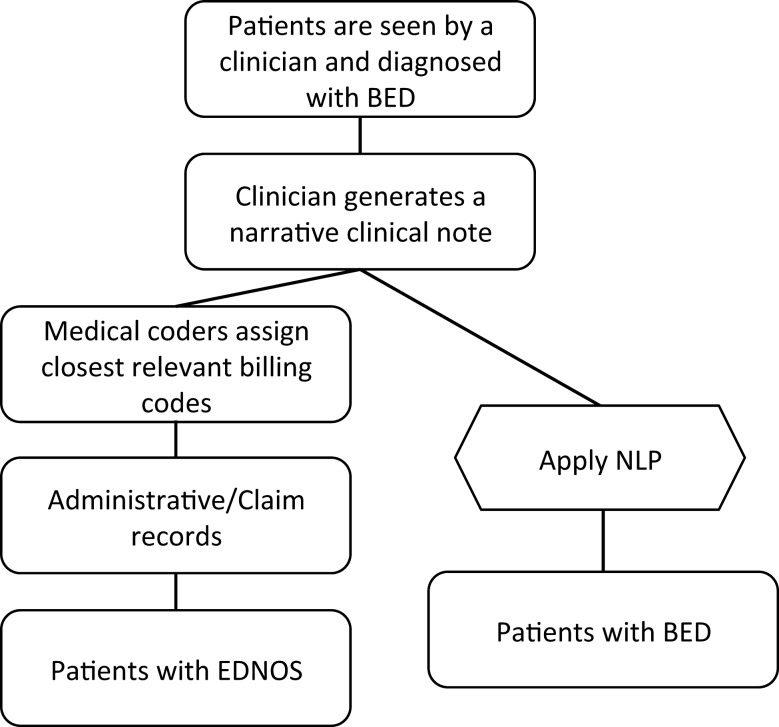
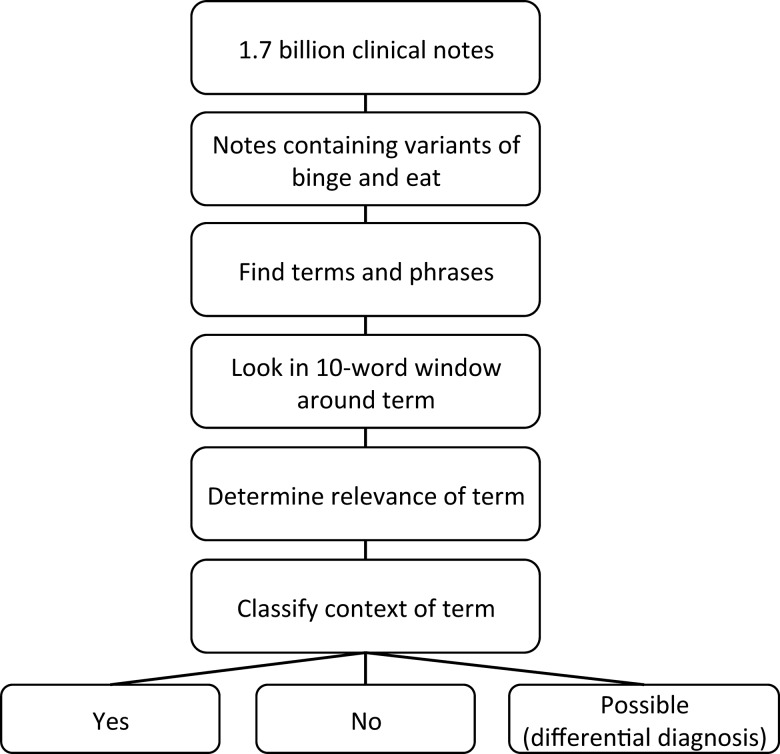
Binge eating disorder (BED) does not have an International Classification of Diseases, 9th or 10th edition code, but is included under 'eating disorder not otherwise specified' (EDNOS). This historical cohort study identified patients with clinician-diagnosed BED from electronic health records (EHR) in the Department of Veterans Affairs between 2000 and 2011 using natural language processing (NLP) and compared their characteristics to patients identified by EDNOS diagnosis codes. NLP identified 1487 BED patients with classification accuracy of 91.8% and sensitivity of 96.2% compared to human review. After applying study inclusion criteria, 525 patients had NLP-identified BED only, 1354 had EDNOS only, and 68 had both BED and EDNOS. Patient characteristics were similar between the groups. This is the first study to use NLP as a method to identify BED patients from EHR data and will allow further epidemiological study of patients with BED in systems with adequate clinical notes.
Keywords: binge eating disorder; eating disorder; electronic health record; natural language processing.
Figures

References
-
- American Psychiatric Association Diagnostic and statistical maual of mental disorders. 5th edn. Washington, DC: American Psychiatric Press, 2013
-
- Safran C. Electronic medical records: a decade of experience. JAMA 2001;285:1766. - PubMed
Publication types
MeSH terms
LinkOut - more resources
Full Text Sources
Other Literature Sources
Medical
