


Postoperative complications in patients with rectal cancer are associated with delays in chemotherapy that lead to worse disease-free and overall survival
- PMID: 24201387
- PMCID: PMC3884512
- DOI: 10.1097/DCR.0b013e3182a857eb
Postoperative complications in patients with rectal cancer are associated with delays in chemotherapy that lead to worse disease-free and overall survival
Abstract
Objective: The objective of this study was to identify the risk factors for delays in chemotherapy after rectal cancer surgery and evaluate the effects of delayed therapy on long-term outcomes. We also sought to clarify what time frame should be used to define delayed adjuvant chemotherapy.
Background: Postoperative complications have been found to influence the timing of chemotherapy in patients with colon cancer. Delays in chemotherapy have been shown to be associated with worse overall and disease-free survival in patients with colorectal cancer, although the timing of delay has not been agreed upon in the literature.
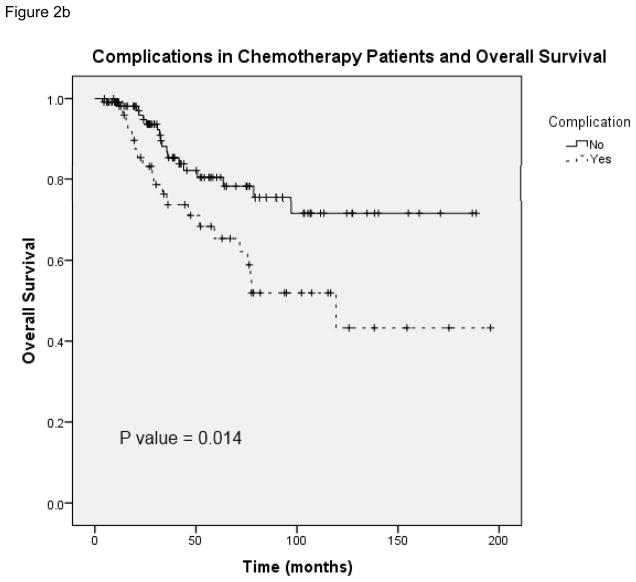
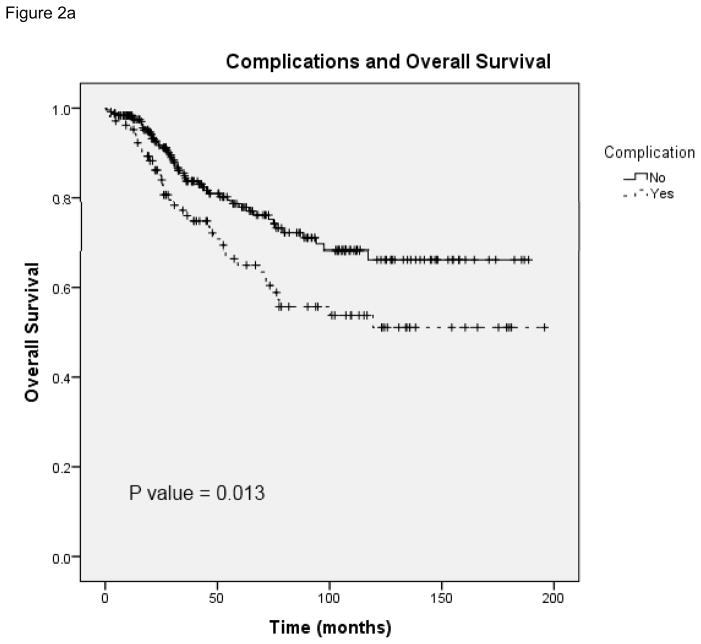
Study design: We performed a retrospective review of a prospectively maintained rectal cancer database. Univariate analysis was used to identify risk factors for delayed chemotherapy. Kaplan-Meier curves were generated to compare overall and disease-free survival in patients based on complications and timing of chemotherapy.
Settings: This study was performed at the University of Wisconsin Hospital, Madison, Wisconsin, between 1995 and 2012.
Patients: Patients with rectal cancer who underwent proctectomy with curative intent were included in this study.
Outcome measures: Timing of chemotherapy, 30-day complications, and 30-day readmissions were the main outcome measures.
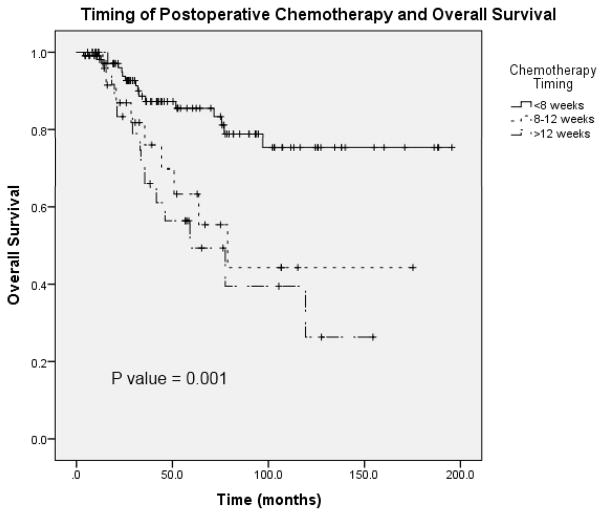
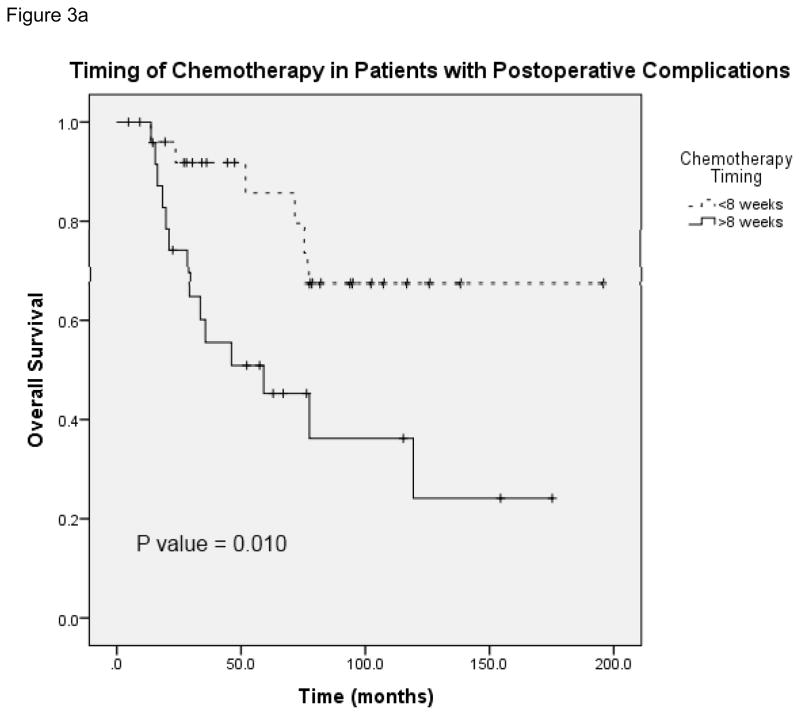
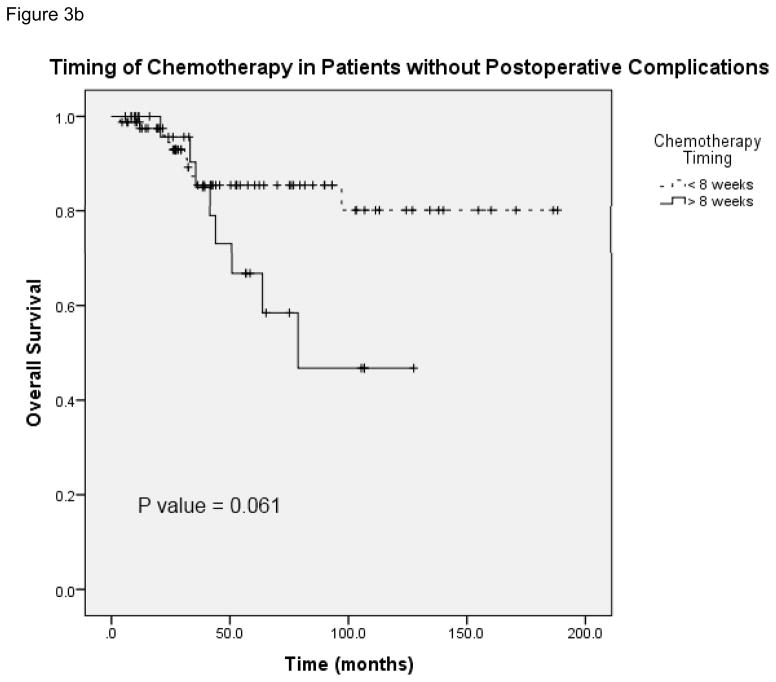
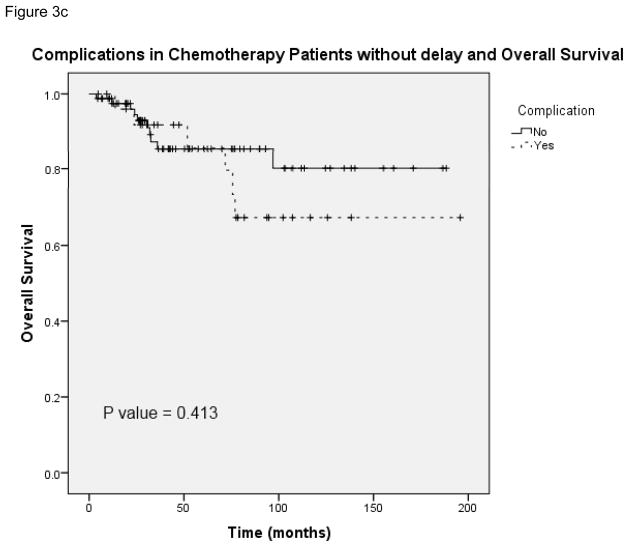
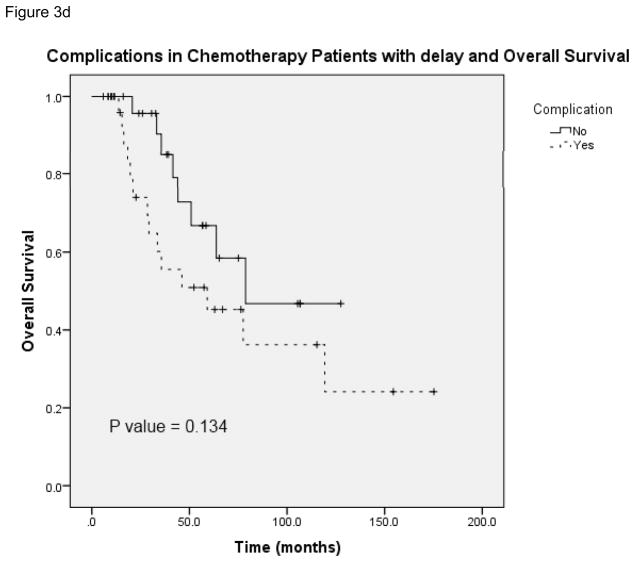
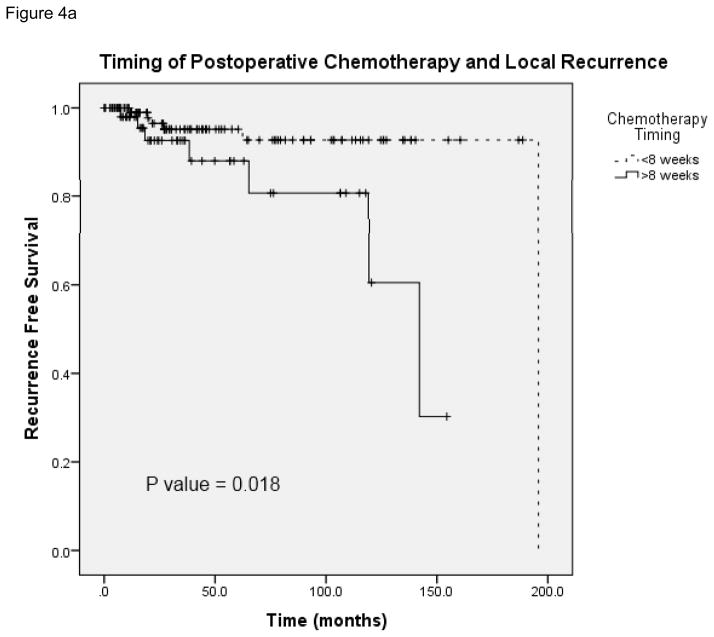
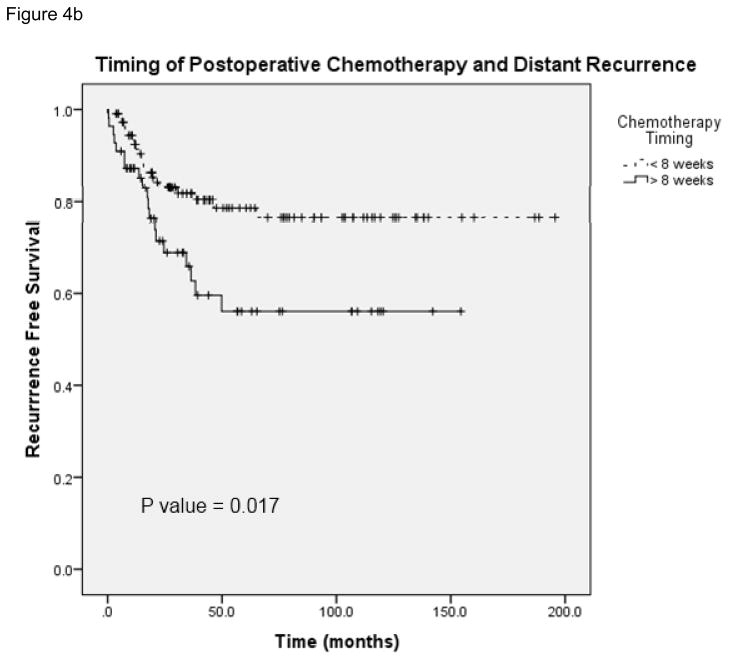
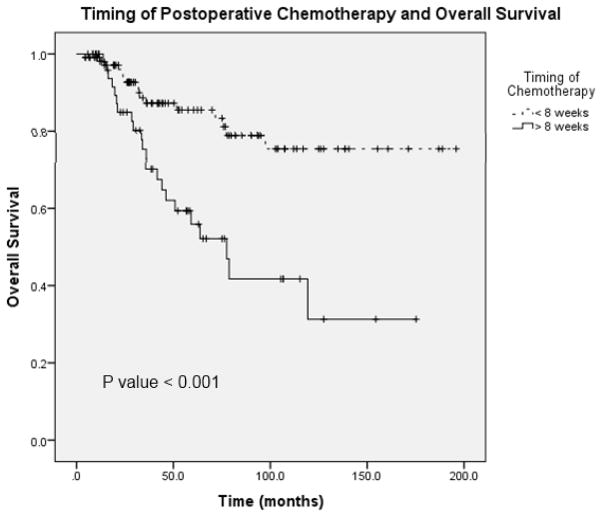
Results: Postoperative complications and 30-day readmissions were associated with delays in chemotherapy ≥8 weeks after surgery. Patients who received chemotherapy ≥8 weeks postoperatively were found to have worse local and distant recurrence rates and worse overall survival in comparison with patients who received chemotherapy within 8 weeks of surgery.
Limitations: The limitations of this study include its retrospective nature and that it was performed at a single institution.
Conclusions: We found complications and readmissions to be risk factors for delayed chemotherapy. Patients who received therapy ≥8 weeks postoperatively had worse disease-free and overall survival.
Conflict of interest statement
The authors have no conflicts of interest to declare.
Figures
Comment in
-
Surgeons play a central role in the utilization of adjuvant chemotherapy for colorectal cancer.Dis Colon Rectum. 2013 Dec;56(12):1327-9. doi: 10.1097/DCR.0b013e3182a854cb. Dis Colon Rectum. 2013. PMID: 24201384 No abstract available.
References
-
- Siegel R, Naishadham D, Jemal A. Cancer statistics, 2012. CA Cancer J Clin. 2012;62:10–29. - PubMed
-
- Hendren S, Birkmeyer JD, Yin H, et al. Surgical complications are associated with omission of chemotherapy for stage III colorectal cancer. Dis Colon Rectum. 2010;53:1587–1593. - PubMed
-
- Cohen ME, Bilimoria KY, Ko CY, et al. Development of an American College of Surgeons National Surgery Quality Improvement Program: morbidity and mortality risk calculator for colorectal surgery. J Am Coll Surg. 2009;208:1009–1016. - PubMed
-
- Sjo OH, Larsen S, Lunde OC, et al. Short term outcome after emergency and elective surgery for colon cancer. Colorectal Dis. 2009;11:733–739. - PubMed
Publication types
MeSH terms
Substances
Grants and funding
LinkOut - more resources
Full Text Sources
Other Literature Sources
Medical
