


Autoimmune effector memory T cells: the bad and the good
- PMID: 24203440
- PMCID: PMC4067599
- DOI: 10.1007/s12026-013-8448-1
Autoimmune effector memory T cells: the bad and the good
Abstract
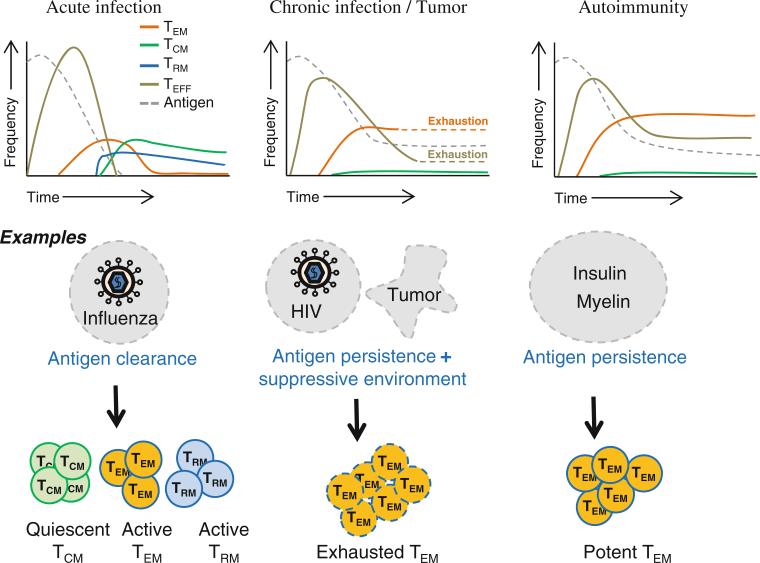
Immunological memory is a hallmark of adaptive immunity, a defense mechanism endowed to vertebrates during evolution. However, an autoimmune pathogenic role of memory lymphocytes is also emerging with accumulating evidence, despite reasonable skepticism on their existence in a chronic setting of autoimmune damage. It is conceivable that autoimmune memory would be particularly harmful since memory cells would constantly "remember" and attack the body's healthy tissues. It is even more detrimental given the resistance of memory T cells to immunomodulatory therapies. In this review, we focus on self-antigen-reactive CD(+) effector memory T (TEM) cells, surveying the evidence for the role of the T(EM) compartment in autoimmune pathogenesis. We will also discuss the role of T(EM) cells in chronic and acute infectious disease settings and how they compare to their counterparts in autoimmune diseases. With their long-lasting potency, the autoimmune T(EM) cells could also play a critical role in anti-tumor immunity, which may be largely based on their reactivity to self-antigens. Therefore, although autoimmune T(EM) cells are "bad" due to their role in relentless perpetration of tissue damage in autoimmune disease settings, they are unlikely a by-product of industrial development along the modern surge of autoimmune disease prevalence. Rather, they may be a product of evolution for their "good" in clearing damaged host cells in chronic infections and malignant cells in cancer settings.
Figures
References
-
- Hummel K, McFann KK, Realsen J, Messer LH, Klingensmith GJ, Chase HP. The increasing onset of type 1 diabetes in children. J Pediatr. 2012;161:652–657. e651. - PubMed
-
- Furst DE, Clarke AE, Fernandes AW, Bancroft T, Greth W, Iorga SR. Incidence and prevalence of adult systemic lupus erythematosus in a large US managed-care population. Lupus. 2013;22:99–105. - PubMed
-
- Koch-Henriksen N, Sorensen PS. The changing demographic pattern of multiple sclerosis epidemiology. Lancet Neurol. 2010;9:520–32. - PubMed
-
- Patterson CC, Dahlquist GG, Gyurus E, Green A, Soltesz G, Group ES. Incidence trends for childhood type 1 diabetes in Europe during 1989-2003 and predicted new cases 2005–20: a multicentre prospective registration study. Lancet. 2009;373:2027–33. - PubMed
Publication types
MeSH terms
Substances
Grants and funding
LinkOut - more resources
Full Text Sources
Other Literature Sources
Medical
Research Materials
