


Characterization of treatment resistant depression episodes in a cohort of patients from a US commercial claims database
- PMID: 24204694
- PMCID: PMC3799999
- DOI: 10.1371/journal.pone.0076882
Characterization of treatment resistant depression episodes in a cohort of patients from a US commercial claims database
Abstract
Context: Treatment Resistant Depression (TRD) is a significant and burdensome health concern.
Objective: To characterize, compare and understand the difference between TRD and non-TRD patients and episodes in respect of their episode duration, treatment patterns and healthcare resource utilization.
Design and setting: Patients between 18 and 64 years with a new diagnosis of major depressive disorder (MDD) and without a previous or comorbid diagnosis of schizophrenia or bipolar disease were included from PharMetrics Integrated Database, a claims database of commercial insurers in the US. Episodes of these patients in which there were at least two distinct failed regimens involving antidepressants and antipsychotics were classified as TRD.
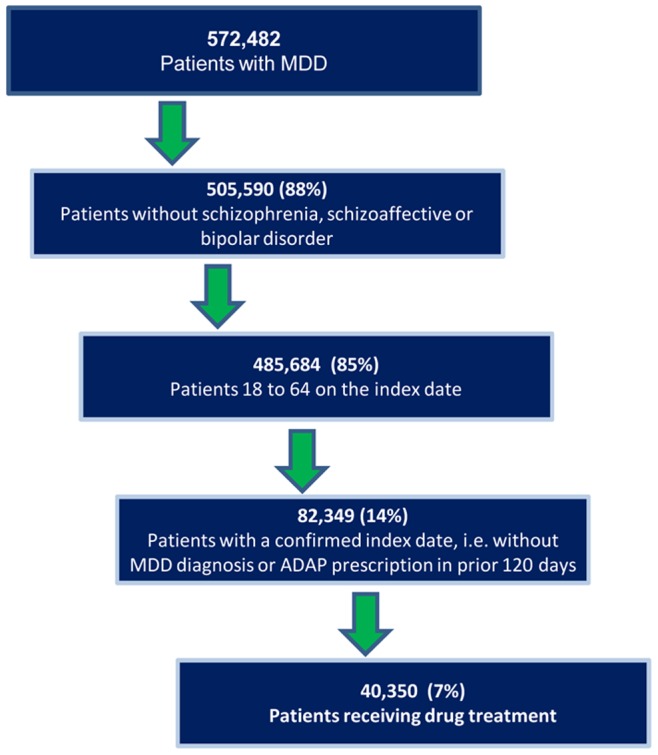
Patients: 82,742 MDD patients were included in the analysis; of these patients, 125,172 episodes were identified (47,654 of these were drug-treated episodes).
Main outcome measures: Comparison between TRD and non-TRD episodes in terms of their duration, number and duration of lines of treatment, comorbidities, and medical resource utilization.
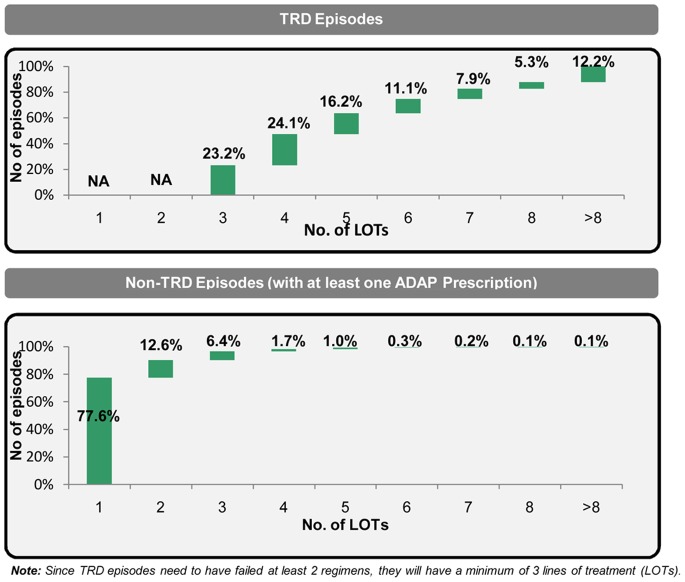
Results: Of the treated episodes, 6.6% (N = 3,134) met the criteria for TRD. The median time to an episode becoming TRD was approximately one year. The mean duration of a TRD episode was 1,004 days (vs. 452 days for a non-TRD episode). More than 75% of TRD episodes had at least four lines of therapy; half of the treatment regimens included a combination of drugs. Average hospitalization costs were higher for TRD than non-TRD episodes: $6,464 vs. $1,734, as were all other health care utilization costs.
Conclusions: While this study was limited to relatively young and commercially covered patients, used a rigorous definition of TRD and did not analyze for cause or consequence, the results highlight high unmet medical need and burden of TRD on patients and health care resources.
Conflict of interest statement
Figures
References
-
- OECD Expert Meeting: Mental health, disability and work (2010) Available: http://www.oecd.org/els/45008308.pdf Accessed 2013 Sep 9.
-
- Hirschfeld RMA, Weissman MM (2002) Risk Factors For Major Depression And Bipolar Disorder. Neuropsychopharmacology: The Fifth Generation of Progress Section 8: Chapter 70.
-
- French L Treatment of Co-morbid Alcohol Use Disorders and Depression, Baylor College of Medicine, Houston, Texas, Available: http://www.bcm.edu/psychiatry/index.cfm?pmid=20058 Accessed 2013 Sep 9.
-
- Musselman DL, Evans DL, Nemeroff CB (1998) The relationship of depression to cardiovascular disease: epidemiology, biology, and treatment. Arch Gen Psychiatry 55: 580–592. - PubMed
Publication types
MeSH terms
Substances
LinkOut - more resources
Full Text Sources
Other Literature Sources
Medical
Miscellaneous
