


A missense mutation in the transcription factor ETV5 leads to sterility, increased embryonic and perinatal death, postnatal growth restriction, renal asymmetry and polydactyly in the mouse
- PMID: 24204802
- PMCID: PMC3804586
- DOI: 10.1371/journal.pone.0077311
A missense mutation in the transcription factor ETV5 leads to sterility, increased embryonic and perinatal death, postnatal growth restriction, renal asymmetry and polydactyly in the mouse
Abstract
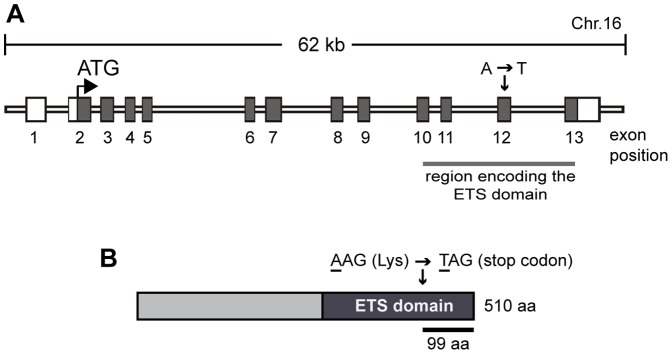
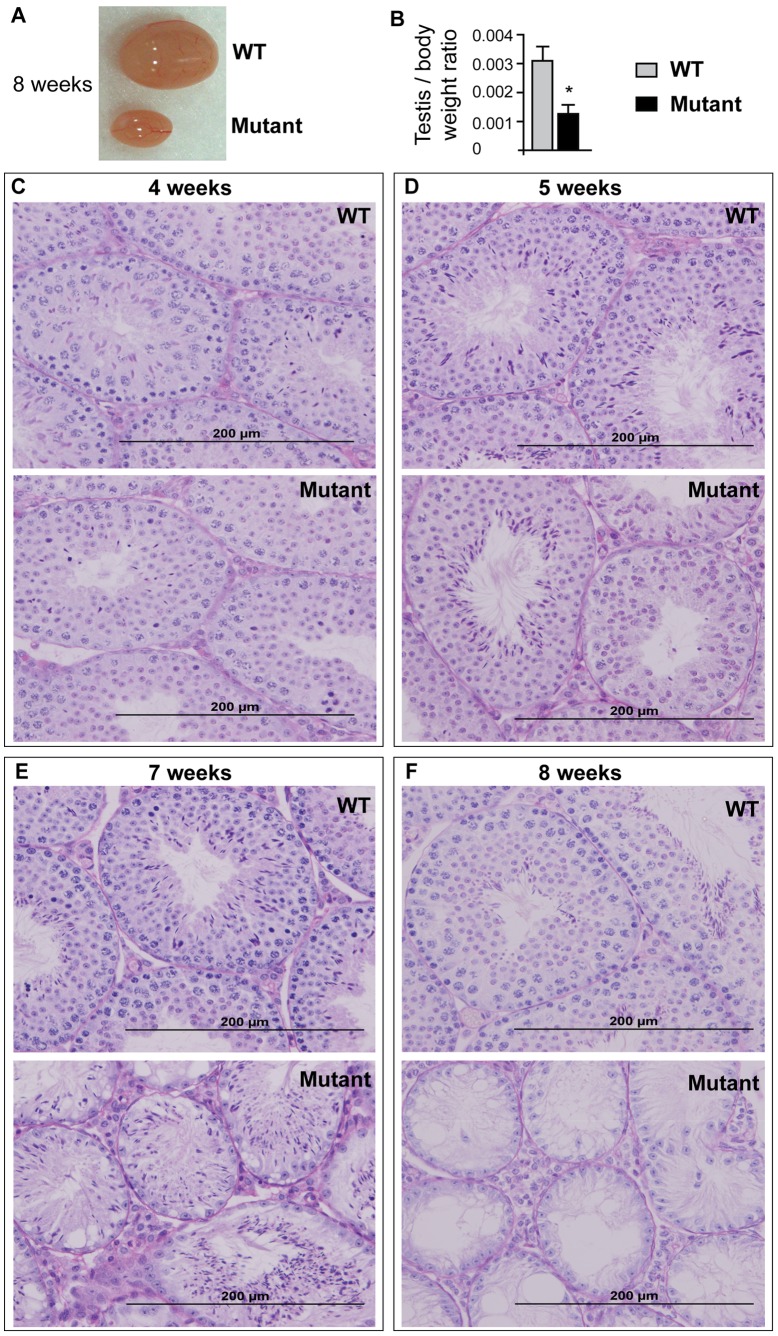
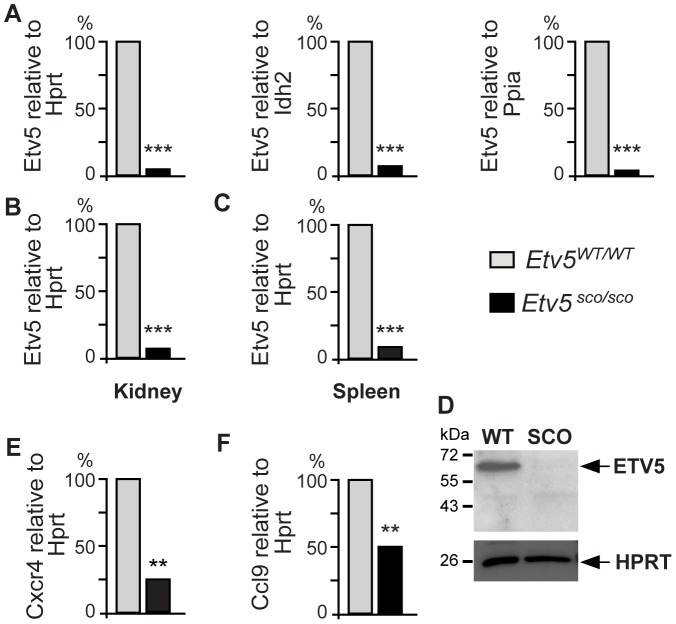
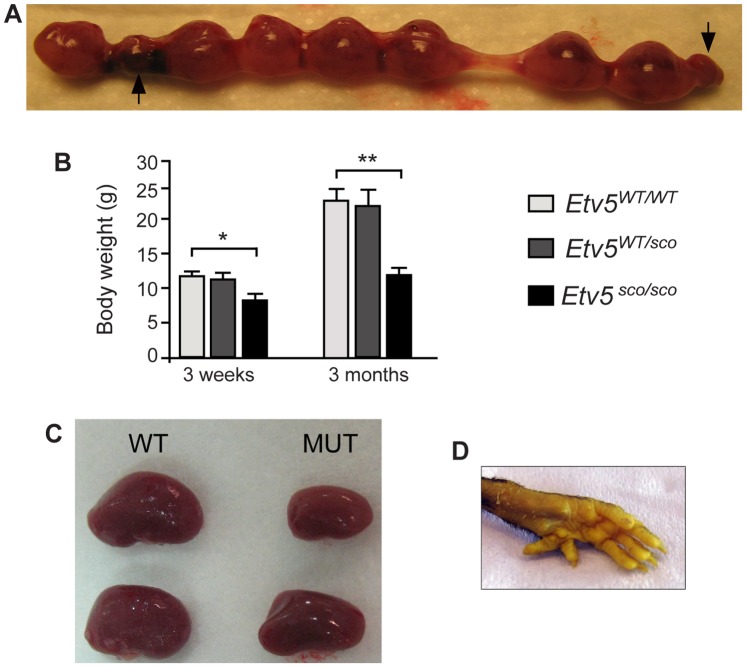
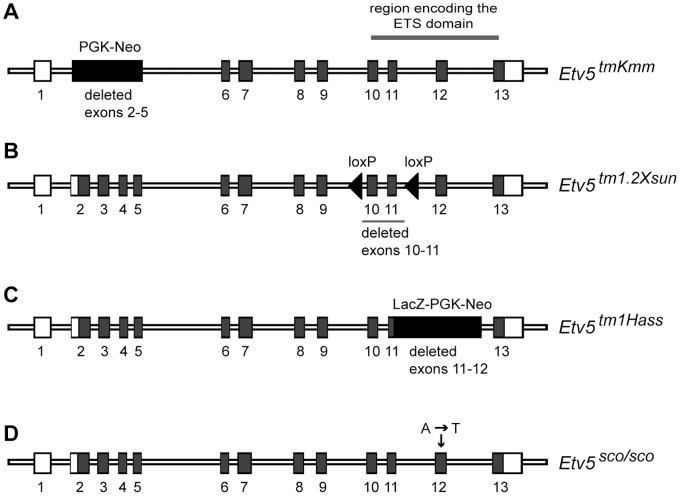
ETV5 (Ets variant gene 5) is a transcription factor that is required for fertility. In this study, we demonstrate that ETV5 plays additional roles in embryonic and postnatal developmental processes in the mouse. Through a genome-wide mouse mutagenesis approach, we generated a sterile mouse line that carried a nonsense mutation in exon 12 of the Etv5 gene. The mutation led to the conversion of lysine at position 412 into a premature termination codon (PTC) within the ETS DNA binding domain of the protein. We showed that the PTC-containing allele produced a highly unstable mRNA, which in turn resulted in an undetectable level of ETV5 protein. The Etv5 mutation resulted in male and female sterility as determined by breeding experiments. Mutant males were sterile due to a progressive loss of spermatogonia, which ultimately resulted in a Sertoli cell only phenotype by 8 week-of-age. Further, the ETV5 target genes Cxcr4 and Ccl9 were significantly down-regulated in mutant neonate testes. CXCR4 and CCL9 have been implicated in the maintenance and migration of spermatogonia, respectively. Moreover, the Etv5 mutation resulted in several developmental abnormalities including an increased incidence of embryonic and perinatal lethality, postnatal growth restriction, polydactyly and renal asymmetry. Thus, our data define a physiological role for ETV5 in many aspects of development including embryonic and perinatal survival, postnatal growth, limb patterning, kidney development and fertility.
Conflict of interest statement
Figures
References
-
- Latchman DS (1996) Transcription-factor mutations and disease. N Engl J Med 334: 28–33. - PubMed
-
- Sharrocks AD (2001) The ETS-domain transcription factor family. Nat Rev Mol Cell Biol 2: 827–837. - PubMed
-
- Wasylyk B, Hagman J, Gutierrez-Hartmann A (1998) Ets transcription factors: nuclear effectors of the Ras-MAP-kinase signaling pathway. Trends Biochem Sci 23: 213–216. - PubMed
-
- Monte D, Baert JL, Defossez PA, de Launoit Y, Stehelin D (1994) Molecular cloning and characterization of human ERM, a new member of the Ets family closely related to mouse PEA3 and ER81 transcription factors. Oncogene 9: 1397–1406. - PubMed
-
- Paratore C, Brugnoli G, Lee HY, Suter U, Sommer L (2002) The role of the Ets domain transcription factor Erm in modulating differentiation of neural crest stem cells. Dev Biol 250: 168–180. - PubMed
Publication types
MeSH terms
Substances
LinkOut - more resources
Full Text Sources
Other Literature Sources
Medical
Molecular Biology Databases
