


A quantitative study of inhibitory interneurons in laminae I-III of the mouse spinal dorsal horn
- PMID: 24205193
- PMCID: PMC3808353
- DOI: 10.1371/journal.pone.0078309
A quantitative study of inhibitory interneurons in laminae I-III of the mouse spinal dorsal horn
Abstract
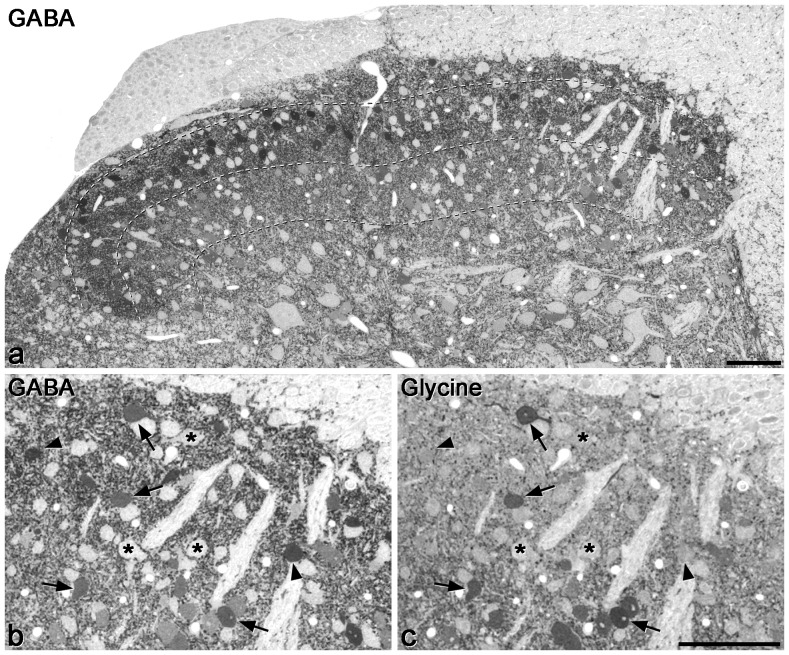
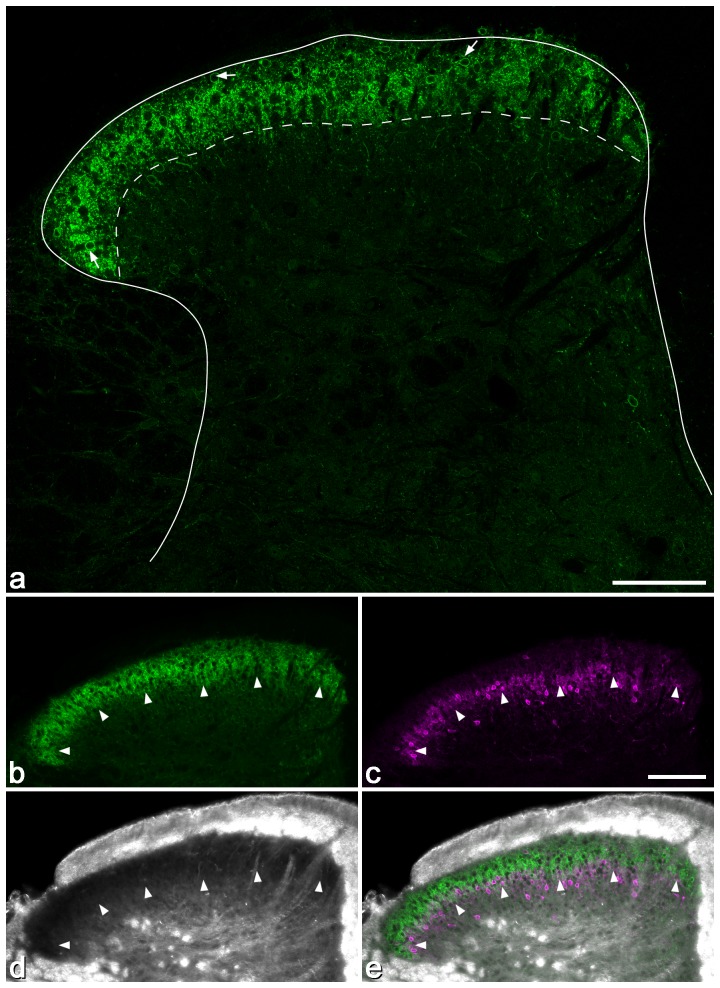
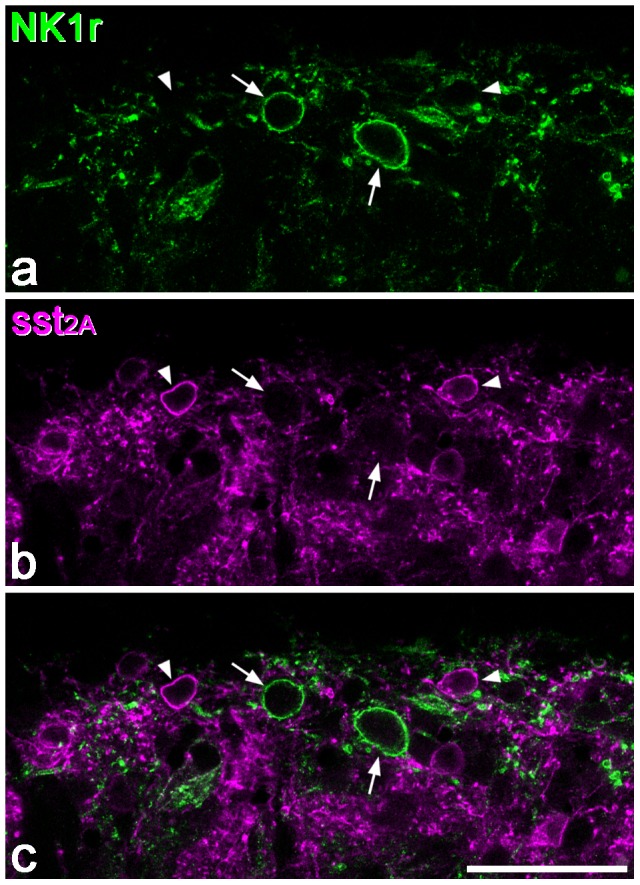
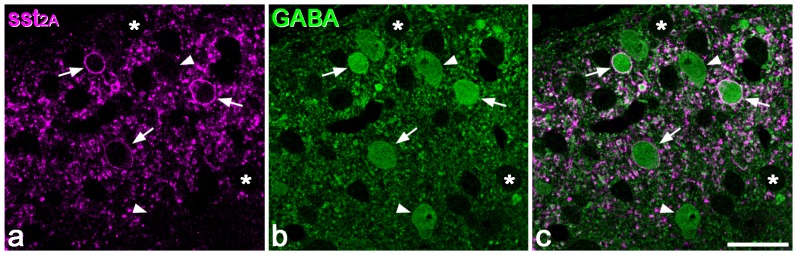
Laminae I-III of the spinal dorsal horn contain many inhibitory interneurons that use GABA and/or glycine as a neurotransmitter. Distinct neurochemical populations can be recognised among these cells, and these populations are likely to have differing roles in inhibiting pain or itch. Quantitative studies in rat have shown that inhibitory interneurons account for 25-40% of all neurons in this region. The sst2A receptor is expressed by around half the inhibitory interneurons in laminae I-II, and is associated with particular neurochemically-defined populations. Although much of the work on spinal pain mechanisms has been performed on rat, the mouse is now increasingly used as a model, due to the availability of genetically altered lines. However, quantitative information on the arrangement of interneurons is lacking in the mouse, and it is possible that there are significant species differences in neuronal organisation. In this study, we show that as in the rat, nearly all neurons in laminae I-III that are enriched with glycine also contain GABA, which suggests that GABA-immunoreactivity can be used to identify inhibitory interneurons in this region. These cells account for 26% of the neurons in laminae I-II and 38% of those in lamina III. As in the rat, the sst2A receptor is only expressed by inhibitory interneurons in laminae I-II, and is present on just over half (54%) of these cells. Antibody against the neurokinin 1 receptor was used to define lamina I, and we found that although the receptor was concentrated in this lamina, it was expressed by many fewer cells than in the rat. By estimating the total numbers of neurons in each of these laminae in the L4 segment of the mouse, we show that there are around half as many neurons in each lamina as are present in the corresponding segment of the rat.
Conflict of interest statement
Figures

References
-
- Polgár E, Hughes DI, Riddell JS, Maxwell DJ, Puskár Z, et al. (2003) Selective loss of spinal GABAergic or glycinergic neurons is not necessary for development of thermal hyperalgesia in the chronic constriction injury model of neuropathic pain. Pain 104: 229–239. - PubMed
-
- Todd AJ, Sullivan AC (1990) Light microscope study of the coexistence of GABA-like and glycine-like immunoreactivities in the spinal cord of the rat. J Comp Neurol 296: 496–505. - PubMed
-
- Maxwell DJ, Rethelyi M (1987) Ultrastructure and synaptic connections of cutaneous afferent fibres in the spinal cord. Trends Neurosci 10: 117–123.
-
- Ribeiro-da-Silva A, Coimbra A (1982) Two types of synaptic glomeruli and their distribution in laminae I-III of the rat spinal cord. J Comp Neurol 209: 176–186. - PubMed
Publication types
MeSH terms
Substances
Grants and funding
LinkOut - more resources
Full Text Sources
Other Literature Sources
Research Materials
