


[Medical students and drug marketing]
- PMID: 24211092
- PMCID: PMC6985649
- DOI: 10.1016/j.aprim.2013.08.003
[Medical students and drug marketing]
Abstract
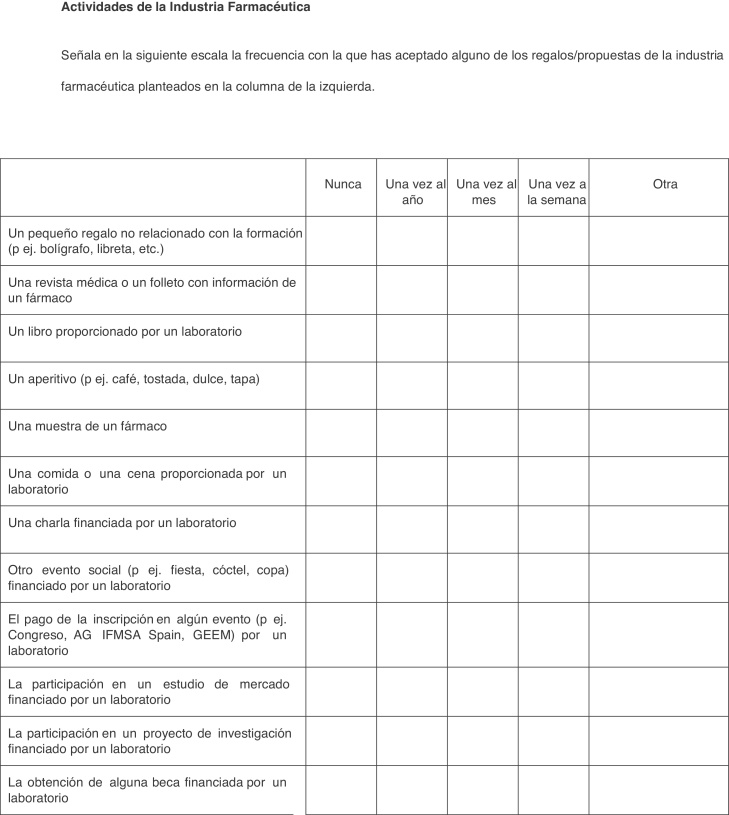
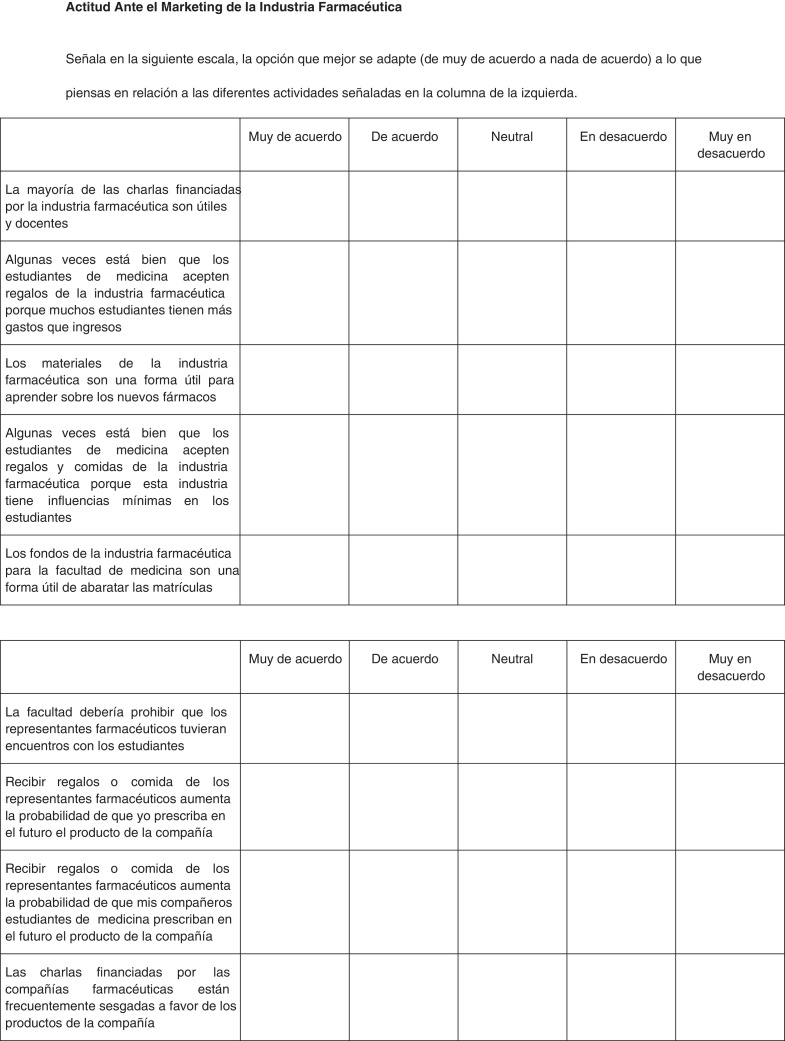
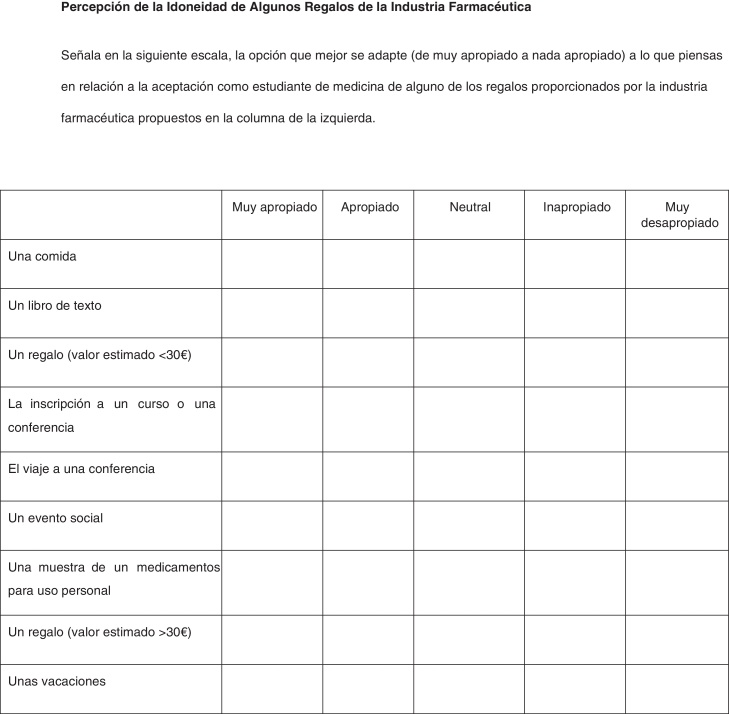
Objective: To determine the exposure of medical students to the marketing activities of the pharmaceutical industry, and identify their opinions and attitudes, and also the possible effects this exposure on their training and future professional practice.
Design: Descriptive cross-sectional.
Setting: University of Zaragoza Faculty of Medicine.
Participants: Third, fourth, fifth and sixth year medical students.
Methods: The information was obtained using a previously adapted, self-report questionnaire on the exposure, attitudes and perceived suitability of drug marketing activities. Percentages were calculated for the categorical variables, applying the chi squared test for the comparison between the groups. A logistic regression was performed to determine the factors associated with their attitudes towards these activities.
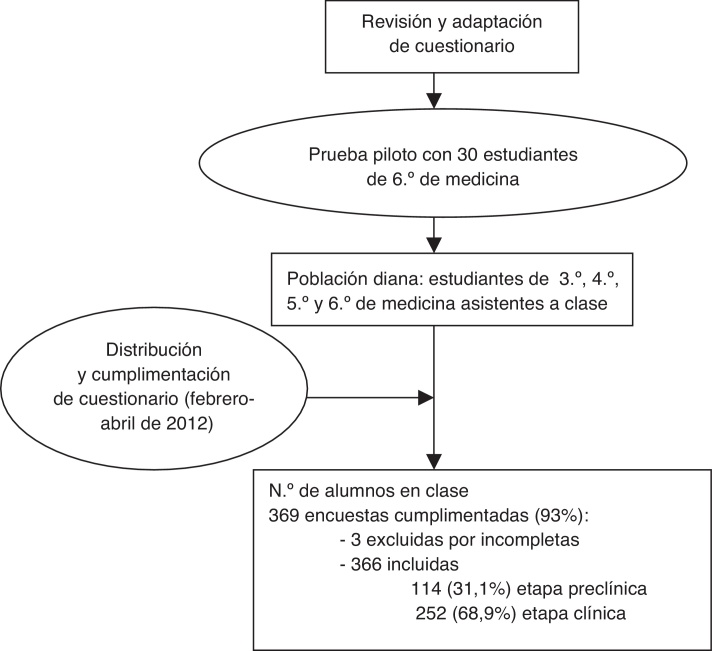
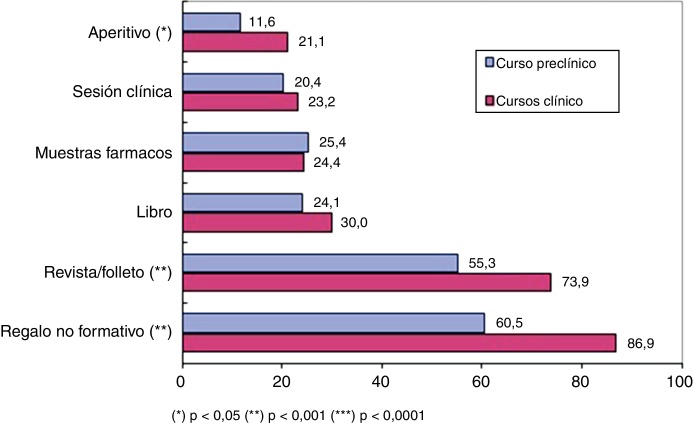
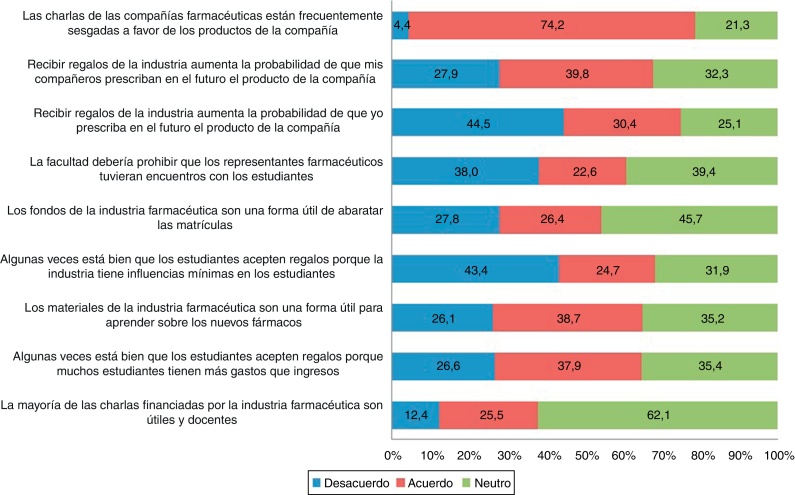
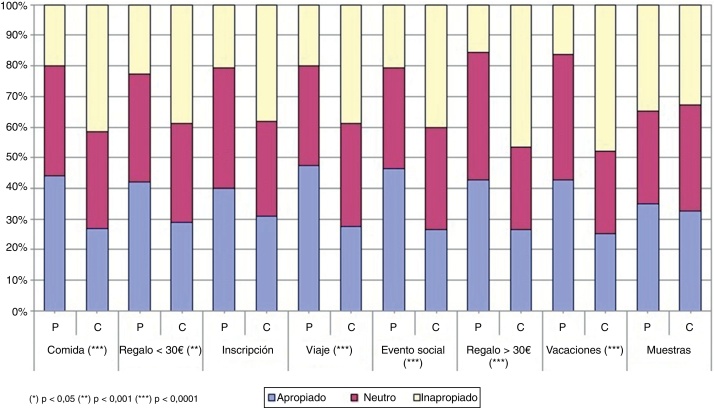
Results: A total of 369 questionnaires were returned (93% of those attending classes). The exposure to marketing activities is high, particularly in the clinical stage (78.6% said to have received a gift non-educational gift). The students recognised the possible biases and repercussions in professional practice, although with ambiguity and contradictions. The most accepted activities are those associated with training, and the most critical attitudes appear in the clinical stage, particularly in the sixth year.
Conclusions: Exposure to drug marketing by medical students and its possible training and professional effects is frequent and significant. The training environment is particularly open to promotional activities. The differences observed in the later years suggest the need for a specific curriculum subject and development of reflective attitudes by the students themselves.
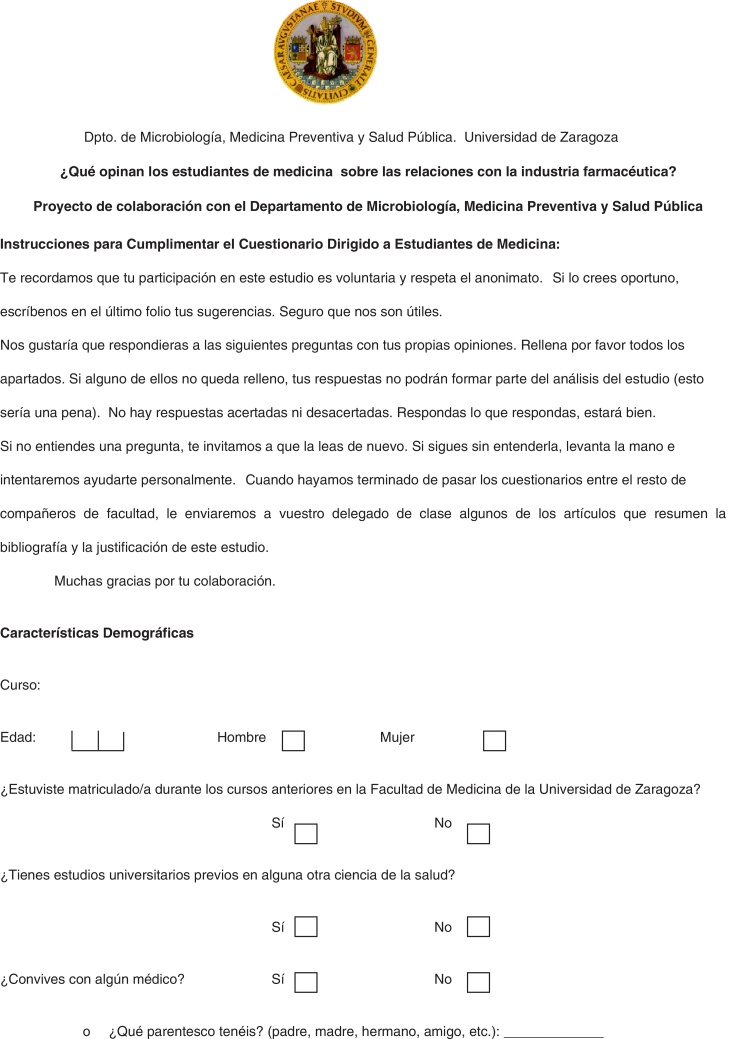
Objetivo: Conocer la exposición de los estudiantes de medicina a las actividades promocionales de la industria farmacéutica, e identificar sus opiniones y actitudes, así como los posibles efectos de esta exposición en su formación y futura práctica profesional.
Diseño: Estudio descriptivo transversal.
Emplazamiento: Facultad de Medicina de la Universidad de Zaragoza.
Participantes: Estudiantes de medicina de los cursos tercero, cuarto, quinto y sexto.
Métodos: La información se obtuvo mediante un cuestionario autoaplicado, previamente adaptado, sobre exposición, actitudes e idoneidad percibida de las actividades de marketing farmacéutico. Se estimaron porcentajes para las variables categóricas, aplicando el test de ji al cuadrado para la comparación entre grupos. Regresión logística para determinar los factores asociados a actitudes proclives a dichas actividades.
Resultados: Se obtuvieron 369 encuestas (93% de los asistentes a clase). La exposición a las actividades promocionales es elevada, sobre todo en la etapa clínica (el 78,6% declara haber recibido un regalo no formativo). Los estudiantes reconocen los sesgos y posibles repercusiones en la práctica profesional, aunque con ambigüedad y contradicciones. Las actividades mejor aceptadas son las relacionadas con la formación y las actitudes más críticas aparecen en la etapa clínica, sobre todo en el sexto curso.
Conclusiones: La exposición de los estudiantes al marketing farmacéutico y sus posibles repercusiones formativas y profesionales son frecuentes e importantes. El ámbito de la formación resulta especialmente permeable a las actividades promocionales. Las diferencias observadas en los últimos cursos señalan la necesidad de formación específica curricular y desarrollo de actitudes reflexivas por los propios estudiantes.
Keywords: Conflict of interests; Conflicto de intereses; Estudiantes de medicina; Industria farmacéutica; Marketing; Medical ethics; Medical students; Pharmaceutical industry; Ética médica.
Copyright © 2013 Elsevier España, S.L. All rights reserved.
Figures
Similar articles
-
Medical students' attitudes toward interactions with the pharmaceutical industry: a national survey in Japan.BMC Med Educ. 2018 Dec 4;18(1):286. doi: 10.1186/s12909-018-1394-9. BMC Med Educ. 2018. PMID: 30509273 Free PMC article.
-
Association of medical students' reports of interactions with the pharmaceutical and medical device industries and medical school policies and characteristics: a cross-sectional study.PLoS Med. 2014 Oct 14;11(10):e1001743. doi: 10.1371/journal.pmed.1001743. eCollection 2014 Oct. PLoS Med. 2014. PMID: 25314155 Free PMC article.
-
Effect of educational interventions and medical school policies on medical students' attitudes toward pharmaceutical marketing practices: a multi-institutional study.Acad Med. 2011 Nov;86(11):1454-62. doi: 10.1097/ACM.0b013e3182303895. Acad Med. 2011. PMID: 21952057
-
Effect of exposure to small pharmaceutical promotional items on treatment preferences.Arch Intern Med. 2009 May 11;169(9):887-93. doi: 10.1001/archinternmed.2009.64. Arch Intern Med. 2009. PMID: 19433701 Clinical Trial.
-
Teaching appropriate interactions with pharmaceutical company representatives: the impact of an innovative workshop on student attitudes.BMC Med Educ. 2005 Feb 8;5(1):5. doi: 10.1186/1472-6920-5-5. BMC Med Educ. 2005. PMID: 15698480 Free PMC article.
References
-
- Bauchner H., Fontanarosa P.B. Restoring confidence in the pharmaceutical industry. JAMA. 2013;309:607–609. - PubMed
-
- Whitehead S. Falling out with pharma. Lancet. 2013;381:1096–1097. - PubMed
-
- Spence D. Bad medicine: The way we manage diabetes. BMJ. 2013 - PubMed
-
- Consumers International. Salud Patentada: la perspectiva del consumidor sobre la RSE, la promoción de medicamentos y la industria farmacéutica en Europa. Londres: Consumers International; 2006.
-
- Servicio Madrileño de Salud Promoción de medicamentos: entre la información y la publicidad. Notas Farmacoterapéuticas. 2007;14
Publication types
MeSH terms
LinkOut - more resources
Full Text Sources
Other Literature Sources
