


Cyclooxygenase-derived vasoconstriction restrains hypoxia-mediated cerebral vasodilation in young adults with metabolic syndrome
- PMID: 24213610
- PMCID: PMC3920126
- DOI: 10.1152/ajpheart.00709.2013
Cyclooxygenase-derived vasoconstriction restrains hypoxia-mediated cerebral vasodilation in young adults with metabolic syndrome
Abstract
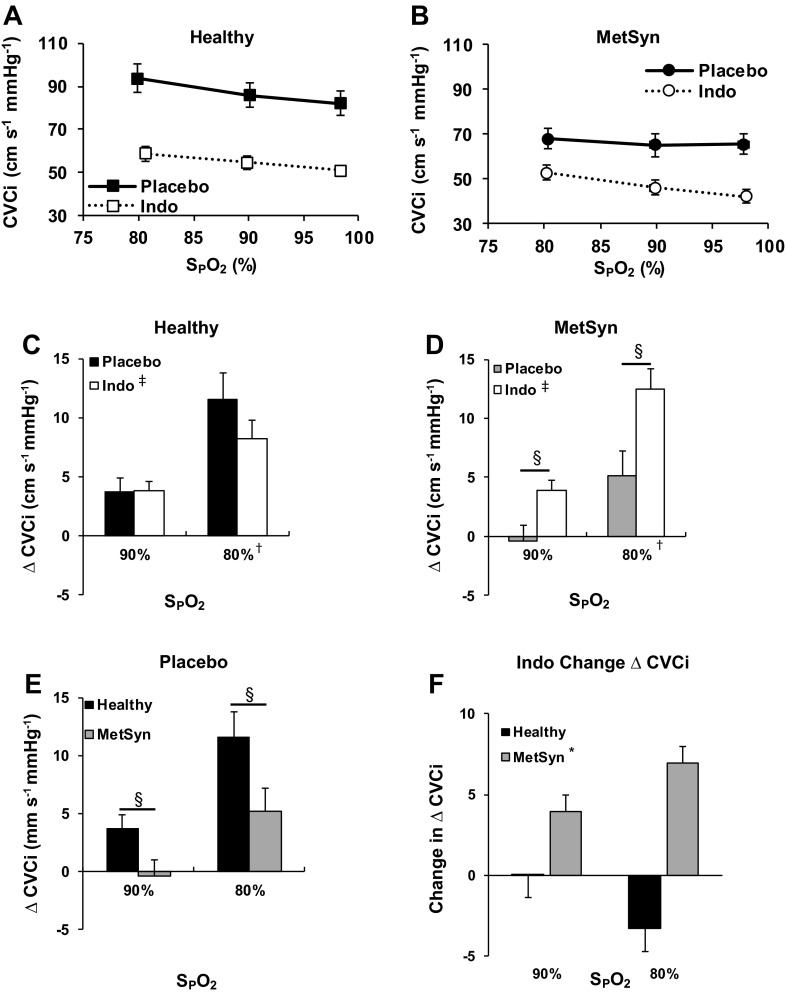
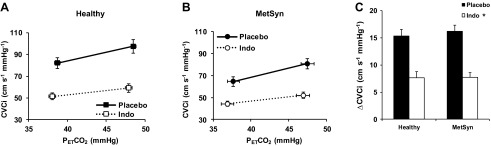
Poor cerebrovascular function in metabolic syndrome (MetSyn) likely contributes to elevated risk of cerebrovascular disease in this growing clinical population. Younger MetSyn adults without clinical evidence of cerebrovascular disease exhibit preserved hypercapnic vasodilation yet markedly impaired hypoxic vasodilation, but the mechanisms behind reduced hypoxic vasodilation are unknown. Based on data from rats, we tested the hypothesis that younger adults with MetSyn exhibit reduced cerebral hypoxic vasodilation due to loss of vasodilating prostaglandins. Middle cerebral artery velocity (MCAv) was measured with transcranial Doppler ultrasound in adults with MetSyn (n = 13, 33 ± 3 yr) and healthy controls (n = 15, 31 ± 2 yr). Isocapnic hypoxia was induced by titrating inspired oxygen to lower arterial saturation to 90% and 80% for 5 min each. Separately, hypercapnia was induced by increasing end-tidal CO2 10 mmHg above baseline levels. Cyclooxygenase inhibition (100 mg indomethacin) was conducted in a randomized double-blind, placebo controlled design. MCAv was normalized for group differences in blood pressure (healthy: 89 ± 2 mmHg vs. MetSyn: 102 ± 2 mmHg) as cerebrovascular conductance index (CVCi), and used to assess cerebral vasodilation. Hypoxia increased CVCi in both groups; however, vasodilation was ∼55% lower in MetSyn at SpO2 = 80% (P < 0.05). Indomethacin tended to decrease hypoxic vasodilation in healthy controls, and unexpectedly increased dilation in MetSyn (P < 0.05). In contrast to hypoxia, hypercapnia-mediated vasodilation was similar between groups, as was the decrease in vasodilation with indomethacin. These data indicate increased production of vasoconstrictor prostaglandins restrains hypoxic cerebral vasodilation in MetSyn, preventing them from responding appropriately to this important physiological stressor.
Keywords: cerebral blood flow; cyclooxygenase; metabolic syndrome.
Figures


References
-
- Coyle MG, Oh W, Petersson KH, Stonestreet BS. Effects of indomethacin on brain blood flow, cerebral metabolism, and sagittal sinus prostanoids after hypoxia. Am J Physiol Heart Circ Physiol 269: H1450–H1459, 1995 - PubMed
-
- Di Carlo A. Human and economic burden of stroke. Age Ageing 38: 4–5, 2009 - PubMed
-
- Erdos B, Miller AW, Busija DW. Impaired endothelium-mediated relaxation in isolated cerebral arteries from insulin-resistant rats. Am J Physiol Heart Circ Physiol 282: H2060–H2065, 2002 - PubMed
Publication types
MeSH terms
Substances
Grants and funding
LinkOut - more resources
Full Text Sources
Other Literature Sources
Medical
