


Prevalence and predictors of atrial fibrillation among patients undergoing bariatric surgery
- PMID: 24214203
- PMCID: PMC3972357
- DOI: 10.1007/s11695-013-1123-8
Prevalence and predictors of atrial fibrillation among patients undergoing bariatric surgery
Abstract
Background: While AF is a disease of the elderly, it can occur earlier in the presence of risk factors such as obesity. Bariatric surgery patients are significantly younger and more obese than previously described populations with AF. Therefore, it remains to be determined whether current estimates of the prevalence and predictors for AF remain true in the bariatric surgery population.
Methods: We performed a cross-sectional analysis of 1,341 consecutive patients who underwent bariatric surgery from January 2008 to October 2012. Baseline characteristics were compared between patients with and without AF. For additional comparison, 176 patients with AF and body mass index (BMI) >40 kg/m(2) were identified from the Vanderbilt AF Registry. A multivariable logistic regression was performed to identify predictors of AF within the bariatric surgery cohort.
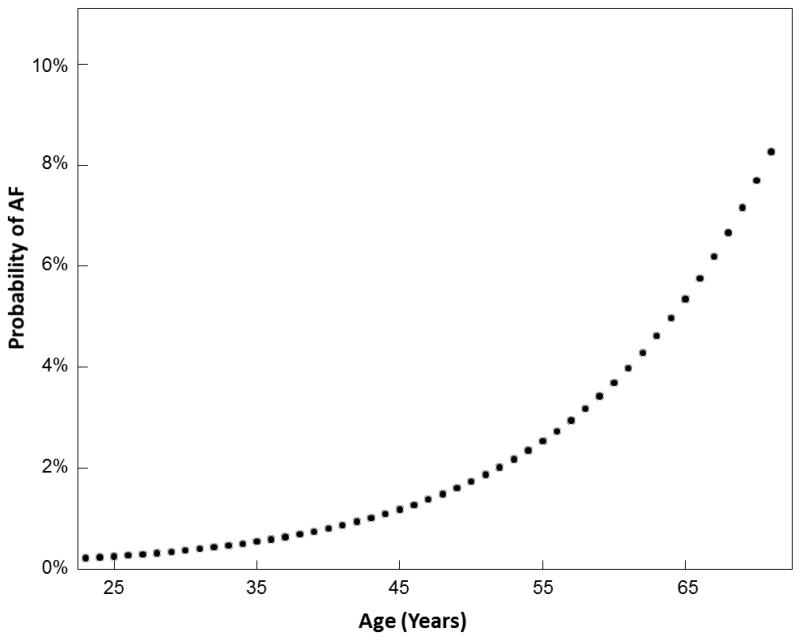
Results: The prevalence of AF in the bariatric surgery cohort was 1.9 % (25/1,341). Patients with AF were older (median 56 years (interquartile range [52-64) vs.46 [38-56] years, p < 0.001), were more often male (48 vs. 23 %, p = 0.004), had more comorbidities, but had no difference in BMI (50 kg/m(2) [44-58] vs. 48 [43-54], p = 0.4). In multivariable analysis, the odds of AF increased 2.2-fold by age per decade (95 % CI, 1.4-3.5; p < 0.001) and 2.4-fold by male gender (1.1-5.4, p = 0.03) when adjusted for BMI. BMI was not independently associated with AF (OR 1.15 [95 % CI, 0.98-1.41], p = 0.09).
Conclusions: The prevalence of AF is 1.9 % among patients undergoing bariatric surgery. Risk of AF was found to increase with age and male gender, but not with higher BMI.
Figures
References
-
- Wang TJ, Parise H, Levy D, et al. Obesity and the risk of new-onset atrial fibrillation. JAMA : the journal of the American Medical Association. 2004;292:2471–7. - PubMed
-
- Benjamin EJ, Levy D, Vaziri SM, D’Agostino RB, Belanger AJ, Wolf PA. Independent risk factors for atrial fibrillation in a population-based cohort. The Framingham Heart Study. JAMA : the journal of the American Medical Association. 1994;271:840–4. - PubMed
-
- Krahn AD, Manfreda J, Tate RB, Mathewson FA, Cuddy TE. The natural history of atrial fibrillation: incidence, risk factors, and prognosis in the Manitoba Follow-Up Study. The American journal of medicine. 1995;98:476–84. - PubMed
-
- Ruigomez A, Johansson S, Wallander MA, Rodriguez LA. Incidence of chronic atrial fibrillation in general practice and its treatment pattern. Journal of clinical epidemiology. 2002;55:358–63. - PubMed
-
- Wilhelmsen L, Rosengren A, Lappas G. Hospitalizations for atrial fibrillation in the general male population: morbidity and risk factors. Journal of internal medicine. 2001;250:382–9. - PubMed
Publication types
MeSH terms
Grants and funding
LinkOut - more resources
Full Text Sources
Other Literature Sources
Medical
