


The role of mannose-binding lectin in severe sepsis and septic shock
- PMID: 24223476
- PMCID: PMC3808714
- DOI: 10.1155/2013/625803
The role of mannose-binding lectin in severe sepsis and septic shock
Abstract
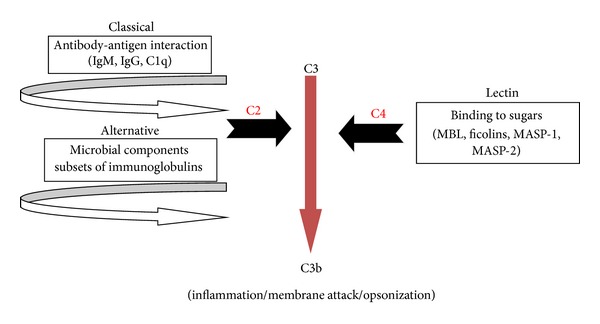
Severe sepsis and septic shock are a primary cause of death in patients in intensive care unit (ICU). Investigations upon genetic susceptibility profile to systemic complications during severe infections are a field of increasing scientific interest. Particularly when adaptive immune system is compromised or immature, innate immunity plays a key role in the immediate defense against invasive pathogens. Mannose-binding lectin (MBL) is a serum protein that recognizes a wide range of pathogenic microorganisms and activates complement cascade via the antibody-independent pathway. More than 30% of humans harbor mutations in MBL gene (MBL2) resulting in reduced plasmatic levels and activity. Increased risk of infection acquisition has been largely documented in MBL-deficient patients, but the real impact of this form of innate immunosuppression upon clinical outcome is not clear. In critically ill patients higher incidence and worse prognosis of severe sepsis/septic shock appear to be associated with low-producers haplotypes. However an excess of MBL activation might be also harmful due to the possibility of an unbalanced proinflammatory response and an additional host injury. Strategies of replacement therapies in critically ill patients with severe infections are under investigation but still far to be applied in clinical practice.
References
-
- Dellinger RP, Levy MM, Rhodes A, et al. Surviving sepsis campaign: international guidelines for management of severe sepsis and septic shock: 2012. Critical Care Medicine. 2013;41(2):580–637. - PubMed
-
- Riversa EP, Jaehne AK, Eichhorn-Wharry L, Brown S, Amponsah D. Fluid therapy in septic shock. Current Opinion in Critical Care. 2010;16(4):297–308. - PubMed
-
- Janeway CA., Jr. The immune system evolved to discriminate infectious nonself from noninfectious self. Immunology Today. 1992;13(1):11–16. - PubMed
-
- Kilpatrick DC. Mannan-binding lectin and its role in innate immunity. Transfusion Medicine. 2002;12(6):335–351. - PubMed
Publication types
MeSH terms
Substances
LinkOut - more resources
Full Text Sources
Other Literature Sources
Medical
Miscellaneous
