


Expression of innate immunity genes and damage of primary human pancreatic islets by epidemic strains of Echovirus: implication for post-virus islet autoimmunity
- PMID: 24223733
- PMCID: PMC3815302
- DOI: 10.1371/journal.pone.0077850
Expression of innate immunity genes and damage of primary human pancreatic islets by epidemic strains of Echovirus: implication for post-virus islet autoimmunity
Abstract
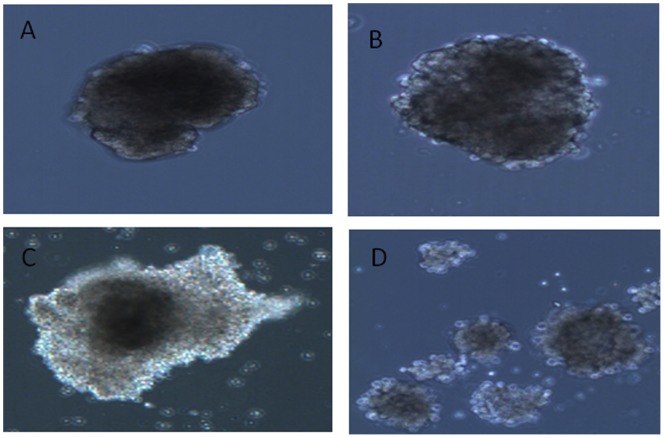
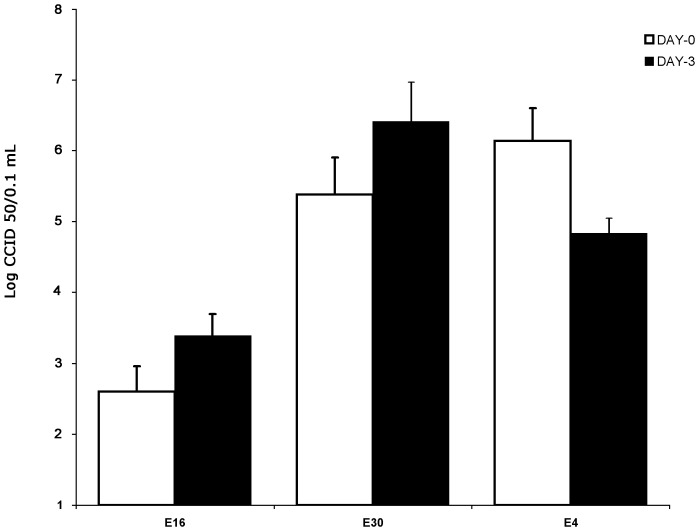
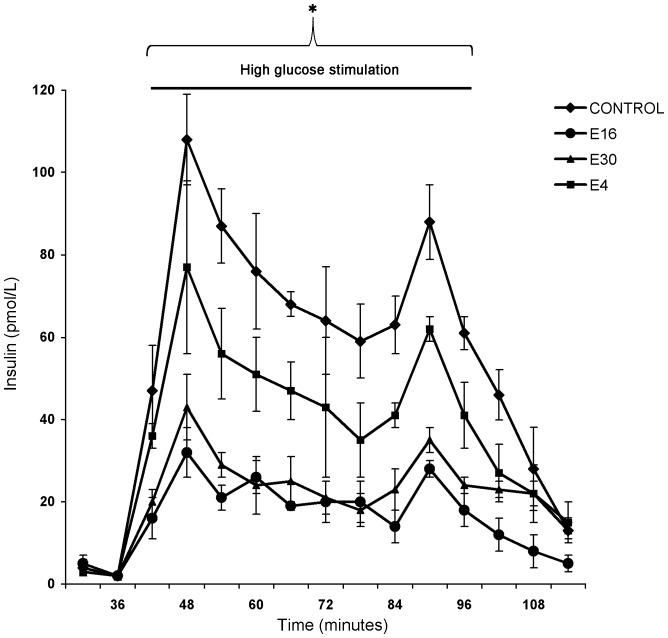
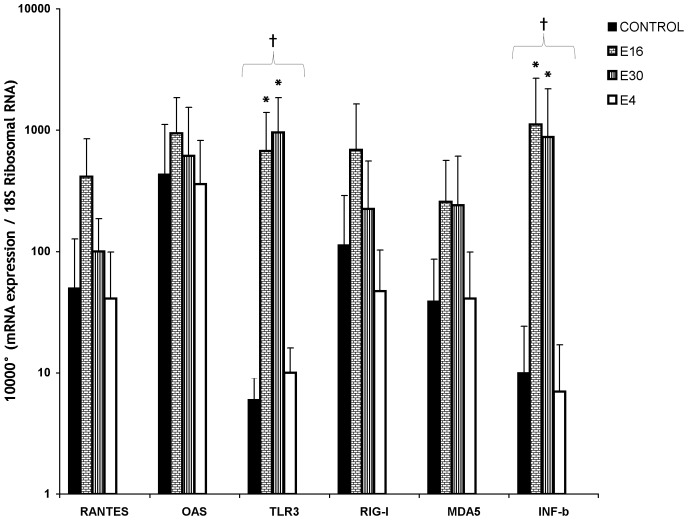
Three large-scale Echovirus (E) epidemics (E4,E16,E30), each differently associated to the acute development of diabetes related autoantibodies, have been documented in Cuba. The prevalence of islet cell autoantibodies was moderate during the E4 epidemic but high in the E16 and E30 epidemic. The aim of this study was to evaluate the effect of epidemic strains of echovirus on beta-cell lysis, beta-cell function and innate immunity gene expression in primary human pancreatic islets. Human islets from non-diabetic donors (n = 7) were infected with the virus strains E4, E16 and E30, all isolated from patients with aseptic meningitis who seroconverted to islet cell antibody positivity. Viral replication, degree of cytolysis, insulin release in response to high glucose as well as mRNA expression of innate immunity genes (IFN-b, RANTES, RIG-I, MDA5, TLR3 and OAS) were measured. The strains of E16 and E30 did replicate well in all islets examined, resulting in marked cytotoxic effects. E4 did not cause any effects on cell lysis, however it was able to replicate in 2 out of 7 islet donors. Beta-cell function was hampered in all infected islets (P<0.05); however the effect of E16 and E30 on insulin secretion appeared to be higher than the strain of E4. TLR3 and IFN-beta mRNA expression increased significantly following infection with E16 and E30 (P<0.033 and P<0.039 respectively). In contrast, the expression of none of the innate immunity genes studied was altered in E4-infected islets. These findings suggest that the extent of the epidemic-associated islet autoimmunity may depend on the ability of the viral strains to damage islet cells and induce pro-inflammatory innate immune responses within the infected islets.
Conflict of interest statement
Figures
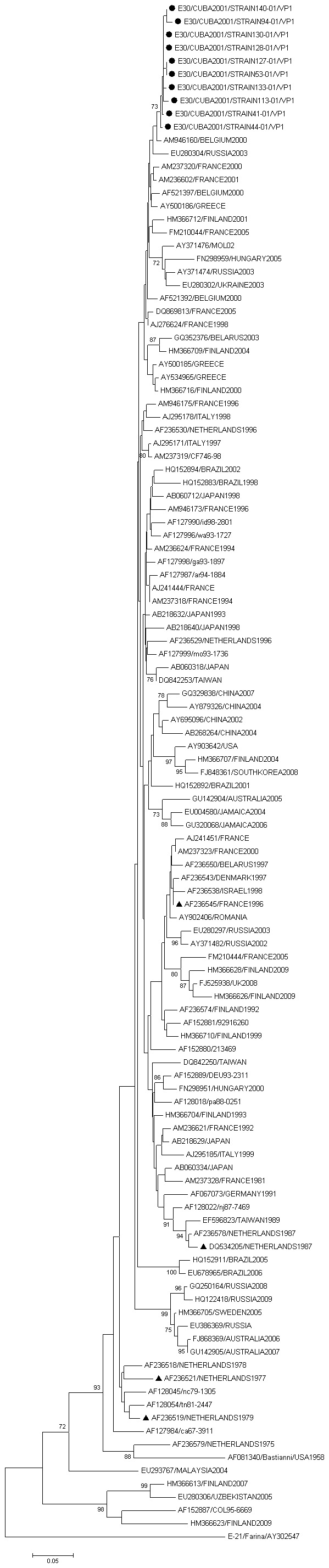
References
-
- Hyoty H, Taylor KW (2002) The role of viruses in human diabetes. Diabetologia 45: 1 353–1361. - PubMed
-
- Oberste MS, Maher K, Nix WA, Michele SM, Uddin M, et al. (2007) Molecular identification of 13 new enterovirus types, EV79–88, EV97, and EV100–101, members of the species Human Enterovirus B. Virus Res. 128: 34–42. - PubMed
-
- Richer MJ, Horwitz MS (2009) The innate immune response: an important partner in shaping coxsackievirus-mediated autoimmunity. J Innate Immun 1: 421–434. - PubMed
-
- Otonkoski T, Roivainen M, Vaarala O, Dinesen B, Leipa JA, et al. (2000) Neonatal Type I diabetes associated with maternal echovirus 6 infection: a case report. Diabetologia 43: 1235–1238. - PubMed
-
- Paananen A, Ylipaasto P, Rieder E, Hovi T, Galama JM, et al. (2003) Molecular and biological analysis of echovirus 9 strain isolated from a diabetic child. J Med Virol 69: 529–537. - PubMed
Publication types
MeSH terms
Substances
LinkOut - more resources
Full Text Sources
Other Literature Sources
