


Sickle cell disease in Saudi Arabia: the phenotype in adults with the Arab-Indian haplotype is not benign
- PMID: 24224700
- PMCID: PMC4094128
- DOI: 10.1111/bjh.12650
Sickle cell disease in Saudi Arabia: the phenotype in adults with the Arab-Indian haplotype is not benign
Abstract
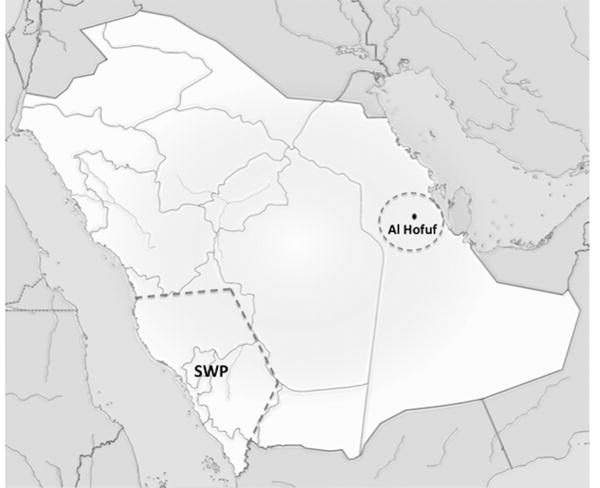
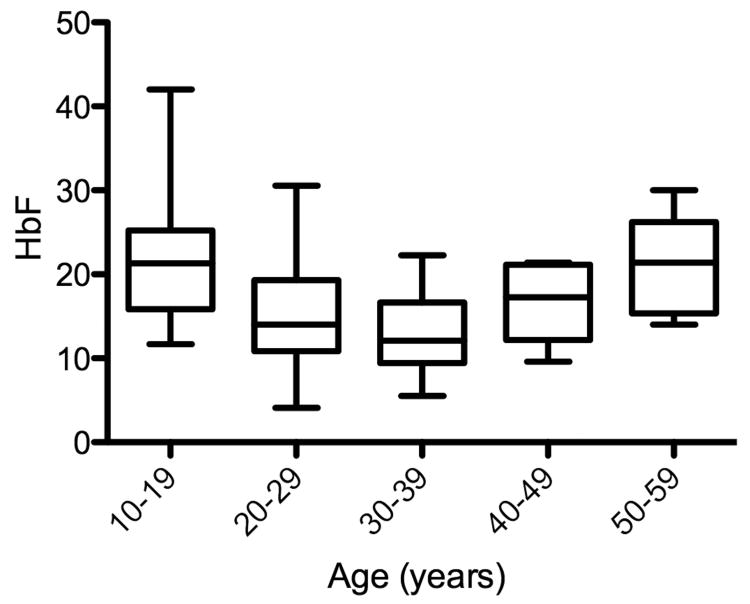
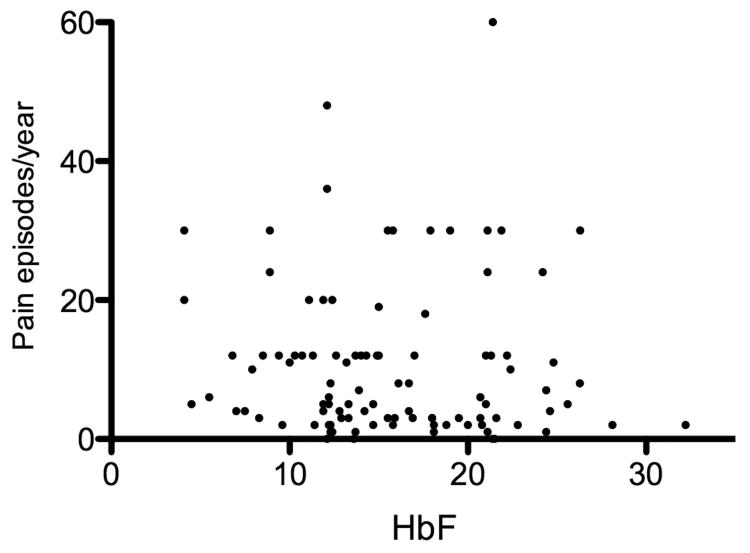
Sickle cell disease (SCD) in Saudi patients from the Eastern Province is associated with the Arab-Indian (AI) HBB (β-globin gene) haplotype. The phenotype of AI SCD in children was described as benign and was attributed to their high fetal haemoglobin (HbF). We conducted a hospital-based study to assess the pattern of SCD complications in adults. A total of 104 patients with average age of 27 years were enrolled. Ninety-six per cent of these patients reported history of painful crisis; 47% had at least one episode of acute chest syndrome, however, only 15% had two or more episodes; symptomatic osteonecrosis was reported in 18%; priapism in 17%; overt stroke in 6%; none had leg ulcers. The majority of patients had persistent splenomegaly and 66% had gallstones. Half of the patients co-inherited α-thalassaemia and about one-third had glucose-6-phosphate dehydrogenase deficiency. Higher HbF correlated with higher rate of splenic sequestration but not with other phenotypes. The phenotype of adult patients with AI SCD is not benign despite their relatively high HbF level. This is probably due to the continued decline in HbF level in adults and the heterocellular and variable distribution of HbF amongst F-cells.
Keywords: Arab-Indian haplotype; Saudi Arabia; fetal haemoglobin; phenotype; sickle cell disease.
© 2013 John Wiley & Sons Ltd.
Figures
Comment in
-
Variable phenotypes of sickle cell disease in India with the Arab-Indian haplotype.Br J Haematol. 2015 Jan;168(1):156-9. doi: 10.1111/bjh.13083. Epub 2014 Aug 19. Br J Haematol. 2015. PMID: 25135424 No abstract available.
References
-
- Adekile A, Al-Kandari M, Haider M, Rajaa M, D'Souza M, Sukumaran J. Hemoglobin F concentration as a function of age in Kuwaiti sickle cell disease patients. Medical principles and practice : international journal of the Kuwait University, Health Science Centre. 2007;16:286–290. - PubMed
-
- Adekile AD. Limitations of Hb F as a phenotypic modifier in sickle cell disease: study of Kuwaiti Arab patients. Hemoglobin. 2011;35:607–617. - PubMed
-
- Adekile AD, Gupta R, Yacoub F, Sinan T, Al-Bloushi M, Haider MZ. Avascular necrosis of the hip in children with sickle cell disease and high Hb F: magnetic resonance imaging findings and influence of alpha-thalassemia trait. Acta haematologica. 2001;105:27–31. - PubMed
-
- Adekile AD, Yacoub F, Gupta R, Sinan T, Haider MZ, Habeeb Y, Al-Bloushi M, Moosa A. Silent brain infarcts are rare in Kuwaiti children with sickle cell disease and high Hb F. American journal of hematology. 2002;70:228–231. - PubMed
-
- Akar NA, Adekile A. Ten-year review of hospital admissions among children with sickle cell disease in Kuwait. Medical principles and practice : international journal of the Kuwait University, Health Science Centre. 2008;17:404–408. - PubMed
Publication types
MeSH terms
Substances
Grants and funding
LinkOut - more resources
Full Text Sources
Other Literature Sources
Medical
