


Activated ClpP kills persisters and eradicates a chronic biofilm infection
- PMID: 24226776
- PMCID: PMC4031760
- DOI: 10.1038/nature12790
Activated ClpP kills persisters and eradicates a chronic biofilm infection
Abstract
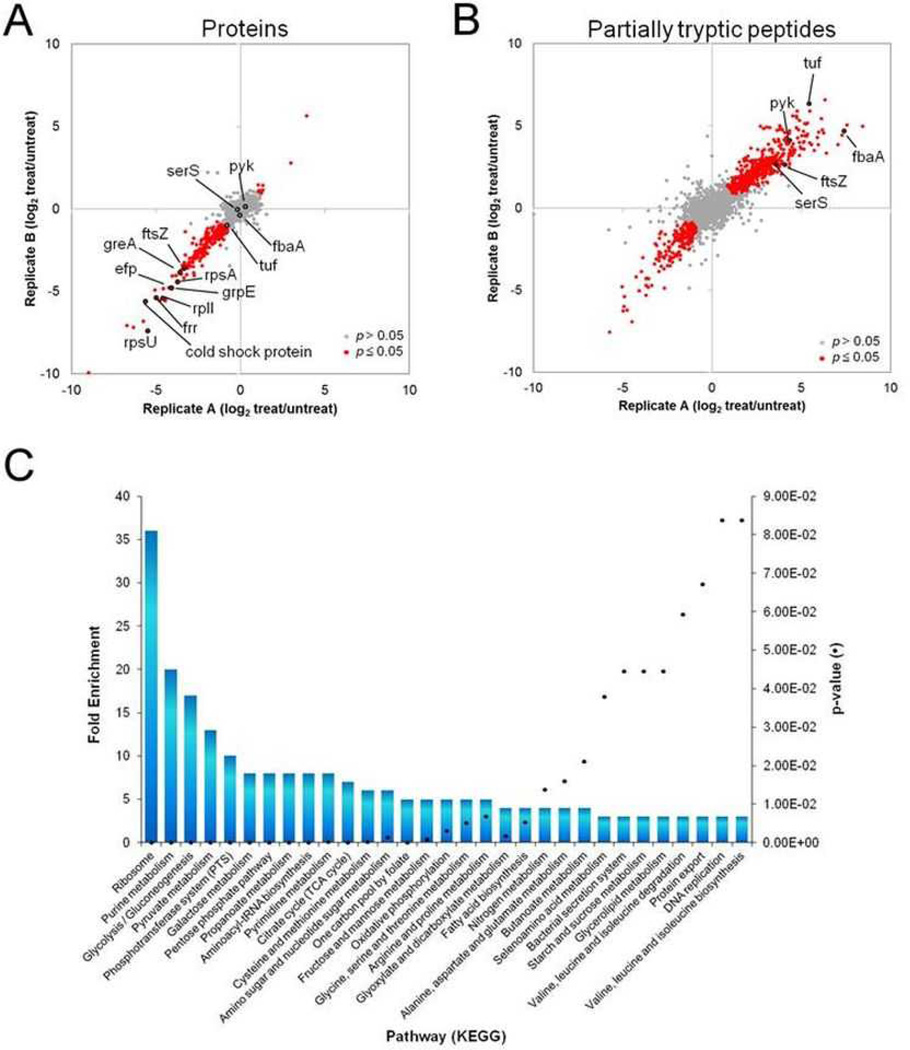
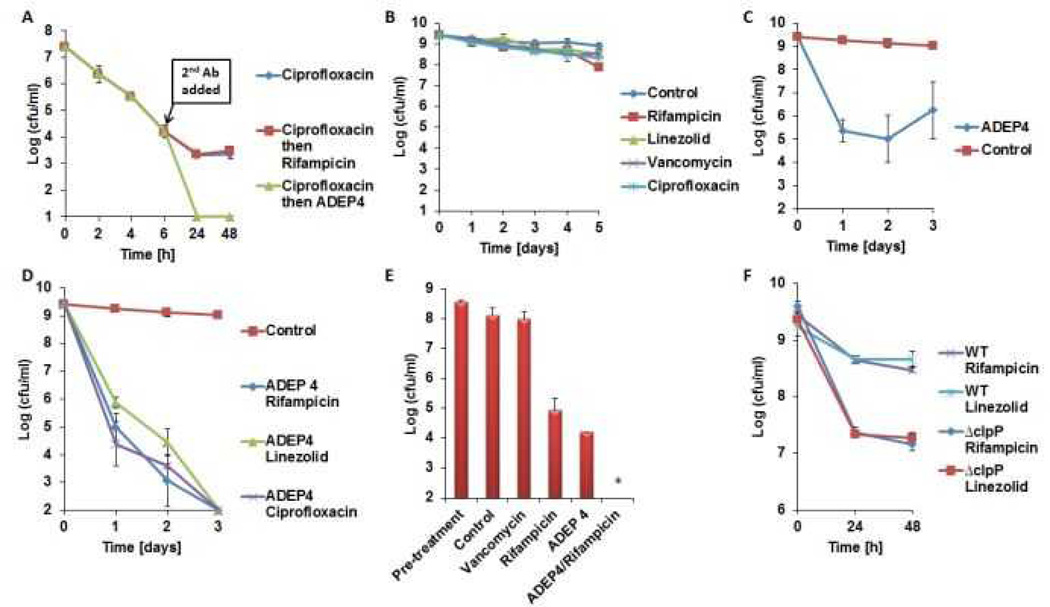
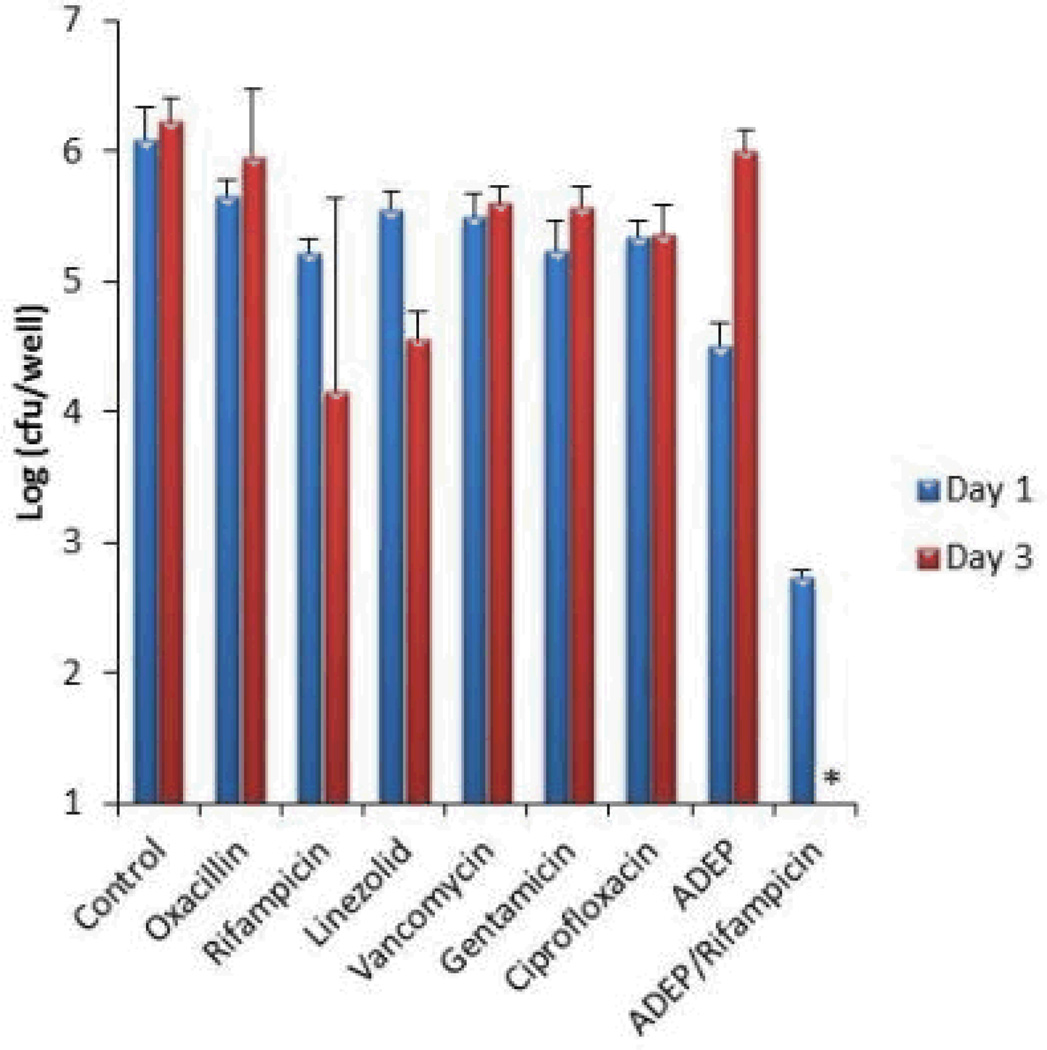
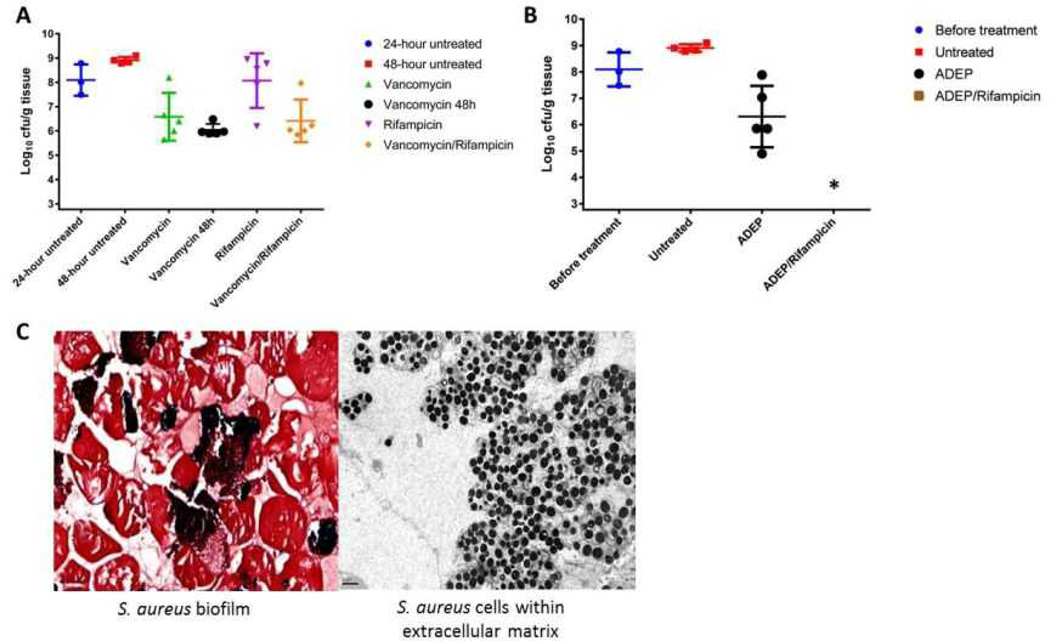
Chronic infections are difficult to treat with antibiotics but are caused primarily by drug-sensitive pathogens. Dormant persister cells that are tolerant to killing by antibiotics are responsible for this apparent paradox. Persisters are phenotypic variants of normal cells and pathways leading to dormancy are redundant, making it challenging to develop anti-persister compounds. Biofilms shield persisters from the immune system, suggesting that an antibiotic for treating a chronic infection should be able to eradicate the infection on its own. We reasoned that a compound capable of corrupting a target in dormant cells will kill persisters. The acyldepsipeptide antibiotic (ADEP4) has been shown to activate the ClpP protease, resulting in death of growing cells. Here we show that ADEP4-activated ClpP becomes a fairly nonspecific protease and kills persisters by degrading over 400 proteins, forcing cells to self-digest. Null mutants of clpP arise with high probability, but combining ADEP4 with rifampicin produced complete eradication of Staphylococcus aureus biofilms in vitro and in a mouse model of a chronic infection. Our findings indicate a general principle for killing dormant cells-activation and corruption of a target, rather than conventional inhibition. Eradication of a biofilm in an animal model by activating a protease suggests a realistic path towards developing therapies to treat chronic infections.
Figures
Comment in
-
Antibiotics: Killing the survivors.Nature. 2013 Nov 21;503(7476):347-9. doi: 10.1038/nature12834. Epub 2013 Nov 13. Nature. 2013. PMID: 24226768 No abstract available.
-
Antimicrobials: persisters come under fire.Nat Rev Microbiol. 2014 Jan;12(1):3. doi: 10.1038/nrmicro3181. Epub 2013 Nov 25. Nat Rev Microbiol. 2014. PMID: 24270842 No abstract available.
-
Antibacterial drugs: Persisters come under fire.Nat Rev Drug Discov. 2014 Jan;13(1):18-9. doi: 10.1038/nrd4215. Nat Rev Drug Discov. 2014. PMID: 24378795 No abstract available.
-
A one-two punch knocks out biofilms.Nat Biotechnol. 2014 Feb;32(2):142. doi: 10.1038/nbt.2813. Nat Biotechnol. 2014. PMID: 24509763 No abstract available.
References
-
- Alekshun MN, Levy SB. Molecular mechanisms of antibacterial multidrug resistance. Cell. 2007;128:1037–1050. - PubMed
-
- Lewis K. Persister cells. Annu Rev Microbiol. 2010;64:357–372. - PubMed
-
- Bigger JW. Treatment of staphylococcal infections with penicillin. Lancet. 1944;ii:497–500.
-
- Costerton JW, Stewart PS, Greenberg EP. Bacterial biofilms: A common cause of persistent infections. Science. 1999;284:1318–1322. - PubMed
Publication types
MeSH terms
Substances
Grants and funding
LinkOut - more resources
Full Text Sources
Other Literature Sources
Medical
Molecular Biology Databases
