


Prevalence of diabetes complications in people with type 2 diabetes mellitus and its association with baseline characteristics in the multinational A1chieve study
- PMID: 24228724
- PMCID: PMC3854020
- DOI: 10.1186/1758-5996-5-57
Prevalence of diabetes complications in people with type 2 diabetes mellitus and its association with baseline characteristics in the multinational A1chieve study
Abstract
Background: Current International Diabetes Federation guidelines recommend a target HbA1c <7.0%, but many people with diabetes worldwide find this difficult to achieve, increasing their risk of developing complications. This publication examines the prevalence of diabetes complications and its association with baseline characteristics in people with type 2 diabetes who participated in the A1chieve study.
Methods: A1chieve was a 24-week, multinational, open-label, observational study of 66,726 people with type 2 diabetes who had begun using biphasic insulin aspart 30, insulin aspart, or insulin detemir in routine clinical care. Participants were enrolled from 28 countries across four continents (Asia, Africa, Europe and South America). Baseline measurements of disease characteristics included: glycated haemoglobin (HbA1c), fasting (FPG) and post-prandial plasma glucose (PPG), high- and low-density lipoprotein cholesterol (H- or LDL-C), systolic blood pressure (SBP), and body mass index (BMI). Data on complications and use of vascular disease preventative drugs were collected.
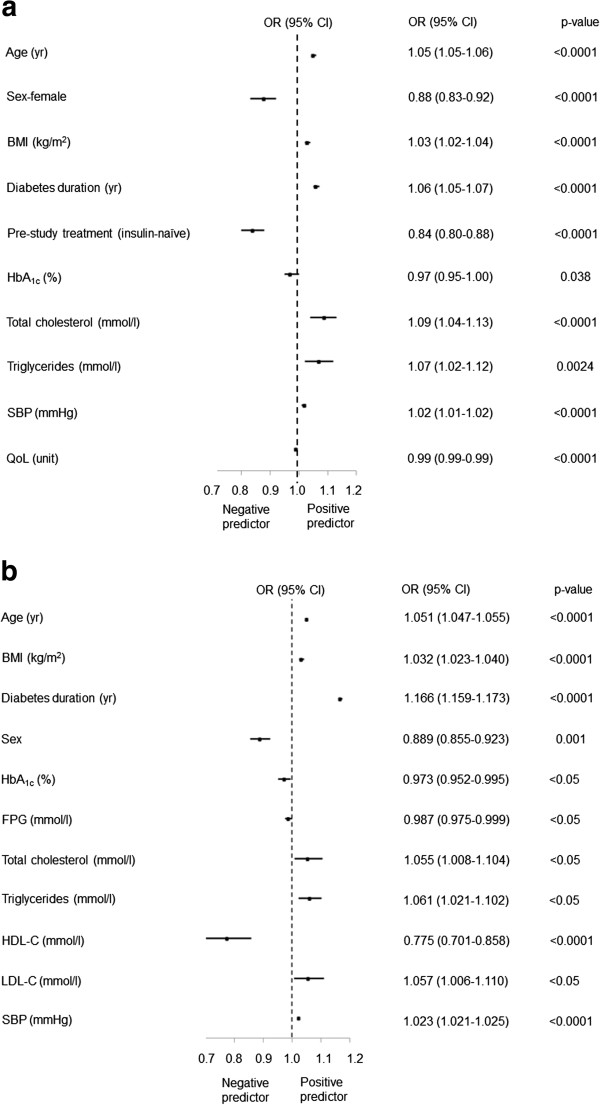
Results: Complication rates were high (27.2% had macrovascular complications and 53.5% had microvascular complications), particularly in Russia, and use of vascular disease preventative drugs was lower than expected. Age, BMI, diabetes duration, LDL-C, and SBP were positively associated, and HDL-C negatively associated, with macro- and microvascular complications (all p < 0.05). HbA1c and FPG were negatively associated with macrovascular complications (both p < 0.05), which may be linked to the cross-sectional study design.
Conclusions: These results suggest a worldwide failure to achieve glycaemic targets. Better diabetes management with earlier initiation and optimisation of insulin regimens (e.g., with insulin analogues in the A1chieve population) may reduce the prevalence of vascular complications, improve the lives of people with diabetes and reduce the burden on healthcare systems.
Figures
References
-
- Stratton IM, Adler AI, Neil HA, Matthews DR, Manley SE, Cull CA, Hadden D, Turner RC, Holman RR. Association of glycaemia with macrovascular and microvascular complications of type 2 diabetes (UKPDS 35): prospective observational study. BMJ. 2000;321:405–412. doi: 10.1136/bmj.321.7258.405. - DOI - PMC - PubMed
-
- International Diabetes Federation Clinical Guidelines Task Force. Global Guidelines for Type 2 Diabetes. 2012. http://www.idf.org/sites/default/files/IDF-Guideline-for-Type-2-Diabetes....
-
- Inzucchi SE, Bergenstal RM, Buse JB, Diamant M, Ferrannini E, Nauck M, Peters AL, Tsapas A, Wender R, Matthews DR. Management of hyperglycemia in type 2 diabetes: a patient-centered approach: position statement of the American Diabetes Association (ADA) and the European Association for the Study of Diabetes (EASD) Diabetes Care. 2012;35:1364–1379. doi: 10.2337/dc12-0413. - DOI - PMC - PubMed
-
- International Diabetes Federation. Guideline for Management of PostMeal Glucose in Diabetes. 2011. http://www.idf.org/sites/default/files/postmeal%20glucose%20guidelines.pdf. - PMC - PubMed
LinkOut - more resources
Full Text Sources
Other Literature Sources
Medical
