


Effects of supplementary butyrate on butanol production and the metabolic switch in Clostridium beijerinckii NCIMB 8052: genome-wide transcriptional analysis with RNA-Seq
- PMID: 24229082
- PMCID: PMC3849199
- DOI: 10.1186/1754-6834-6-138
Effects of supplementary butyrate on butanol production and the metabolic switch in Clostridium beijerinckii NCIMB 8052: genome-wide transcriptional analysis with RNA-Seq
Abstract
Background: Butanol (n-butanol) has high values as a promising fuel source and chemical feedstock. Biobutanol is usually produced by the solventogenic clostridia through a typical biphasic (acidogenesis and solventogenesis phases) acetone-butanol-ethanol (ABE) fermentation process. It is well known that the acids produced in the acidogenic phase are significant and play important roles in the switch to solventogenesis. However, the mechanism that triggers the metabolic switch is still not clear.
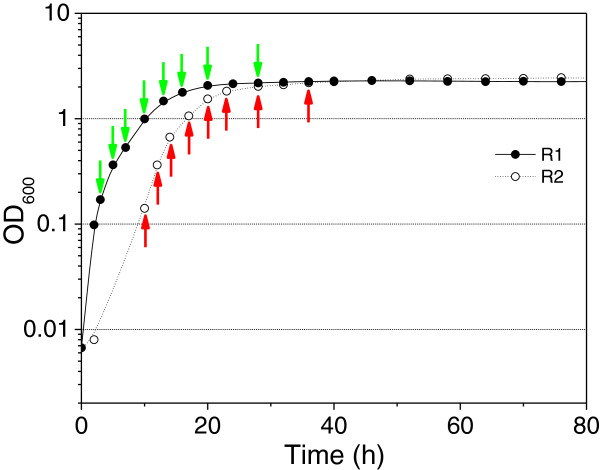
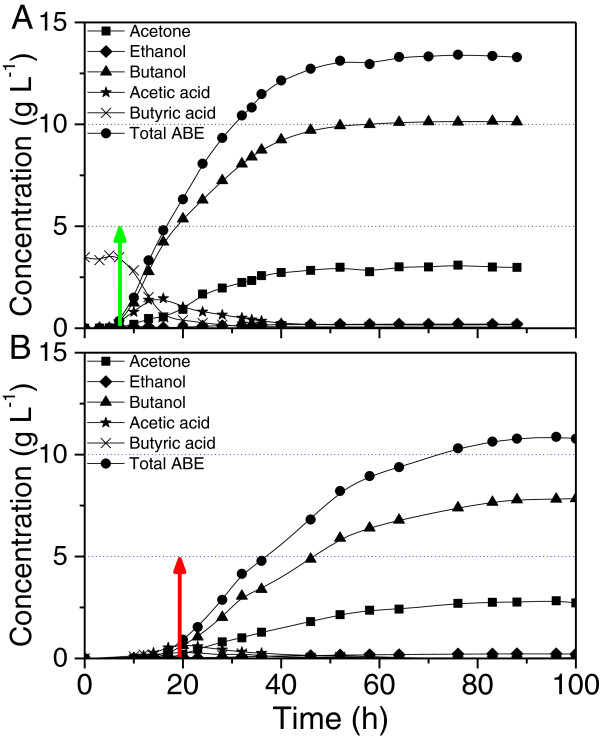
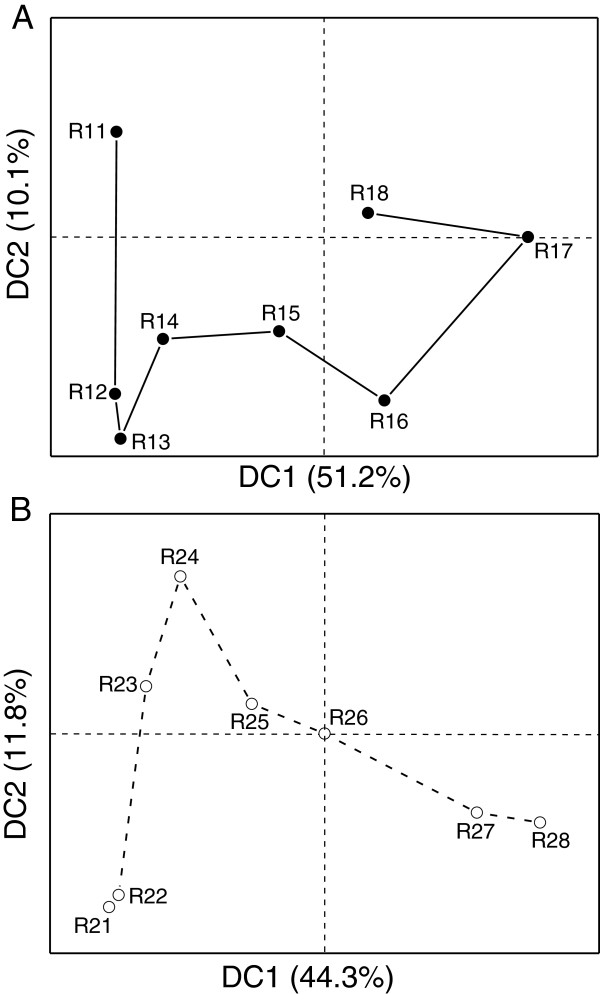
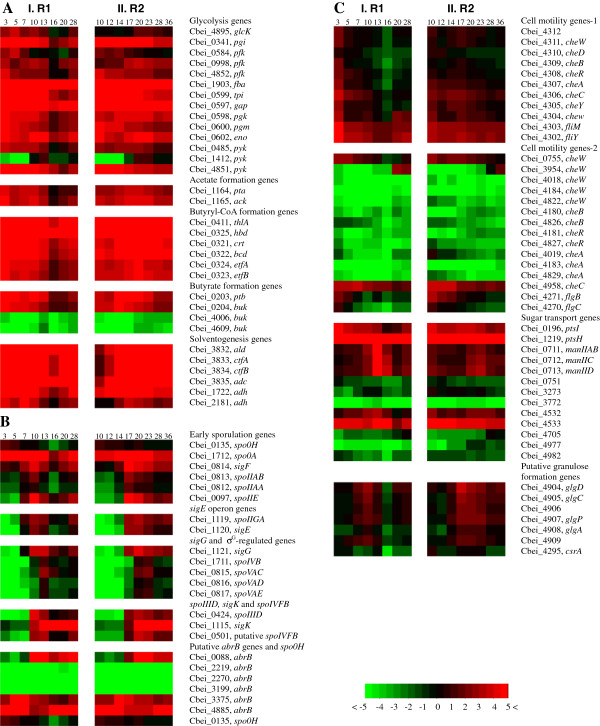
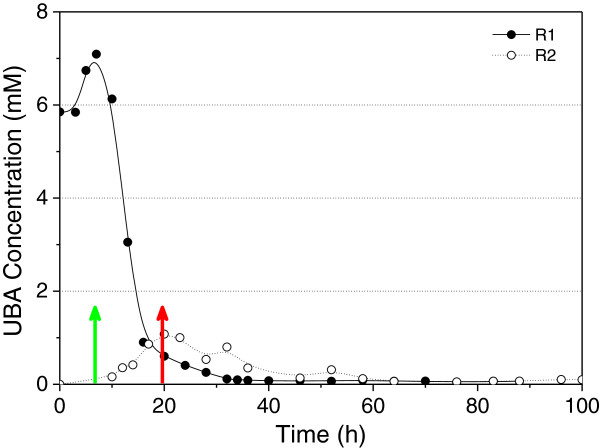
Results: Sodium butyrate (40 mM) was supplemented into the medium for the ABE fermentation with Clostridium beijerinckii NCIMB 8052. With butyrate addition (reactor R1), solvent production was triggered early in the mid-exponential phase and completed quickly in < 50 h, while in the control (reactor R2), solventogenesis was initiated during the late exponential phase and took > 90 h to complete. Butyrate supplementation led to 31% improvement in final butanol titer, 58% improvement in sugar-based yield, and 133% improvement in butanol productivity, respectively. The butanol/acetone ratio was 2.4 versus 1.8 in the control, indicating a metabolic shift towards butanol production due to butyrate addition. Genome-wide transcriptional dynamics was investigated with RNA-Seq analysis. In reactor R1, gene expression related to solventogenesis was induced about 10 hours earlier when compared to that in reactor R2. Although the early sporulation genes were induced after the onset of solventogenesis in reactor R1 (mid-exponential phase), the sporulation events were delayed and uncoupled from the solventogenesis. In contrast, in reactor R2, sporulation genes were induced at the onset of solventogenesis, and highly expressed through the solventogenesis phase. The motility genes were generally down-regulated to lower levels prior to stationary phase in both reactors. However, in reactor R2 this took much longer and gene expression was maintained at comparatively higher levels after entering stationary phase.
Conclusions: Supplemented butyrate provided feedback inhibition to butyrate formation and may be re-assimilated through the reversed butyrate formation pathway, thus resulting in an elevated level of intracellular butyryl phosphate, which may act as a phosphate donor to Spo0A and then trigger solventogenesis and sporulation events. High-resolution genome-wide transcriptional analysis with RNA-Seq revealed detailed insights into the biochemical effects of butyrate on solventogenesis related-events at the gene regulation level.
Figures
References
-
- Lee SM, Cho MO, Park CH, Chung YC, Kim JH, Sang BI, Um Y. Continuous butanol production using suspended and immobilized Clostridium beijerinckii NCIMB 8052 with supplementary butyrate. Energ Fuel. 2008;22:3459–3464. doi: 10.1021/ef800076j. - DOI
LinkOut - more resources
Full Text Sources
Other Literature Sources
Molecular Biology Databases
