Reciprocal behavioral plasticity and behavioral types during predator-prey interactions
- PMID: 24231533
- PMCID: PMC3965372
- DOI: 10.1086/673526
Reciprocal behavioral plasticity and behavioral types during predator-prey interactions
Abstract
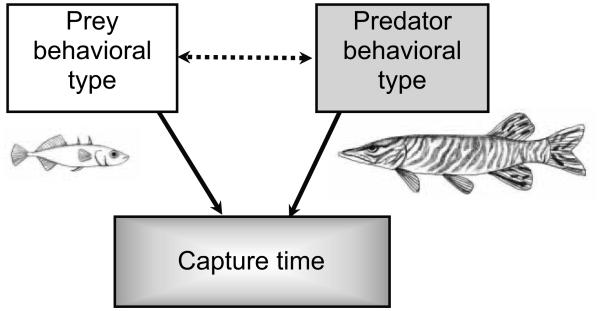
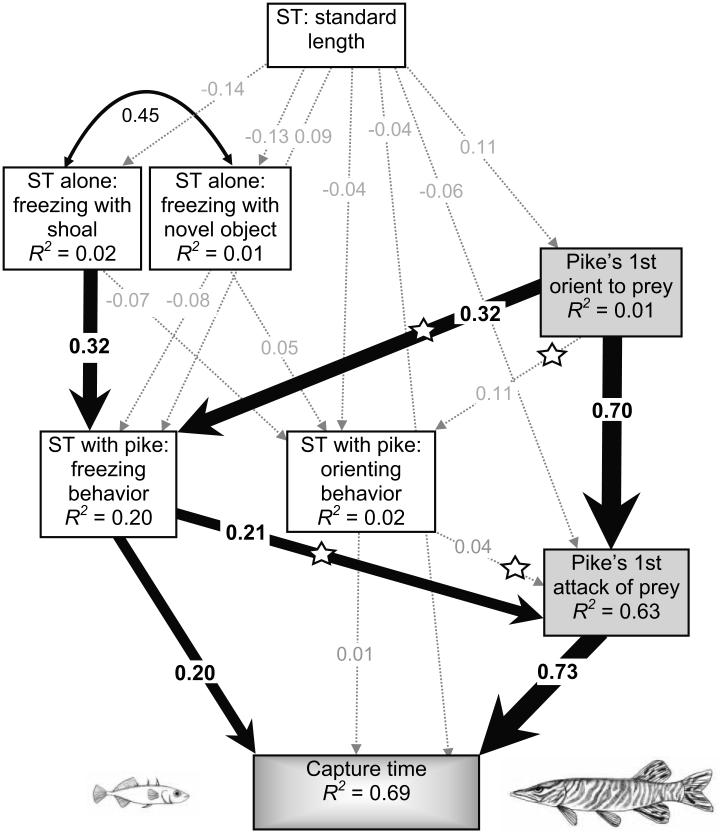
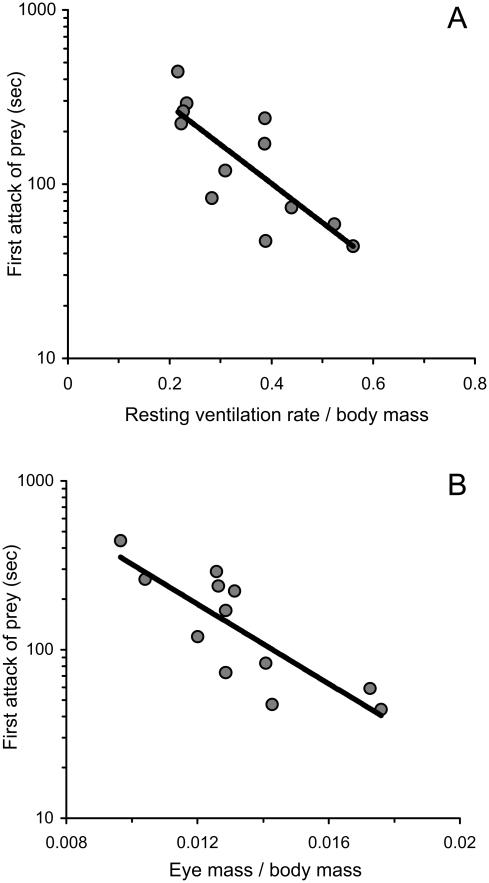
How predators and prey interact has important consequences for population dynamics and community stability. Here we explored how predator-prey interactions are simultaneously affected by reciprocal behavioral plasticity (i.e., plasticity in prey defenses countered by plasticity in predator offenses and vice versa) and consistent individual behavioral variation (i.e., behavioral types) within both predator and prey populations. We assessed the behavior of a predator species (northern pike) and a prey species (three-spined stickleback) during one-on-one encounters. We also measured additional behavioral and morphological traits in each species. Using structural equation modeling, we found that reciprocal behavioral plasticity as well as predator and prey behavioral types influenced how individuals behaved during an interaction. Thus, the progression and ultimate outcome of predator-prey interactions depend on both the dynamic behavioral feedback occurring during the encounter and the underlying behavioral type of each participant. We also examined whether predator behavioral type is underlain by differences in metabolism and organ size. We provide some of the first evidence that behavioral type is related to resting metabolic rate and size of a sensory organ (the eyes). Understanding the extent to which reciprocal behavioral plasticity and intraspecific behavioral variation influence the outcome of species interactions could provide insight into the maintenance of behavioral variation as well as community dynamics.
Figures
References
-
- Agrawal AA. Ecology: phenotypic plasticity in the interactions and evolution of species. Science. 2001;294:321–326. - PubMed
-
- Alonzo SH. State-dependent habitat selection games between predators and prey: the importance of behavioural interactions and expected lifetime reproductive success. Evolutionary Ecology Research. 2002;4:759–778.
-
- Arbuckle JL. Amos. Version 7.0. SPSS; Chicago: 2006.
-
- Barreto RE, Volpato GL. Ventilation rates indicate stress-coping styles in Nile tilapia. Journal of Biosciences. 2011;36:851–855. - PubMed
-
- Beaudoin CP, Tonn WM, Prepas EE, Wassenaar LI. Individual specialization and trophic adaptability of northern pike (Esox lucius): an isotope and dietary analysis. Oecologia (Berlin) 1999;120:386–396. - PubMed
Publication types
MeSH terms
Grants and funding
LinkOut - more resources
Full Text Sources
Other Literature Sources