


Primary venous thromboembolism prophylaxis in patients with solid tumors: a meta-analysis
- PMID: 24233387
- PMCID: PMC4427894
- DOI: 10.1007/s11239-013-1014-9
Primary venous thromboembolism prophylaxis in patients with solid tumors: a meta-analysis
Abstract
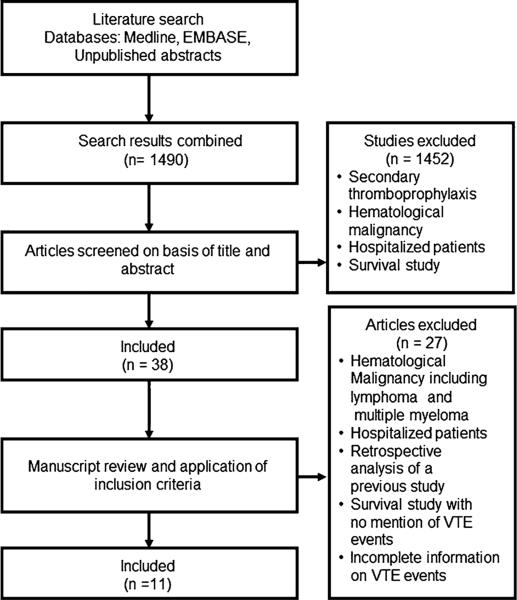
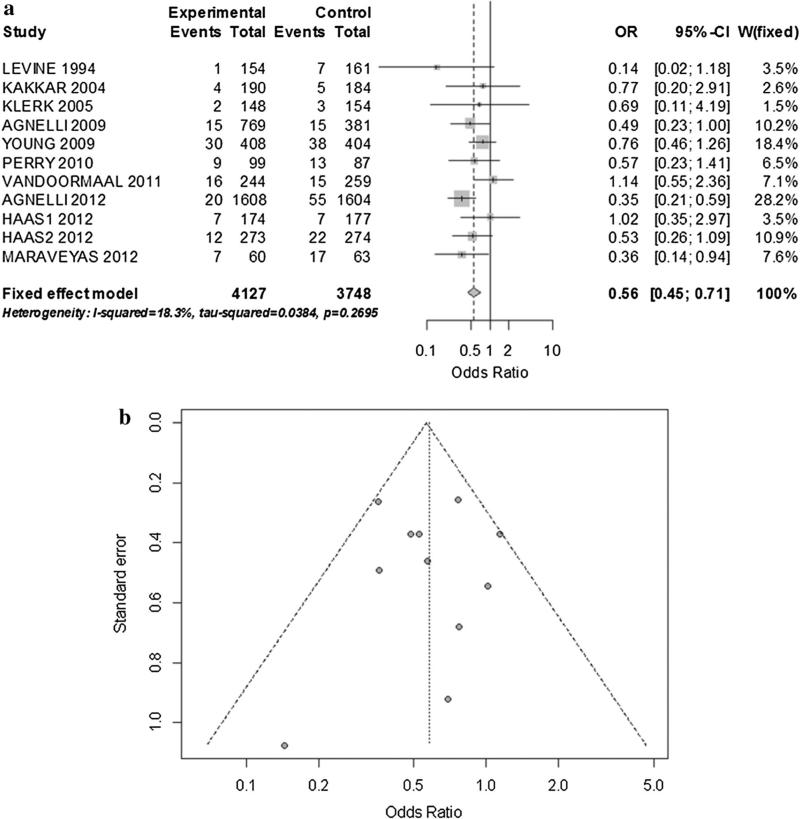
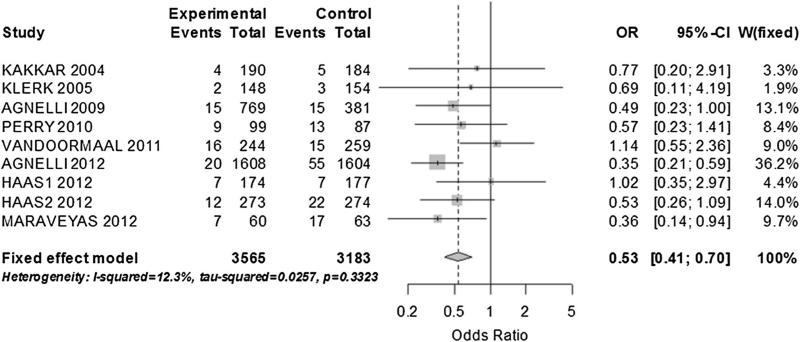
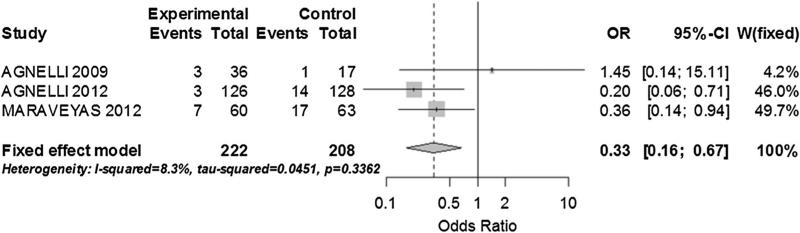
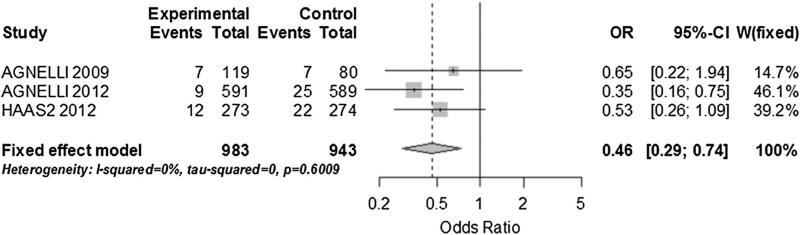
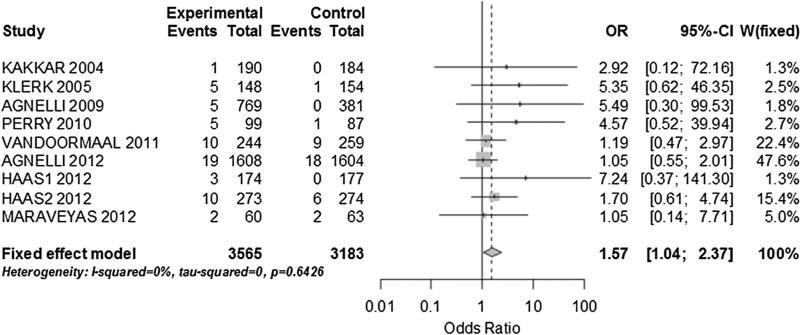
Venous thromboembolism (VTE) is a leading cause of death among outpatient chemotherapy patients. However the VTE preventive measures for outpatients are not widely advocated. We did a meta-analysis to evaluate the outpatient VTE prevention's effectiveness and safety. We searched electronic databases until the end of December 2012 and reviewed the abstracts and manuscripts following the PRISMA guidelines. Occurrence of first VTE event was the efficacy outcome. The safety end point was major bleeding. We calculated Q statistic and a homogeneity formal test. The odds ratio (OR) estimates were pooled by using the Mantel-Haenszel fixed-effects method in the absence of heterogeneity. Data were analyzed using the R META package). We identified 1,485 articles and reviewed 37 articles based on initial screening. The number of patients included in 11 selected trials was 7,805. The odds of VTE was lower in the prophylaxis group (OR 0.56; 95% CI 0.45-0.71) and improved when heparin-based prevention was analyzed (OR 0.53; 95% CI 0.41-0.70). We found strong prevention among patients with lung cancer (OR 0.46; 95% CI 0.29-0.74) and pancreatic cancer (OR 0.33; 95% CI 0.16-0.67). Major bleeding events were frequent in the intervention group (OR 1.65; 95% CI 1.12-2.44). Thromboprophylaxis reduced VTE episodes. The VTE events were reduced by 47% in heparin-based prophylaxis trials compared to placebo. The patients receiving heparin-based prophylaxis had a 60% increase in bleeding events. Improving risk stratification tools to personalize prevention strategies may enhance the VTE prevention applicability in cancer patients.
Figures
Comment in
-
Primary thromboprophylaxis in patients with solid cancers.J Thromb Thrombolysis. 2015 Feb;39(2):260-1. doi: 10.1007/s11239-014-1138-6. J Thromb Thrombolysis. 2015. PMID: 25231275 No abstract available.
-
Primary venous thromboembolism prophylaxis in patients with solid tumors.J Thromb Thrombolysis. 2015 Feb;39(2):258-9. doi: 10.1007/s11239-014-1152-8. J Thromb Thrombolysis. 2015. PMID: 25486907 No abstract available.
References
-
- Heit JA, Silverstein MD, Mohr DN, Petterson TM, O'Fallon WM, Melton LJ., 3rd Risk factors for deep vein thrombosis and pulmonary embolism: a population-based case-control study. Arch Int Med. 2000;160(6):809–815. - PubMed
-
- Khorana AA, Francis CW, Culakova E, Kudere NM, Lyman GH. Thromboembolism is a leading cause of death in cancer patients receiving outpatient chemotherapy. J Thromb Haemost. 2007;5:632–634. - PubMed
-
- Sorensen HT, Mellemkjaer L, Olsen JH, Baron JA. Prognosis of cancers associated with venous thromboembolism. N Engl J Med. 2000;343(25):1846–1850. - PubMed
-
- Dobesh PP. Economic Burden of Venous Thromboembolism in Hospitalized Patients. Pharmacotherapy. 2009;29(8):943–953. - PubMed
Publication types
MeSH terms
Grants and funding
LinkOut - more resources
Full Text Sources
Other Literature Sources
