


High-fat diet reduces the formation of butyrate, but increases succinate, inflammation, liver fat and cholesterol in rats, while dietary fibre counteracts these effects
- PMID: 24236183
- PMCID: PMC3827442
- DOI: 10.1371/journal.pone.0080476
High-fat diet reduces the formation of butyrate, but increases succinate, inflammation, liver fat and cholesterol in rats, while dietary fibre counteracts these effects
Abstract
Introduction: Obesity is linked to type 2 diabetes and risk factors associated to the metabolic syndrome. Consumption of dietary fibres has been shown to have positive metabolic health effects, such as by increasing satiety, lowering blood glucose and cholesterol levels. These effects may be associated with short-chain fatty acids (SCFAs), particularly propionic and butyric acids, formed by microbial degradation of dietary fibres in colon, and by their capacity to reduce low-grade inflammation.
Objective: To investigate whether dietary fibres, giving rise to different SCFAs, would affect metabolic risk markers in low-fat and high-fat diets using a model with conventional rats for 2, 4 and 6 weeks.
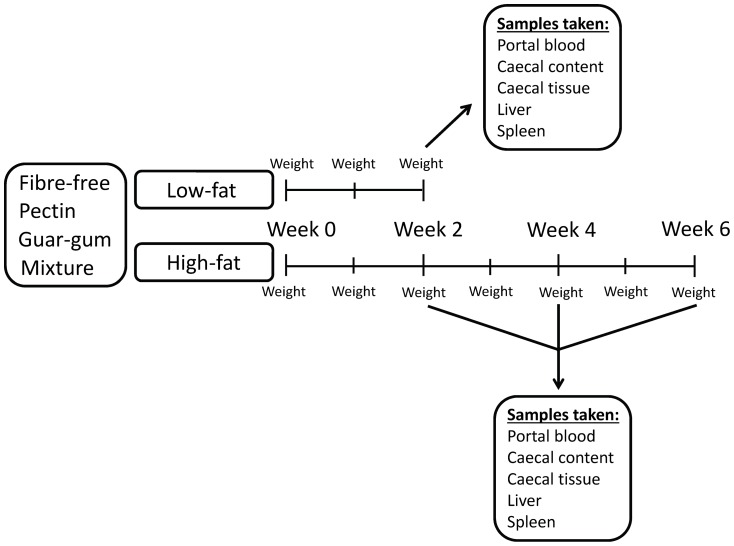
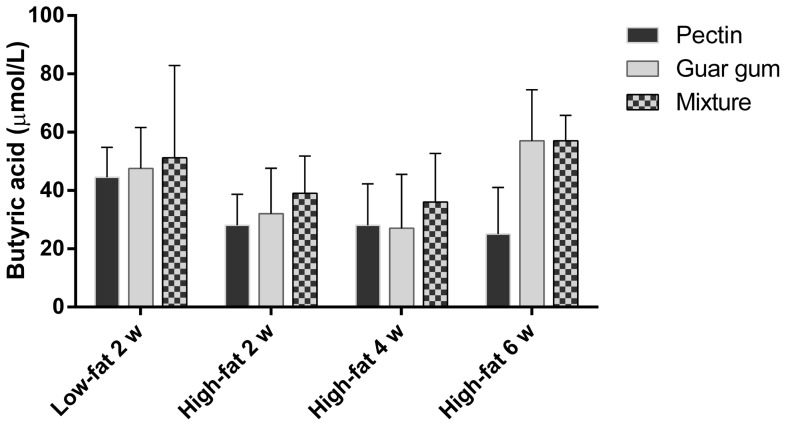
Material and methods: Conventional rats were administered low-fat or high-fat diets, for 2, 4 or 6 weeks, supplemented with fermentable dietary fibres, giving rise to different SCFA patterns (pectin - acetic acid; guar gum - propionic acid; or a mixture - butyric acid). At the end of each experimental period, liver fat, cholesterol and triglycerides, serum and caecal SCFAs, plasma cholesterol, and inflammatory cytokines were analysed. The caecal microbiota was analysed after 6 weeks.
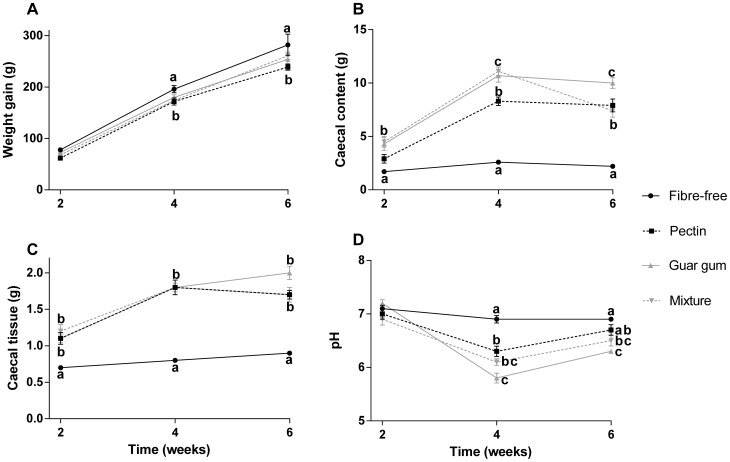
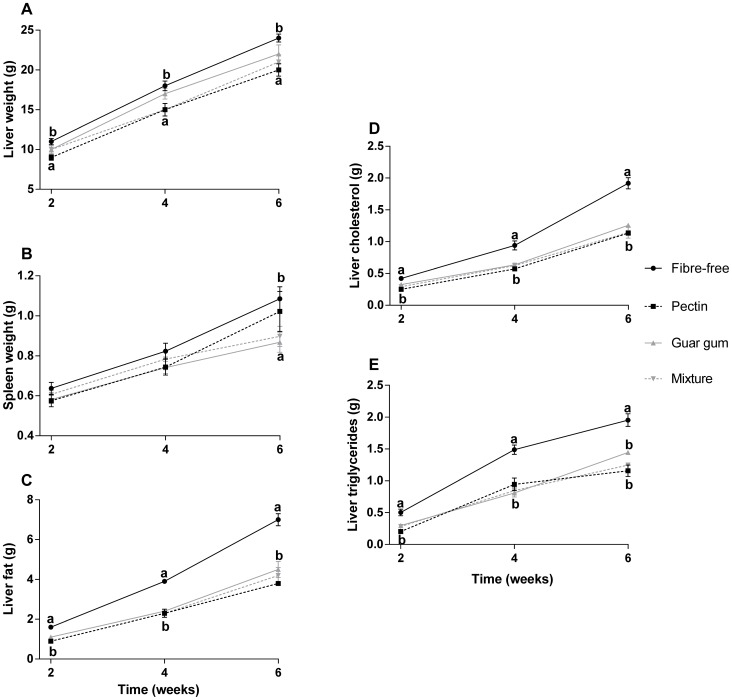
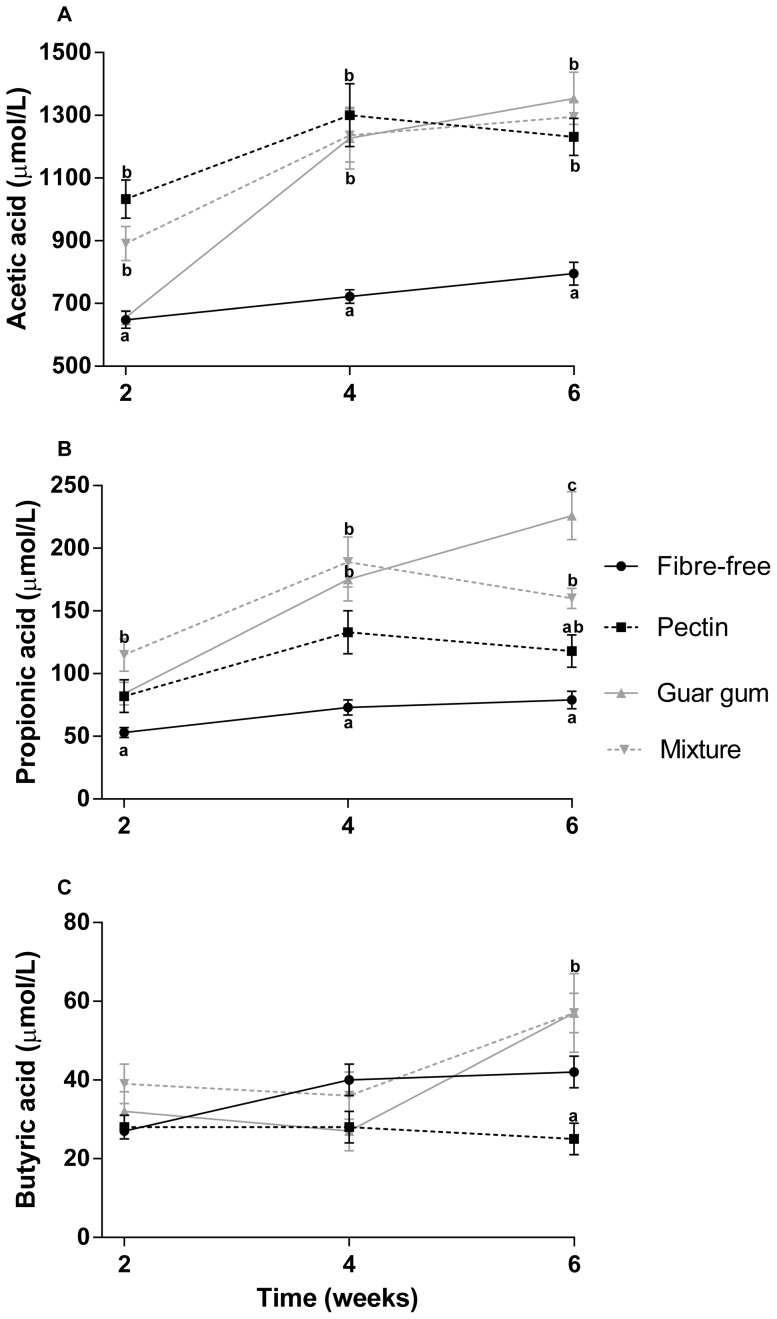
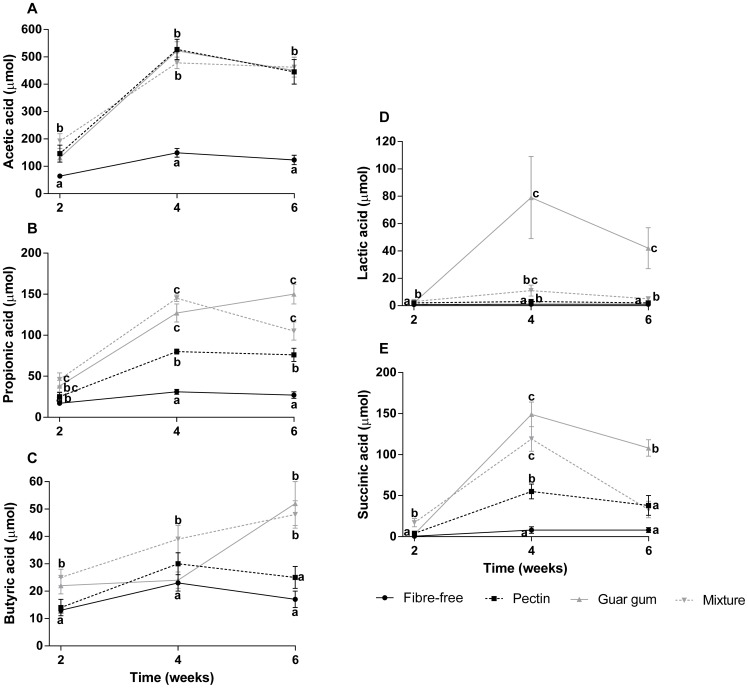
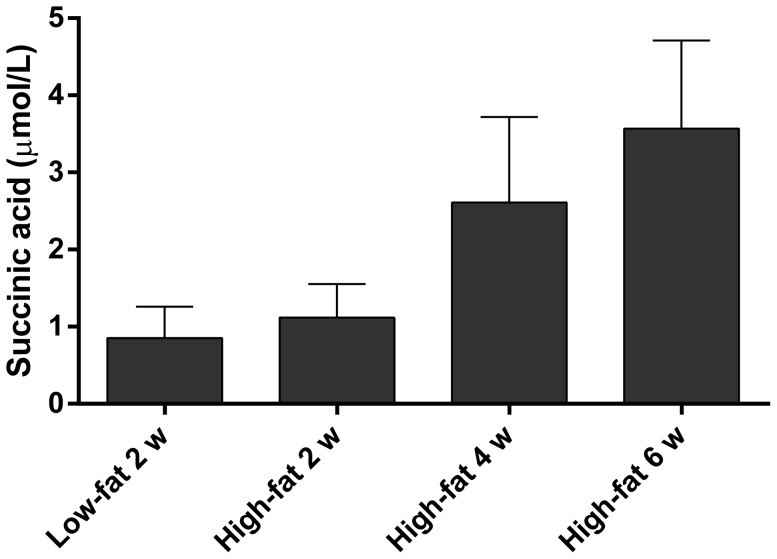
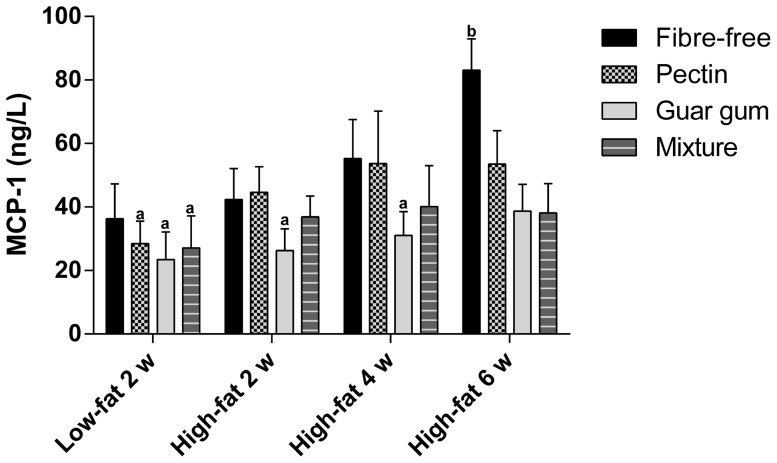
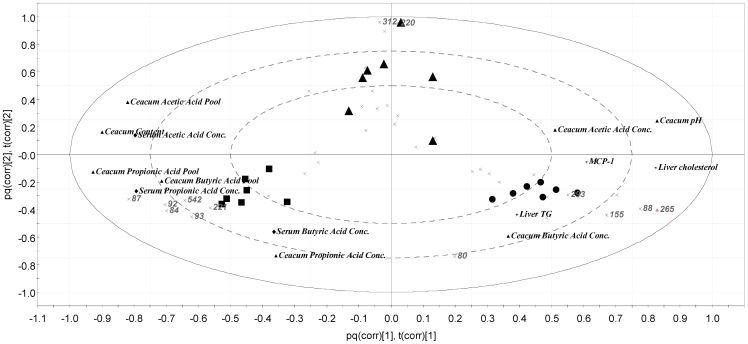
Results and discussion: Fermentable dietary fibre decreased weight gain, liver fat, cholesterol and triglyceride content, and changed the formation of SCFAs. The high-fat diet primarily reduced formation of SCFAs but, after a longer experimental period, the formation of propionic and acetic acids recovered. The concentration of succinic acid in the rats increased in high-fat diets with time, indicating harmful effect of high-fat consumption. The dietary fibre partly counteracted these harmful effects and reduced inflammation. Furthermore, the number of Bacteroides was higher with guar gum, while noticeably that of Akkermansia was highest with the fibre-free diet.
Conflict of interest statement
Figures

References
-
- Wang YC, McPherson K, Marsh T, Gortmaker SL, Brown M (2011) Health and economic burden of the projected obesity trends in the USA and the UK. Lancet 378: 815–825. - PubMed
-
- World Health Organization website. Obesity and overweight. http://www.who.int/mediacentre/factsheets/fs311/en/. Accessed 2013 May 16.
-
- Mahady SE, George J (2012) Management of nonalcoholic steatohepatitis: an evidence-based approach. Clinics in Liver Disease 16: 631–645. - PubMed
-
- Anderson JW, Baird P, Davis RH Jr, Ferreri S, Knudtson M, et al. (2009) Health benefits of dietary fiber. Nutr Rev 67: 188–205. - PubMed
-
- Schulze MB, Schulz M, Heidemann C, Schienkiewitz A, Hoffmann K, et al. (2007) Fiber and magnesium intake and incidence of type 2 diabetes: a prospective study and meta-analysis. Arch Intern Med 167: 956–965. - PubMed
Publication types
MeSH terms
Substances
LinkOut - more resources
Full Text Sources
Other Literature Sources
Medical
