


Probiotics for infantile colic: a systematic review
- PMID: 24238101
- PMCID: PMC4225660
- DOI: 10.1186/1471-2431-13-186
Probiotics for infantile colic: a systematic review
Abstract
Background: Infantile colic is a common paediatric condition which causes significant parental distress. Increased intestinal coliform colonization in addition to alteration in Lactobacillus abundance and distribution may play an important role in its pathogenesis. The objectives of this systematic review are to evaluate the efficacy of probiotic supplementation in the reduction of crying time and successful treatment of infantile colic.
Methods: Literature searches were conducted of MEDLINE, EMBASE and the Cochrane Central Register of Controlled Trials. Only randomized controlled trials enrolling term, healthy infants with colic were included. A meta-analysis of included trials was performed utilizing the Cochrane Collaboration methodology.
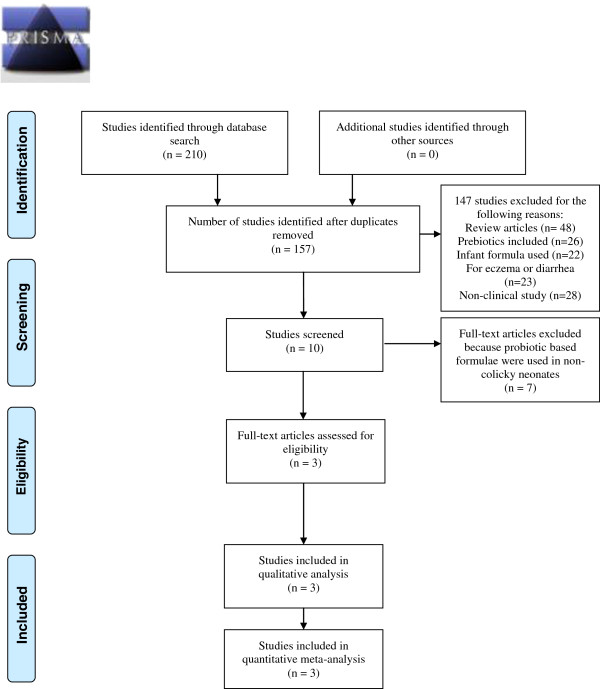
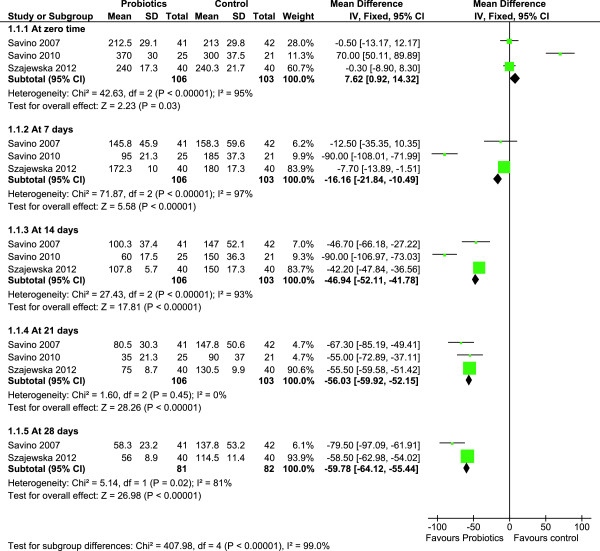
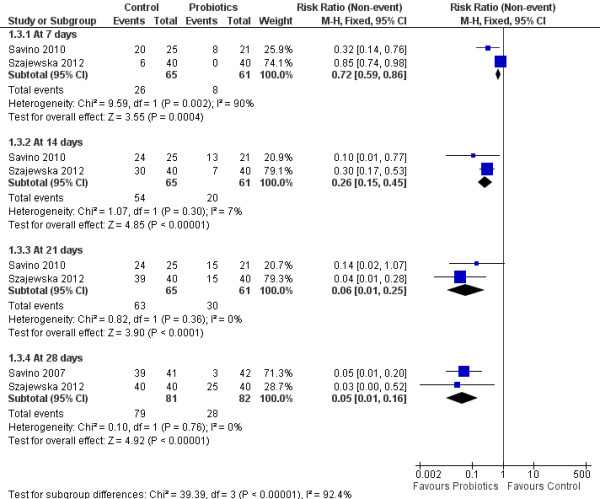
Results: Three trials that enrolled 220 breastfed infants met inclusion criteria, of which 209 infants were available for analysis. Two of the studies were assessed as good quality. Lactobacillus reuteri (strains-American Type Culture Collection Strain 55730 and DSM 17 938) was the only species utilized in the therapeutic intervention. Two of the trials were industry funded. Probiotic supplementation compared to simethicone or placebo significantly and progressively shortened crying times to 7 days reaching a plateau at three weeks post initiation of therapy [mean difference -56.03 minutes; 95% CI (-59.92, -52.15)]. Similarly, probiotics compared to placebo significantly increased the treatment success of infantile colic with a relative risk (RR) of 0.06; 95% CI (0.01, 0.25) and a number needed to treat of 2.
Conclusions: Although L. reuteri may be effective as a treatment strategy for crying in exclusively breastfed infants with colic, the evidence supporting probiotic use for the treatment of infant colic or crying in formula-fed infants remains unresolved. Results from larger rigorously designed studies will help draw more definitive conclusions.
Figures
References
-
- Wessel MA, Cobb JC, Jackson EB, Harris GS Jr, Detwiler AC. Paroxysmal fussing in infancy, sometimes called colic. Pediatrics. 1954;14:421–435. - PubMed
-
- Castro-Rodríguez JA, Stern DA, Halonen M. et al.Relation between infantile colic and asthma/atopy: a prospective study in an unselected population. Pediatrics. 2001;108:878–882. - PubMed
Publication types
MeSH terms
LinkOut - more resources
Full Text Sources
Other Literature Sources
Medical
Miscellaneous
