


Calcium imaging using fluorescence lifetimes and long-wavelength probes
- PMID: 24243158
- PMCID: PMC6885754
- DOI: 10.1007/BF00866388
Calcium imaging using fluorescence lifetimes and long-wavelength probes
Abstract
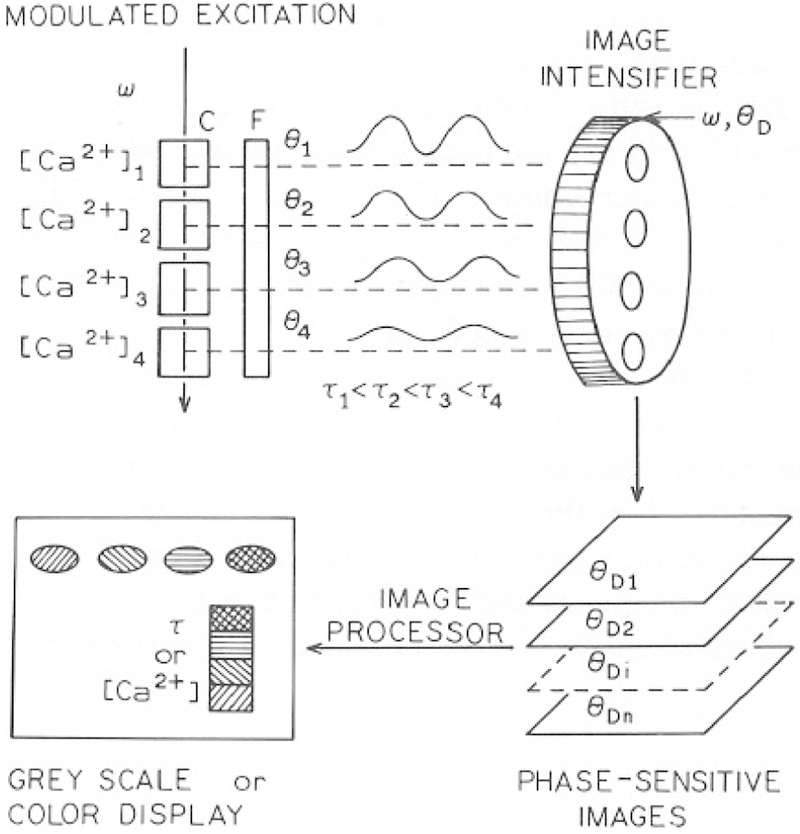
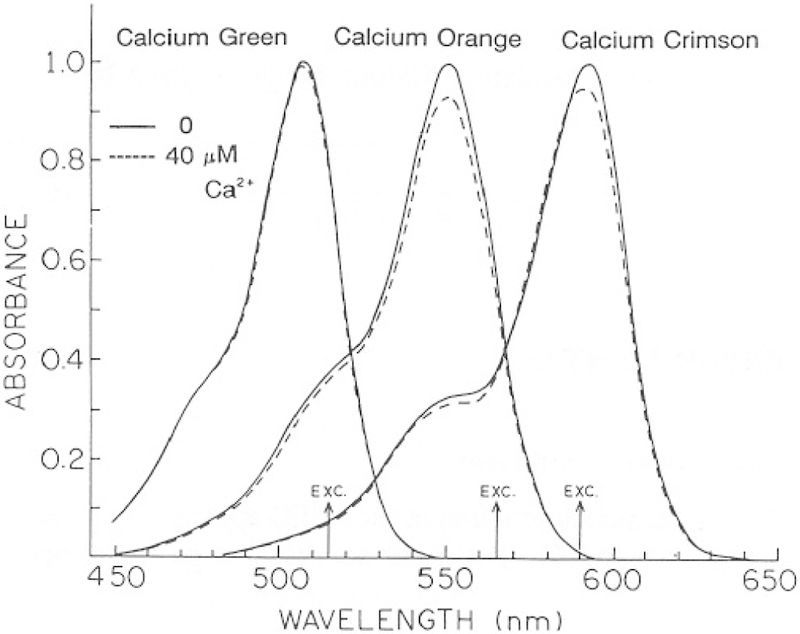
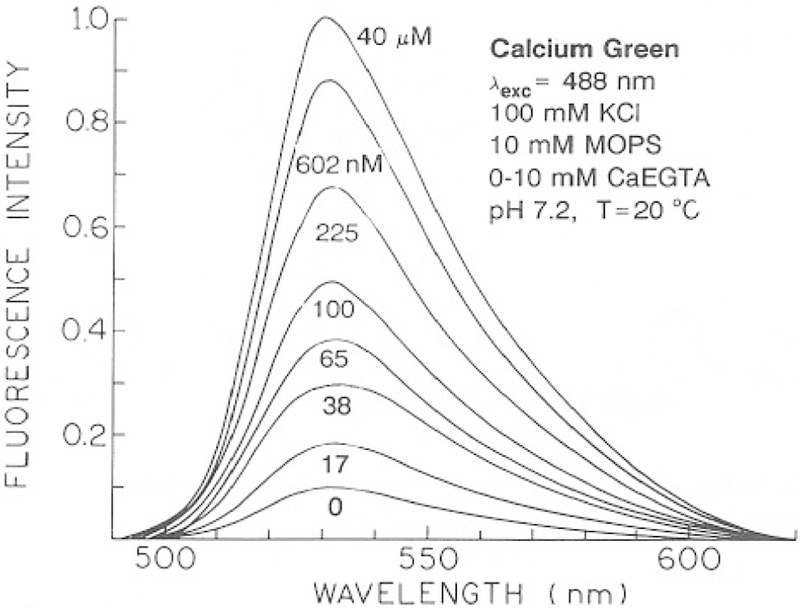
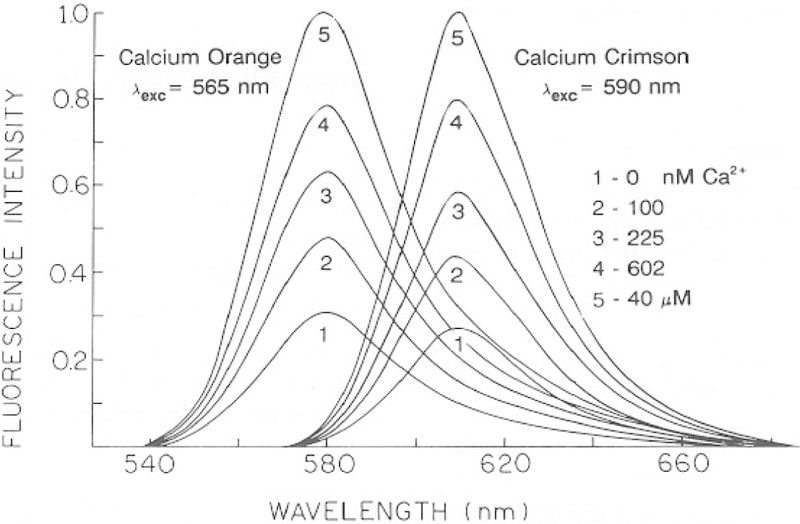
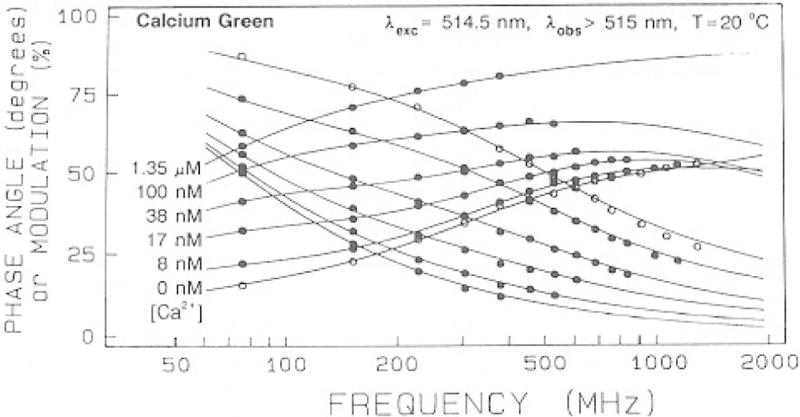
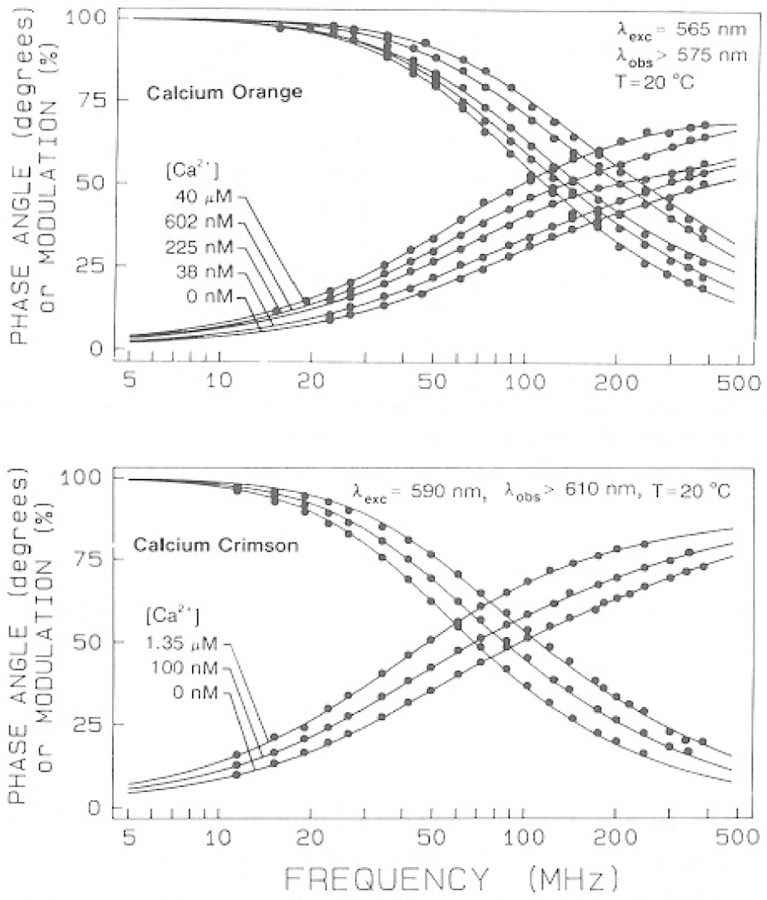
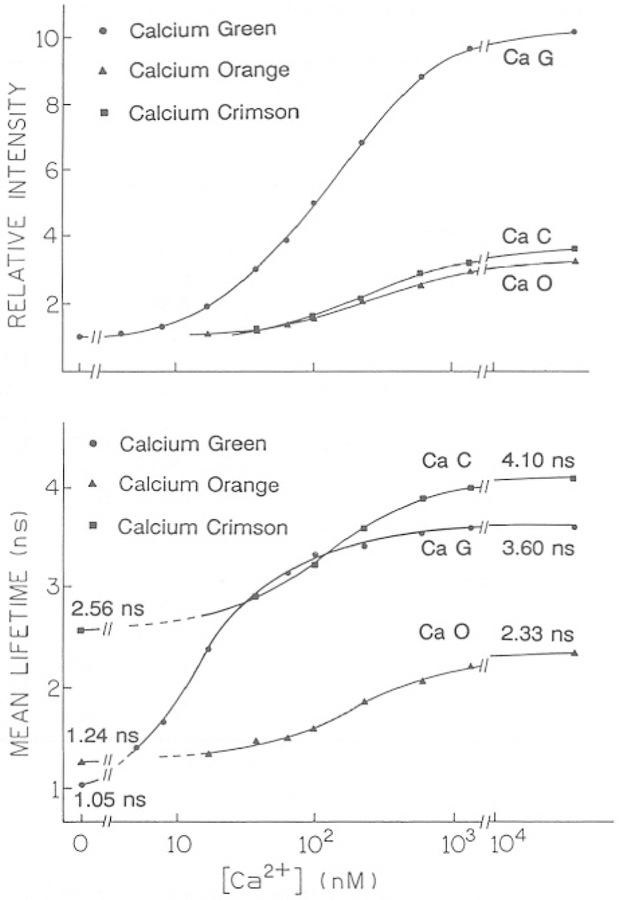
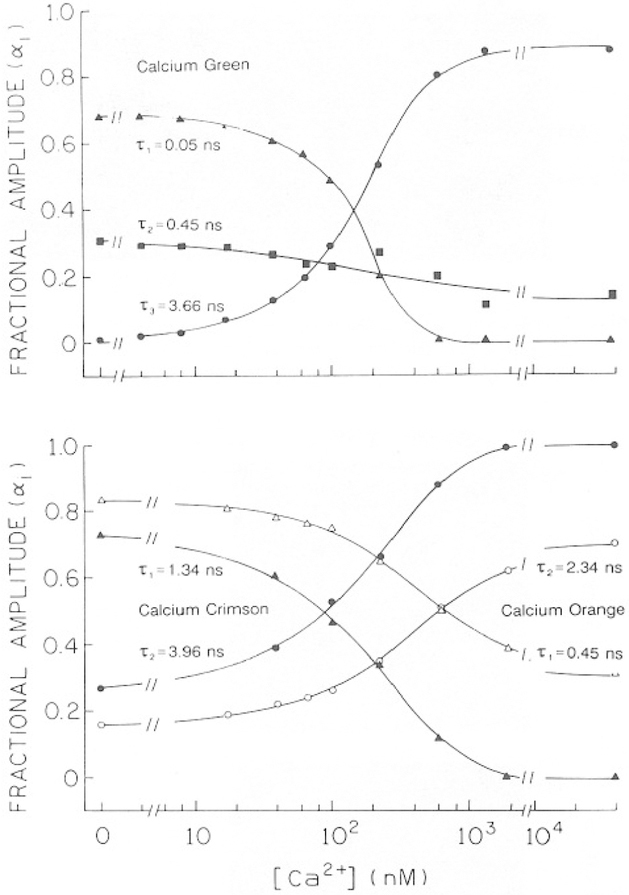
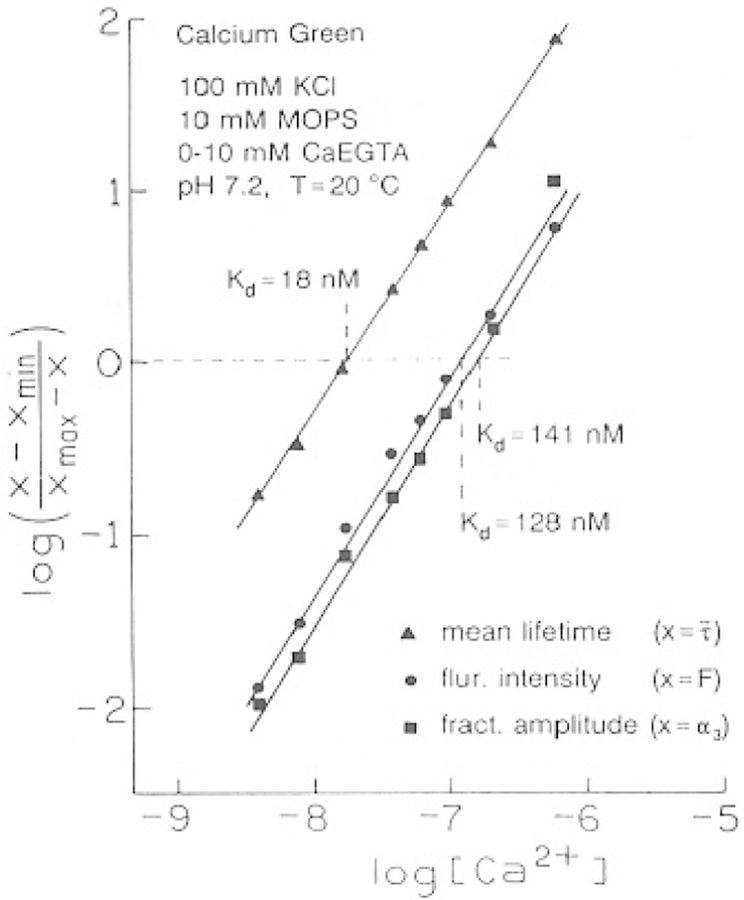
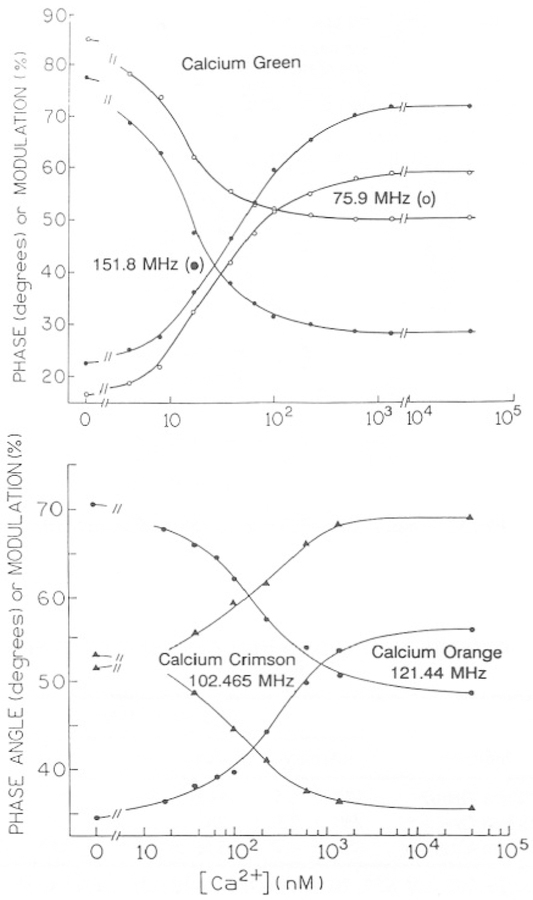
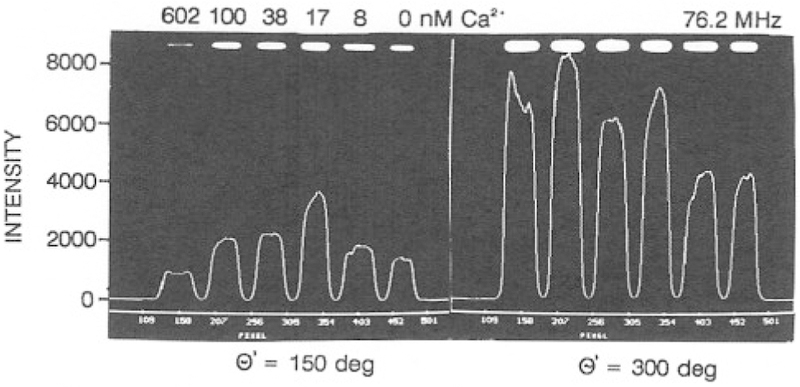
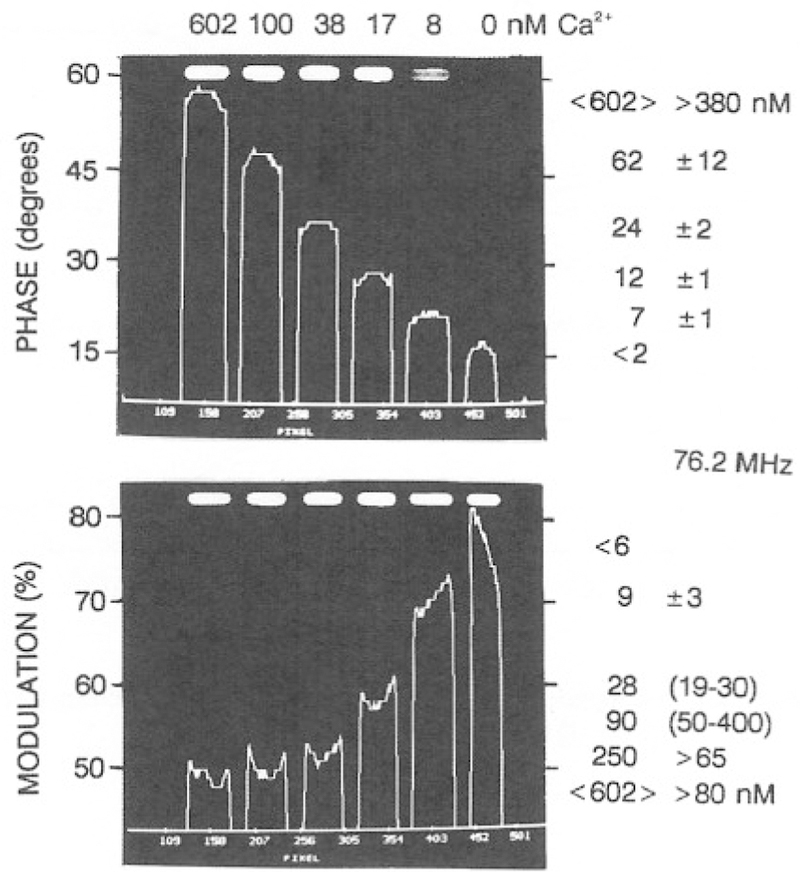
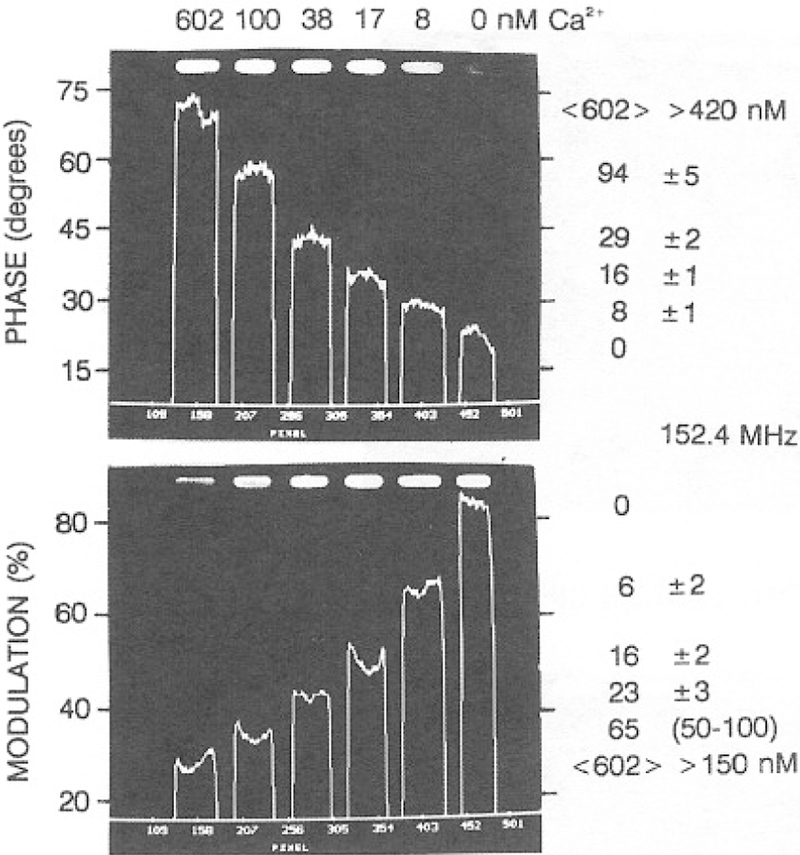
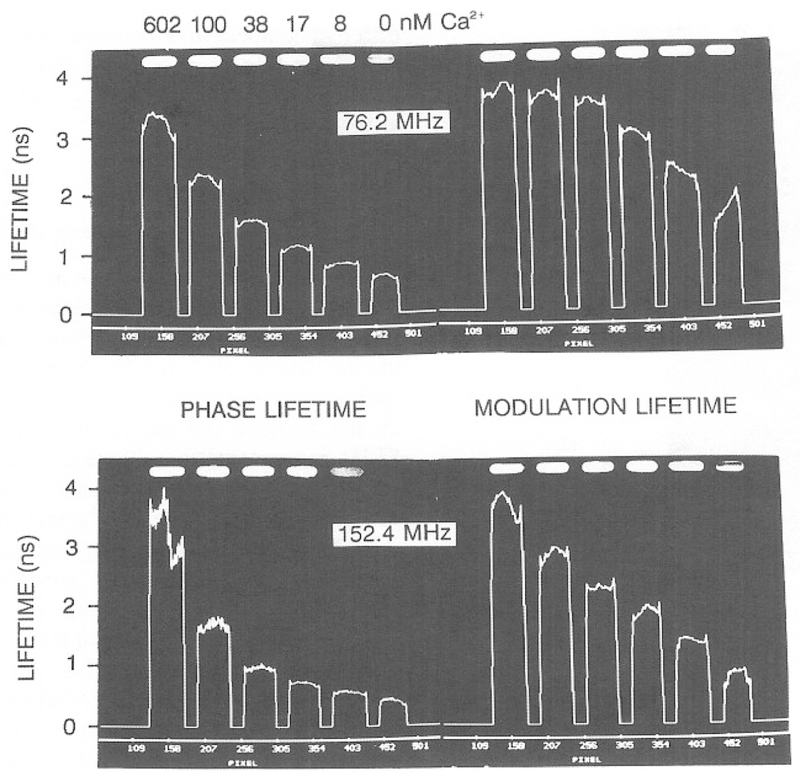
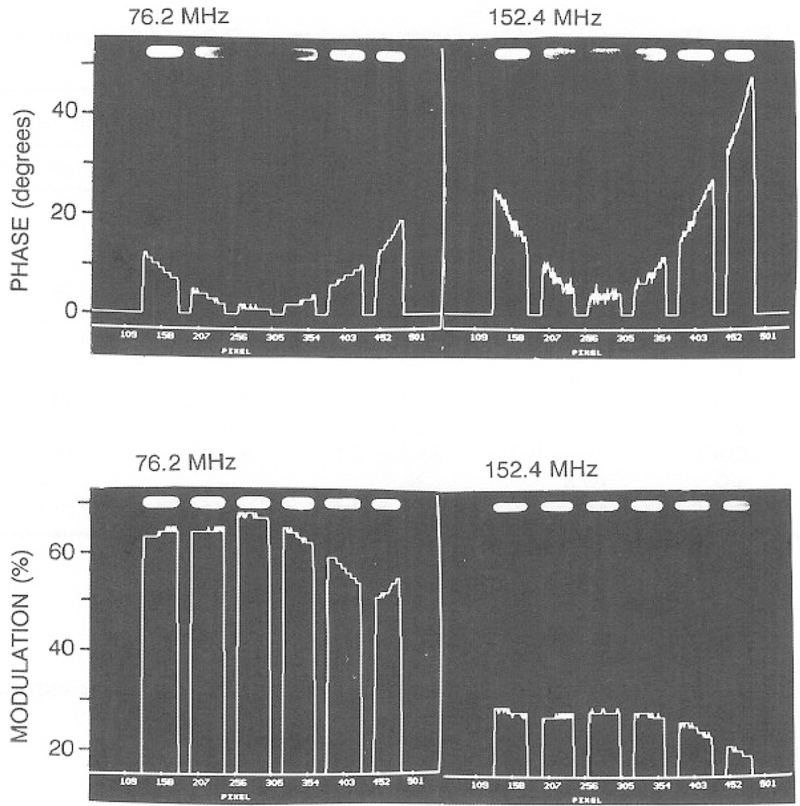
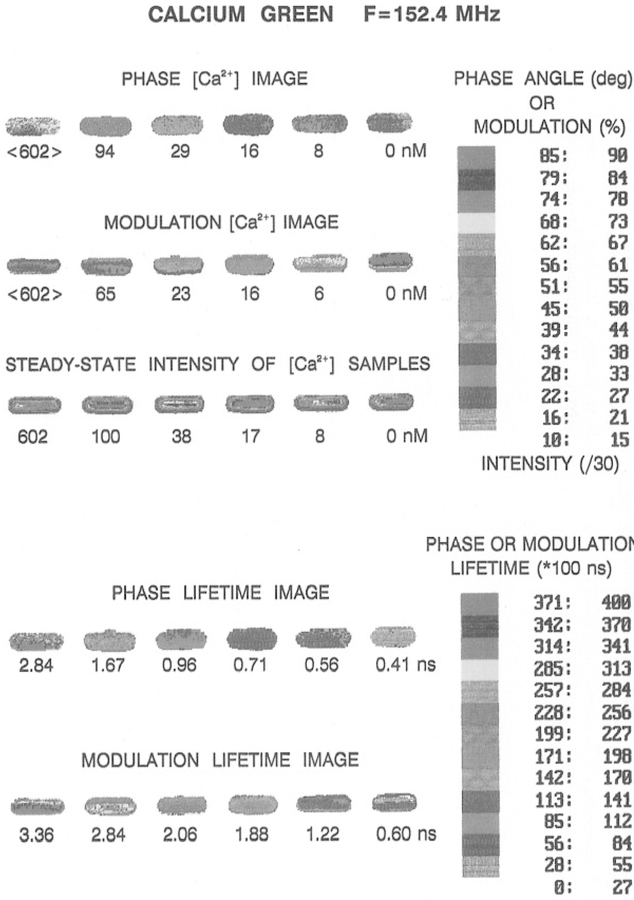
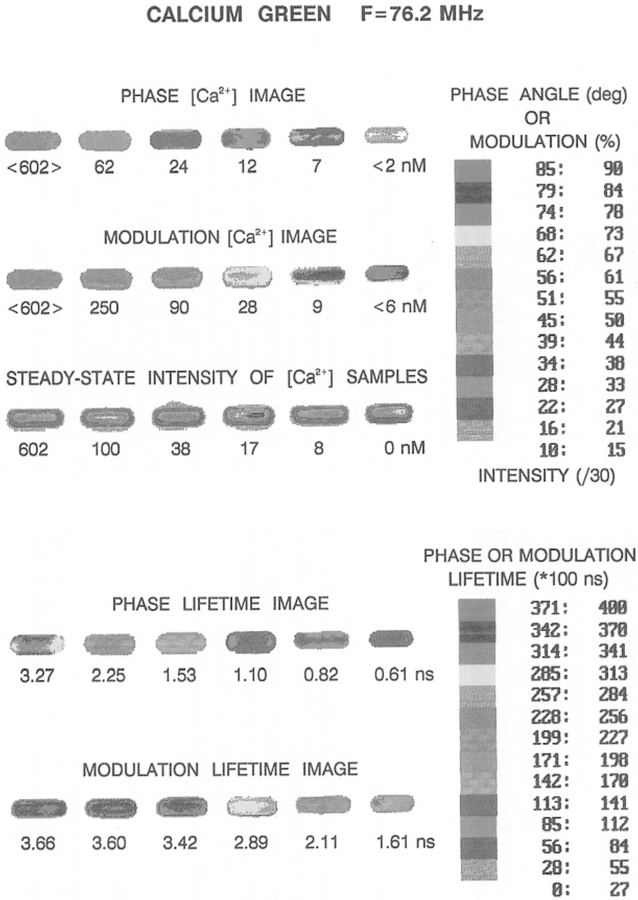
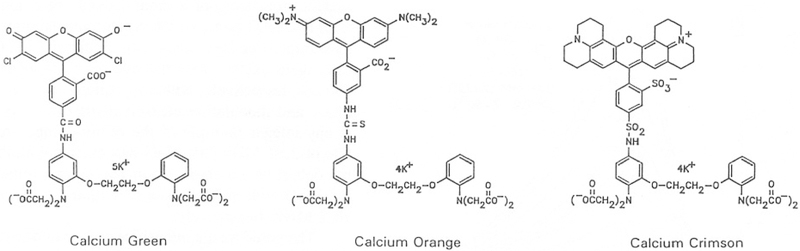
We describe imaging of calcium concentrations using the long-wavelength Ca(2+) indicators, Calcium Green, Orange, and Crimson. The lifetimes of these probes were measured using the frequency-domain method and were found to increase from 50% to severalfold in response to calcium. The two-dimensional images of the calcium concentration were obtained using a new apparatus for fluorescence lifetime imaging (FLIM). We also describe procedures to correct for the position-dependent frequency response of the gain-modulated image intensifier used in the FLIM apparatus. Importantly, the FLIM method does not require the probe to display shifts in the excitation or emission spectra. Using the FLIM method, calcium imaging is possible using probes which display changes in lifetime in response to calcium. Consequently, calcium imaging is possible with excitation wavelengths ranging from 488 to as long as 620 nm, where autofluorescence and/or photochemical damage is minimal. These probes are also suitable for calcium measurements of single cells using lifetime-based flow cytometry.
Figures
References
-
- Tsien R (1980) Biochemistry 19, 2396–2404. - PubMed
-
- Tsien R and Pozzan T (1989) Methods Enzymel 172, 230–262. - PubMed
-
- Grynkiewicz G, Poenie M, and Tsien RY (1985) J. Biol. Chem 260, 3440–3450. - PubMed
-
- Komada H, Nakabayashi H, Nakano H, Hara M, Yoshida T, Takanari H, and Izutsu K (1989) Cell Struct. Funct 14, 141–150. - PubMed
-
- Moore ED, Becker PL, Fogarty KE, Williams DA, and Fay FS (1990) Cell Calcium 11, 157–179, - PubMed
Grants and funding
LinkOut - more resources
Full Text Sources
Other Literature Sources
Miscellaneous