


Preclinical trial of a new dual mTOR inhibitor, MLN0128, using renal cell carcinoma tumorgrafts
- PMID: 24243565
- PMCID: PMC4365782
- DOI: 10.1002/ijc.28579
Preclinical trial of a new dual mTOR inhibitor, MLN0128, using renal cell carcinoma tumorgrafts
Abstract
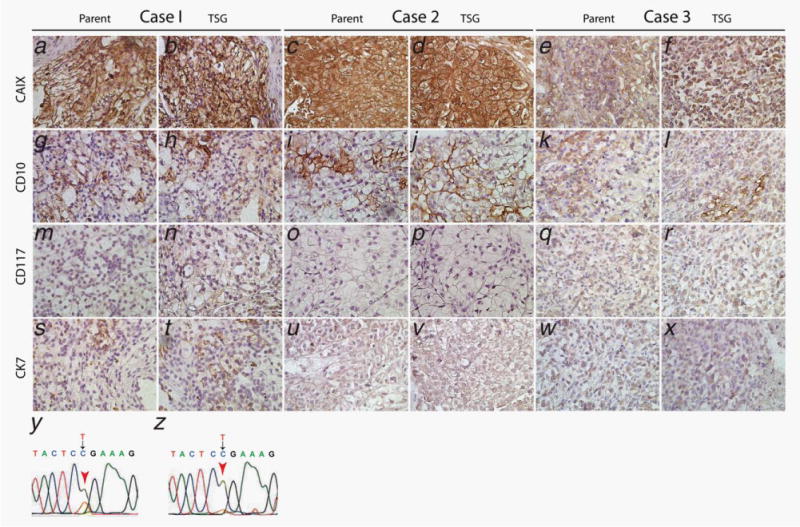
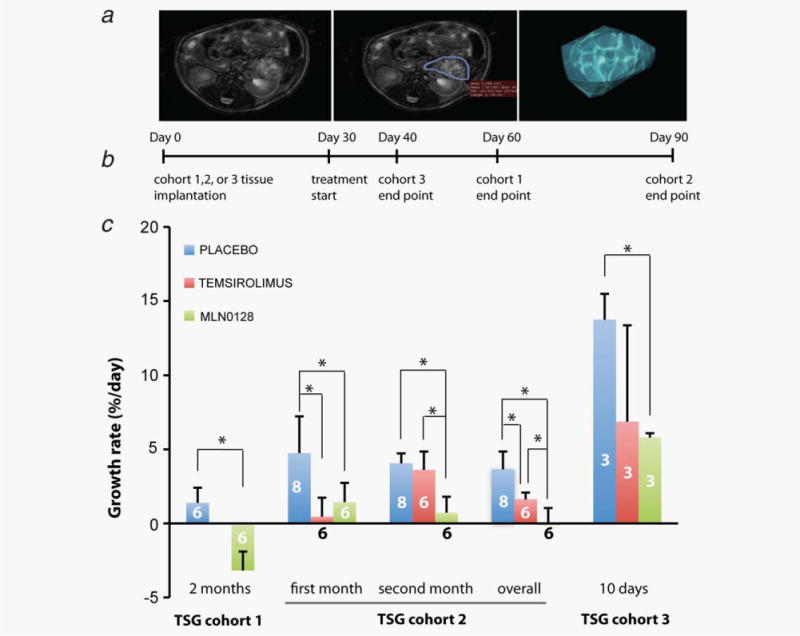
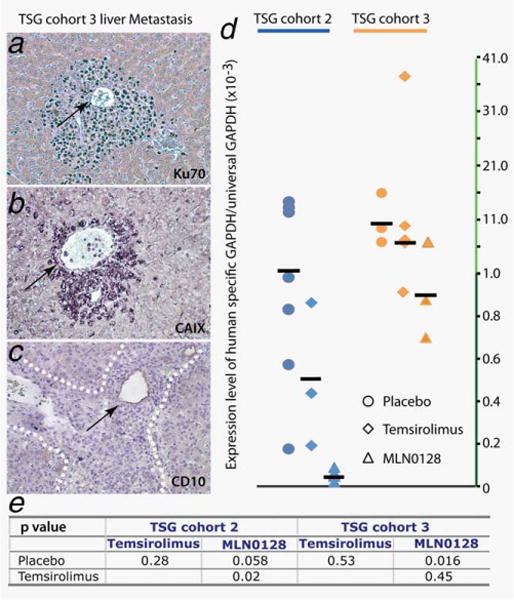
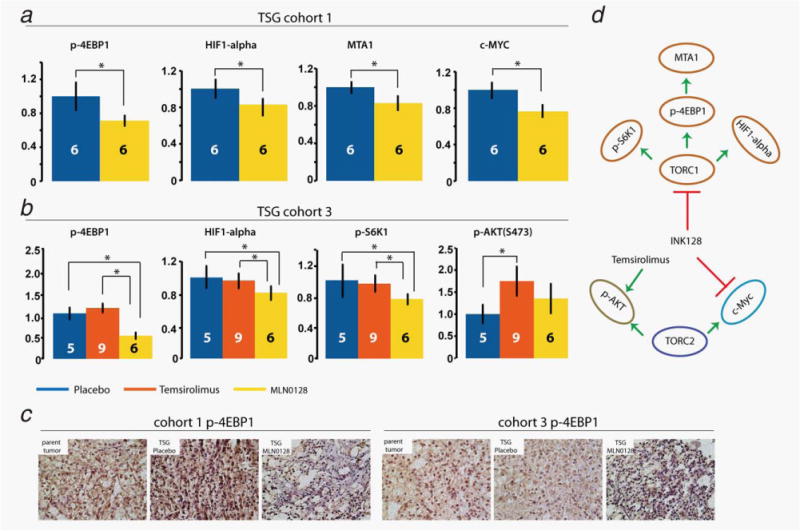
mTOR is a rational target in renal cell carcinoma (RCC) because of its role in disease progression. However, the effects of temsirolimus, the only first-generation mTOR inhibitor approved by the FDA for first-line treatment of metastatic RCC, on tumor reduction and progression-free survival are minimal. Second-generation mTOR inhibitors have not been evaluated on RCC. We compared the effects of temsirolimus and MLN0128, a potent second-generation mTOR inhibitor, on RCC growth and metastasis using a realistic patient-derived tissue slice graft (TSG) model. TSGs were derived from three fresh primary RCC specimens by subrenal implantation of precision-cut tissue slices into immunodeficient mice that were randomized and treated with MLN0128, temsirolimus, or placebo. MLN0128 consistently suppressed primary RCC growth, monitored by magnetic resonance imaging (MRI), in three TSG cohorts for up to 2 months. Temsirolimus, in contrast, only transiently inhibited the growth of TSGs in one of two cohorts before resistance developed. In addition, MLN0128 reduced liver metastases, determined by human-specific quantitative polymerase chain reaction, in two TSG cohorts, whereas temsirolimus failed to have any significant impact. Moreover, MLN0128 decreased levels of key components of the two mTOR subpathways including TORC1 targets 4EBP1, p-S6K1, HIF1α and MTA1 and the TORC2 target c-Myc, consistent with dual inhibition. Our results demonstrated that MLN0128 is superior to temsirolimus in inhibiting primary RCC growth as well as metastases, lending strong support for further clinical development of dual mTOR inhibitors for RCC treatment.
Keywords: mTOR inhibitor; renal cell carcinoma; tumorgrafts.
© 2013 UICC.
Conflict of interest statement
Conflict of interest: Nothing to report
Figures
References
-
- Pantuck AJ, Seligson DB, Klatte T, et al. Prognostic relevance of the mTOR pathway in renal cell carcinoma: implications for molecular patient selection for targeted therapy. Cancer. 2007;109:2257–67. - PubMed
-
- Robb VA, Karbowniczek M, Klein-Szanto AJ, et al. Activation of the mTOR signaling pathway in renal clear cell carcinoma. J Urol. 2007;177:346–52. - PubMed
-
- Barthelemy P, Hoch B, Chevreau C, et al. mTOR inhibitors in advanced renal cell carcinomas: from biology to clinical practice. Crit Rev Oncol Hematol. 2013;88:42–56. - PubMed
Publication types
MeSH terms
Substances
Grants and funding
LinkOut - more resources
Full Text Sources
Other Literature Sources
Medical
Miscellaneous
