


A sequence-ready physical map of barley anchored genetically by two million single-nucleotide polymorphisms
- PMID: 24243933
- PMCID: PMC3875818
- DOI: 10.1104/pp.113.228213
A sequence-ready physical map of barley anchored genetically by two million single-nucleotide polymorphisms
Abstract
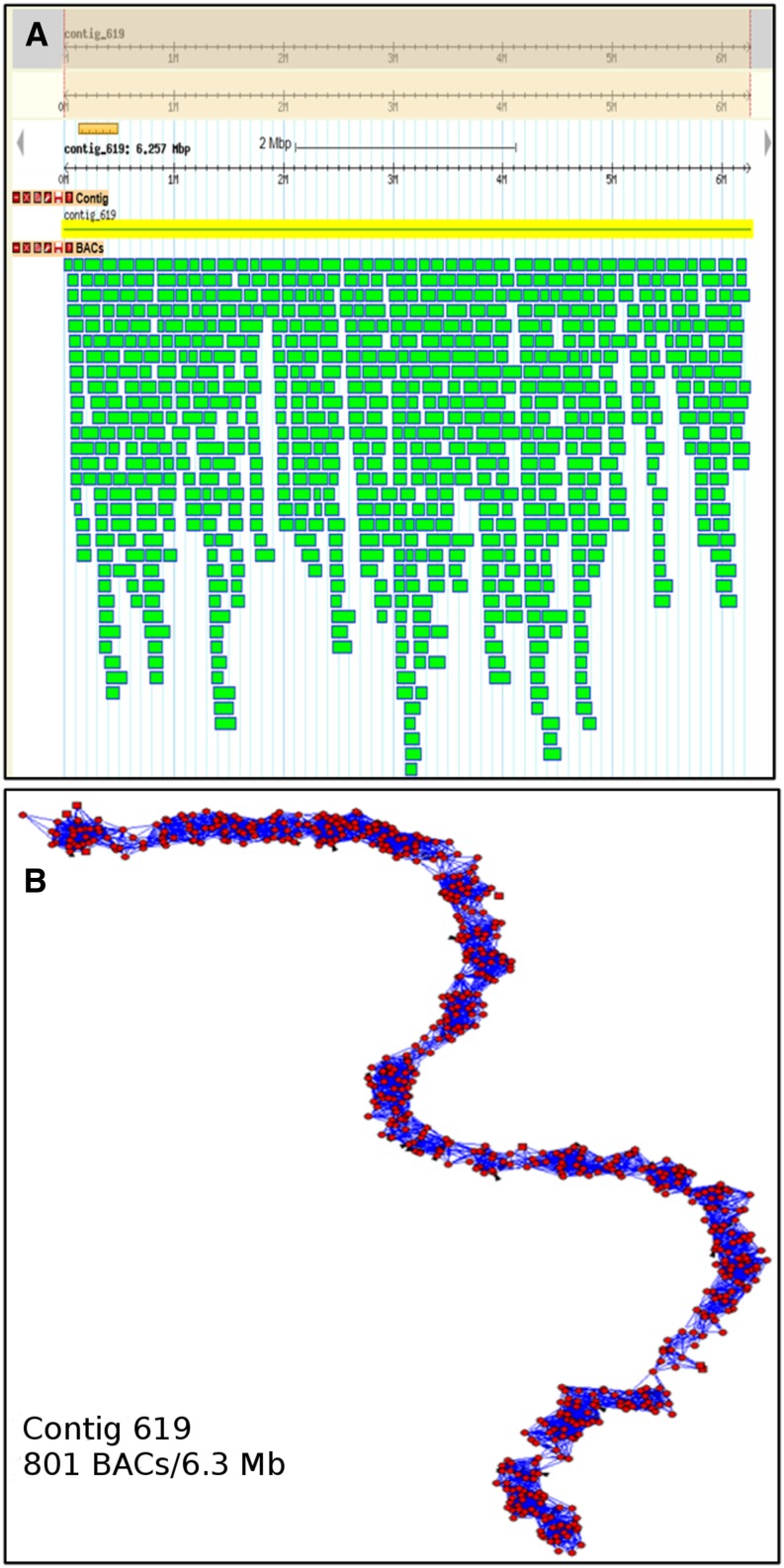
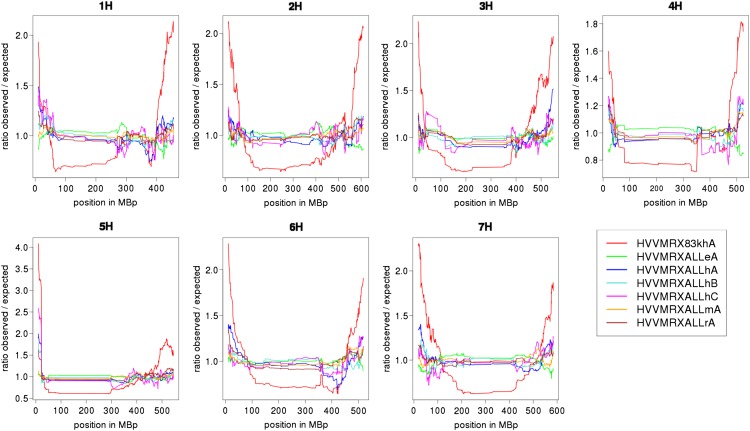
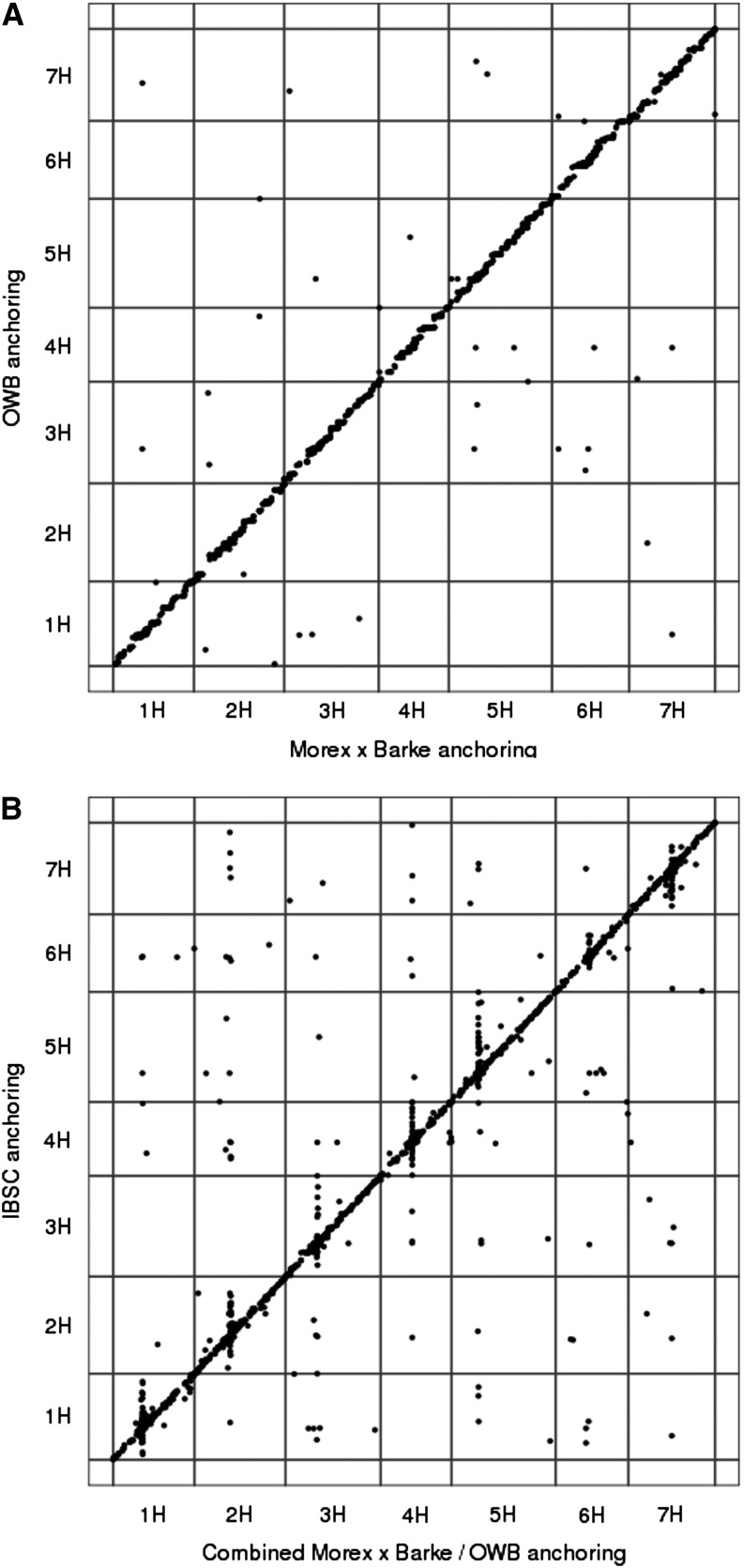
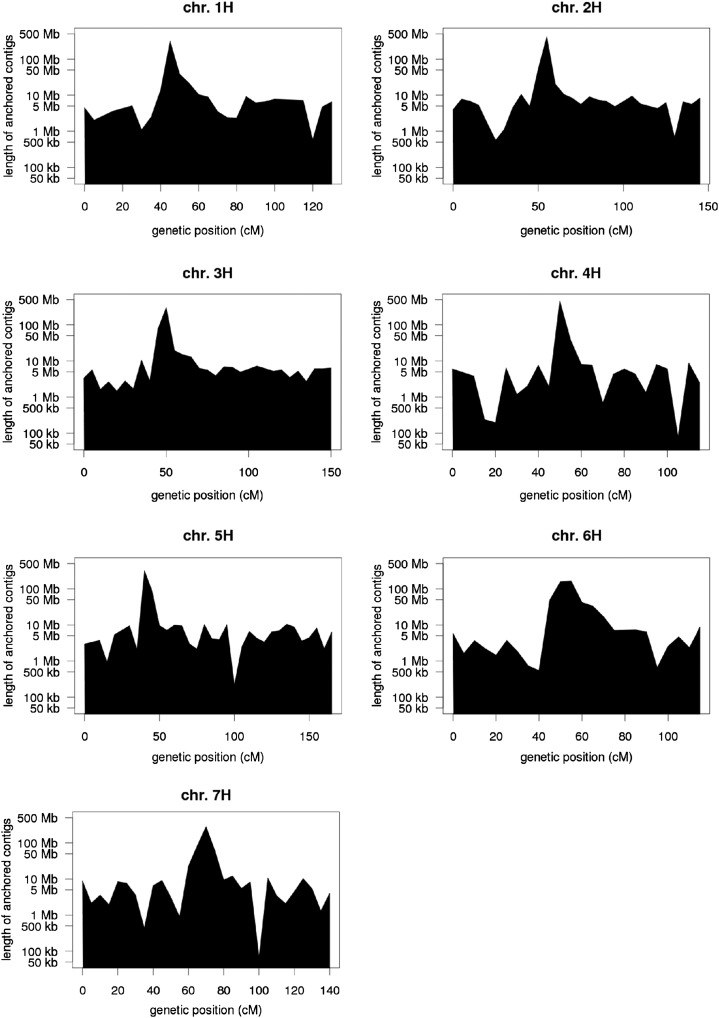
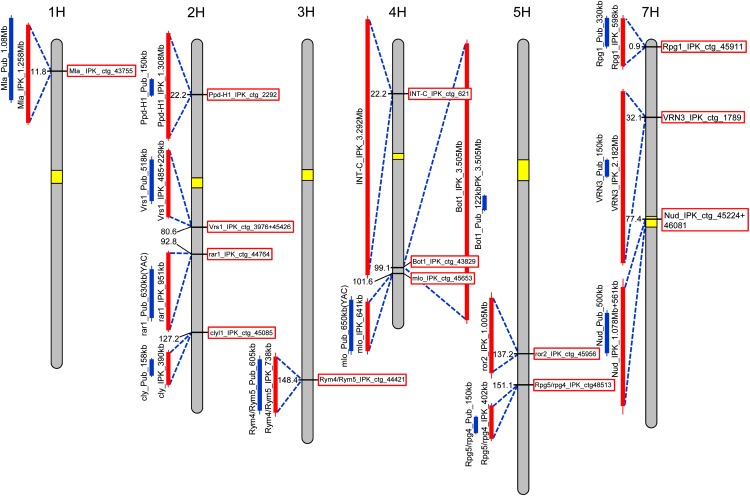
Barley (Hordeum vulgare) is an important cereal crop and a model species for Triticeae genomics. To lay the foundation for hierarchical map-based sequencing, a genome-wide physical map of its large and complex 5.1 billion-bp genome was constructed by high-information content fingerprinting of almost 600,000 bacterial artificial chromosomes representing 14-fold haploid genome coverage. The resultant physical map comprises 9,265 contigs with a cumulative size of 4.9 Gb representing 96% of the physical length of the barley genome. The reliability of the map was verified through extensive genetic marker information and the analysis of topological networks of clone overlaps. A minimum tiling path of 66,772 minimally overlapping clones was defined that will serve as a template for hierarchical clone-by-clone map-based shotgun sequencing. We integrated whole-genome shotgun sequence data from the individuals of two mapping populations with published bacterial artificial chromosome survey sequence information to genetically anchor the physical map. This novel approach in combination with the comprehensive whole-genome shotgun sequence data sets allowed us to independently validate and improve a previously reported physical and genetic framework. The resources developed in this study will underpin fine-mapping and cloning of agronomically important genes and the assembly of a draft genome sequence.
Figures
References
-
- Altschul SF, Gish W, Miller W, Myers EW, Lipman DJ. (1990) Basic local alignment search tool. J Mol Biol 215: 403–410 - PubMed
-
- Arabidopsis Genome Initiative (2000) Analysis of the genome sequence of the flowering plant Arabidopsis thaliana. Nature 408: 796–815 - PubMed
-
- Brueggeman R, Drader T, Kleinhofs A. (2006) The barley serine/threonine kinase gene Rpg1 providing resistance to stem rust belongs to a gene family with five other members encoding kinase domains. Theor Appl Genet 113: 1147–1158 - PubMed
-
- Brueggeman R, Druka A, Nirmala J, Cavileer T, Drader T, Rostoks N, Mirlohi A, Bennypaul H, Gill U, Kudrna D, et al. (2008) The stem rust resistance gene Rpg5 encodes a protein with nucleotide-binding-site, leucine-rich, and protein kinase domains. Proc Natl Acad Sci USA 105: 14970–14975 - PMC - PubMed
-
- Büschges R, Hollricher K, Panstruga R, Simons G, Wolter M, Frijters A, van Daelen R, van der Lee T, Diergaarde P, Groenendijk J, et al. (1997) The barley Mlo gene: a novel control element of plant pathogen resistance. Cell 88: 695–705 - PubMed
Publication types
MeSH terms
LinkOut - more resources
Full Text Sources
Other Literature Sources
