. 2013 Nov 7;8(11):e72786.
doi: 10.1371/journal.pone.0072786. eCollection 2013.

A high-throughput screen against pantothenate synthetase (PanC) identifies 3-biphenyl-4-cyanopyrrole-2-carboxylic acids as a new class of inhibitor with activity against Mycobacterium tuberculosis

Affiliations

A high-throughput screen against pantothenate synthetase (PanC) identifies 3-biphenyl-4-cyanopyrrole-2-carboxylic acids as a new class of inhibitor with activity against Mycobacterium tuberculosis

Anuradha Kumar et al. PLoS One. .

Abstract

The enzyme pantothenate synthetase, PanC, is an attractive drug target in Mycobacterium tuberculosis. It is essential for the in vitro growth of M. tuberculosis and for survival of the bacteria in the mouse model of infection. PanC is absent from mammals. We developed an enzyme-based assay to identify inhibitors of PanC, optimized it for high-throughput screening, and tested a large and diverse library of compounds for activity. Two compounds belonging to the same chemical class of 3-biphenyl-4- cyanopyrrole-2-carboxylic acids had activity against the purified recombinant protein, and also inhibited growth of live M. tuberculosis in manner consistent with PanC inhibition. Thus we have identified a new class of PanC inhibitors with whole cell activity that can be further developed.


Conflict of interest statement

Competing Interests: The authors have read the journal's policy and have the following conflicts: This work was funded by the Lilly TB Drug Discovery Initiative (http://www.tbdrugdiscovery.org/) and funding was provided by Eli Lilly and Company. The following authors are employed by Eli Lilly & Company: Michal Vieth, Thierry Masquelin, and Philip A. Hipskind, each were involved in data collection, analysis and preparation of the manuscript as detailed in the authors' contribution. This does not alter the authors' adherence to all the PLOS ONE policies on sharing data and materials.

Figures

Figure 1
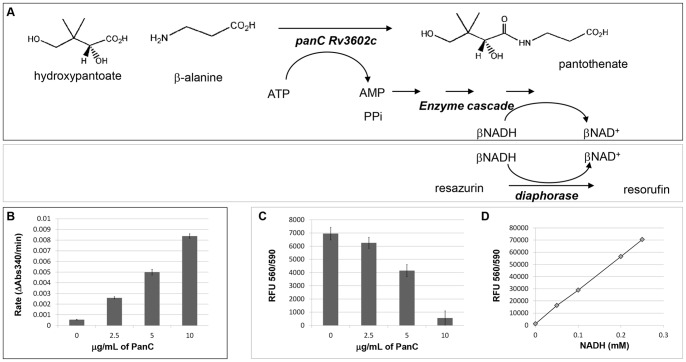
Figure 1. Single-time point fluorescence assay for PanC.
A) Reaction schematic. Upper panel shows the reaction catalyzed by PanC and the enzyme cascade that is initiated by the reaction product AMP resulting in βNADH oxidation. Lower panel shows the final βNADH dependent fluorescence generating reaction that is coupled to the PanC-initiated enzyme cascade. B) Low-throughput assay: kinetic reaction monitoring the rate of βNADH oxidation. C) High-throughput assay: fluorescent resorufin signal generated by residual βNADH following the PanC initiated enzyme cascade. D) Fluorescence generated with varied βNADH in solution using the same conditions as in (B).
Figure 2
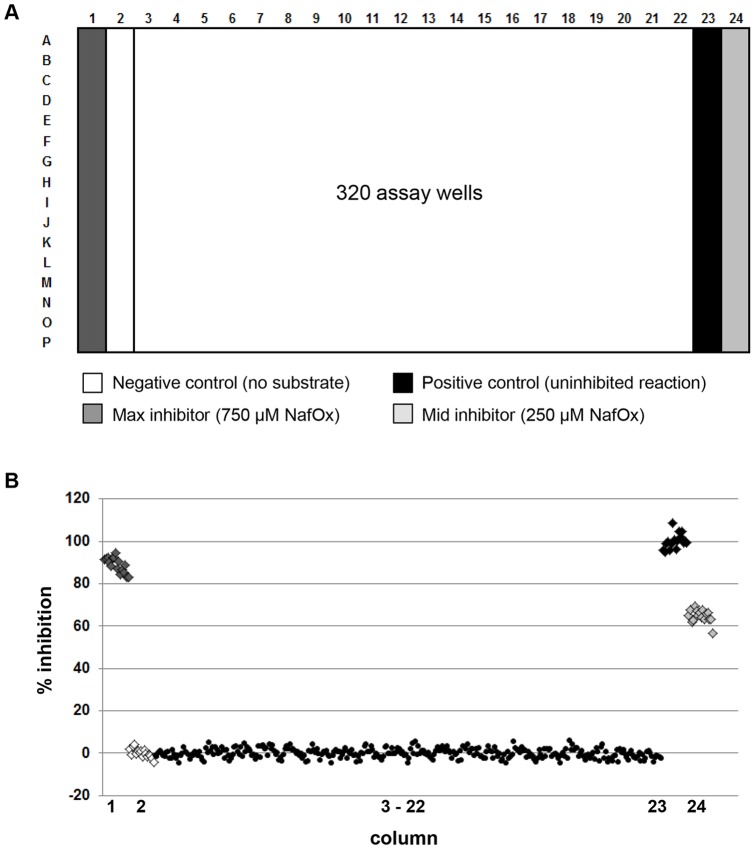
Figure 2. Design and implementation of HTS campaign.
A) Plate layout for 320-array with four sets of controls (n = 16 for each) in columns 1, 2, 23, and 24. B) Results from Blank Plate Validation using DMSO alone in all 320 assay wells.
Figure 3
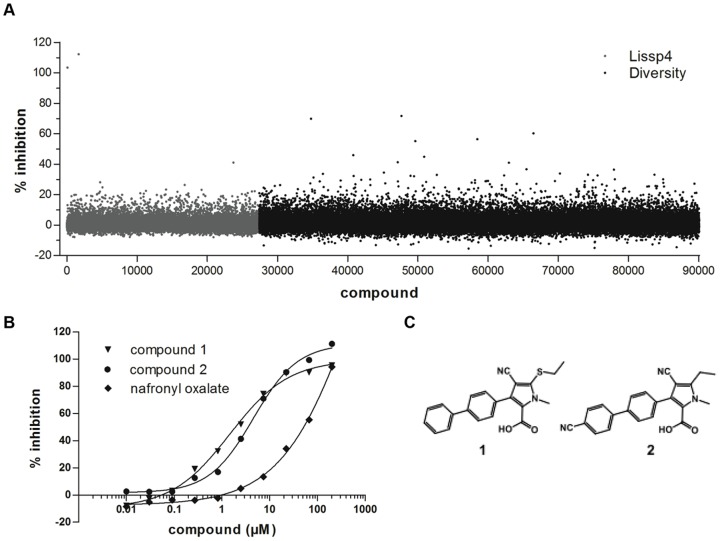
Figure 3. Screening results.
A) Activity of compounds from LISSP4 (grey) and Diversity (black) libraries shown as percent inhibition against PanCMTB. B) Concentration response curves (CRCs) for two representative hits and nafronyl oxalate. C) Structures of compound 1 and 2.
Figure 4
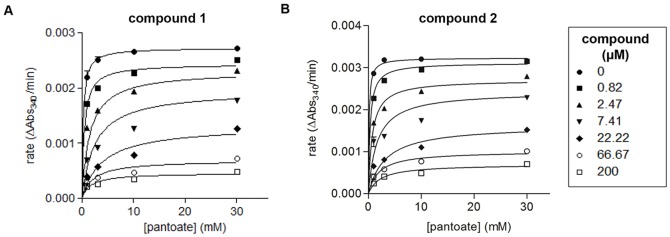
Figure 4. Biochemical characterization of Class 1 compounds.
Michaelis-Menten plots with varied concentrations of pantoate and A) compound 1 and B) compound 2. Graphpad Prism was used to fit the data to nonlinear regressions.
Figure 5
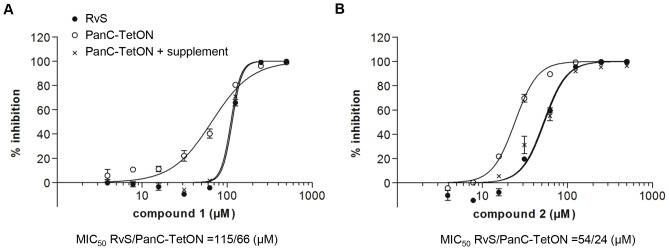
Figure 5. Activity against whole-cell M. tuberculosis.
Wild-type MTB (RvS; black circles), PanC conditional knockdown (PanC-TetON; white circles), and the knockdown supplemented with pantothenate (PanC-TetON+supplement; x) were grown in the presence of varied concentrations of A) compound 1 or B) compound 2. Results are the average and standard deviation of triplicates. The MIC50 was determined by plotting %inhibition against compound concentration and fitting to a non-linear curve with Graphpad Prism™.

References

    1. WHO (2011) Global tuberculosis control report 2011. Geneva.
    1. Cole ST, Brosch R, Parkhill J, Garnier T, Churcher C, et al. (1998) Deciphering the biology of Mycobacterium tuberculosis from the complete genome sequence. Nature 393: 537–544. - PubMed
    1. Sassetti CM, Boyd DH, Rubin EJ (2001) Comprehensive identification of conditionally essential genes in mycobacteria. Proc Natl Acad Sci USA 98: 12712–12717. - PMC - PubMed
    1. Bardarov S, Bardarov S Jr, Pavelka MS Jr, Sambandamurthy V, Larsen M, et al. (2002) Specialized transduction: an efficient method for generating marked and unmarked targeted gene disruptions in Mycobacterium tuberculosis, M. bovis BCG and M. smegmatis . Microbiology 148: 3007–3017. - PubMed
    1. Abrahams GL, Kumar A, Savvi S, Hung AW, Wen S, et al. (2012) Pathway-selective sensitization of Mycobacterium tuberculosis for target-based whole-cell screening. Chem Biol 19: 844–854. - PMC - PubMed

Publication types

MeSH terms

LinkOut - more resources