


Predictors and moderators of internet- and group-based cognitive behaviour therapy for panic disorder
- PMID: 24244406
- PMCID: PMC3820658
- DOI: 10.1371/journal.pone.0079024
Predictors and moderators of internet- and group-based cognitive behaviour therapy for panic disorder
Abstract
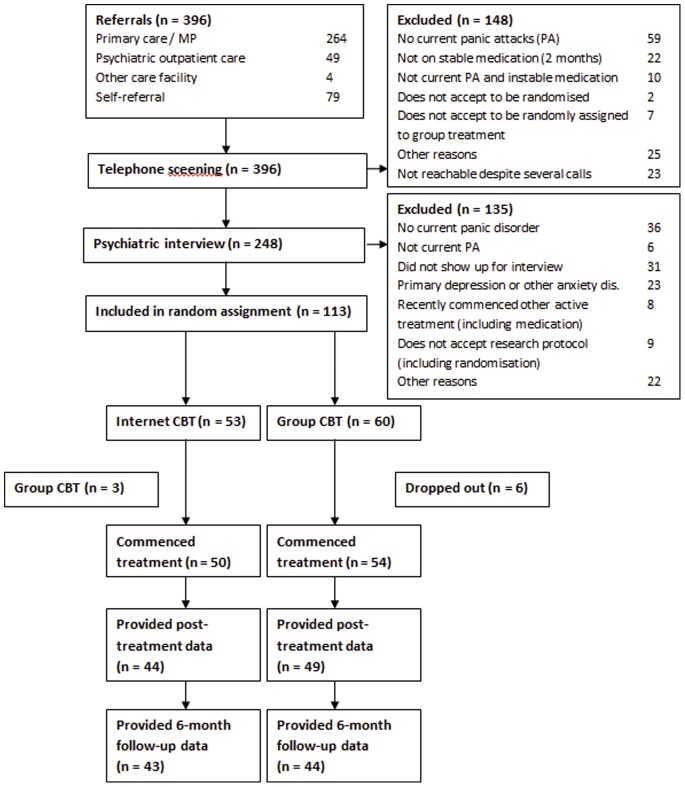
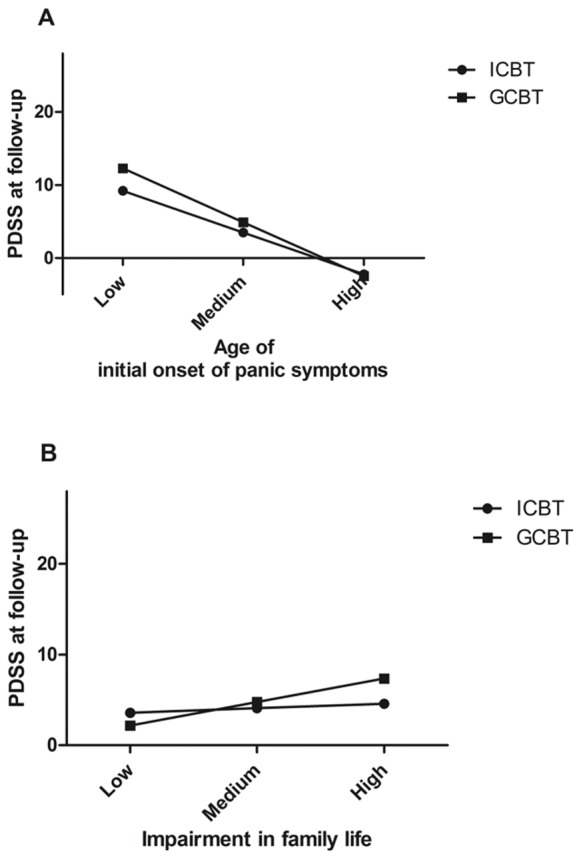
Internet-based cognitive behaviour therapy (ICBT) can be equally effective as traditional face-to-face cognitive behaviour therapy (CBT) for treating panic disorder (PD). However, little is known about the predictors and moderators of outcome of ICBT when delivered in psychiatric outpatient settings. This study investigated a selection of outcome predictors and moderators of ICBT for panic disorder based on data from a randomised controlled trial where therapist-guided ICBT was compared with group CBT (GCBT) for panic disorder. Participants (N = 104) received 10 weeks of ICBT or GCBT and were assessed before and after treatment, and after six months. Multiple regression analyses were used to test for significant predictors of treatment outcome. Predictors of positive treatment response for both modalities were having low levels of symptom severity and work impairment. In addition, anxiety sensitivity was found to have a small negative relationship with treatment outcome, suggesting that anxiety sensitivity may slightly enhance treatment response. Treatment modality had a moderating effect on the relationship between domestic impairment and outcome and on the relationship between initial age of onset of panic symptoms and treatment outcome, favouring ICBT for patients having had an early onset of PD symptoms and for patients having a high domestic functional impairment. These results suggest that both ICBT and GCBT are effective treatment modalities for PD and that it is possible to predict a significant proportion of the long-term outcome variance based on clinical variables.
Conflict of interest statement
Figures
References
-
- Clum GA, Surls R (1993) A meta-analysis of treatments for panic disorder. J Consult Clin Psychol 61: 317–326. - PubMed
-
- Mitte K (2005) A meta-analysis of the efficacy of psycho- and pharmacotherapy in panic disorder with and without agoraphobia. J Affect Disord 88: 27–45. - PubMed
-
- Westen D, Morrison K (2001) A multidimensional meta-analysis of treatments for depression, panic, and generalized anxiety disorder: an empirical examination of the status of empirically supported therapies. J Consult Clin Psychol 69: 875–899. - PubMed
-
- Spek V, Cuijpers P, Nykicek I, Riper H, Keyzer J, et al. (2007) Internet-based cognitive behaviour therapy for symptoms of depression and anxiety: a meta-analysis. Psychological Medicine 37: 319–328. - PubMed
Publication types
MeSH terms
LinkOut - more resources
Full Text Sources
Other Literature Sources
Medical
