


Reduction mammoplasty operative techniques for improved outcomes in the treatment of gigantomastia
- PMID: 24244786
- PMCID: PMC3807584
Reduction mammoplasty operative techniques for improved outcomes in the treatment of gigantomastia
Abstract
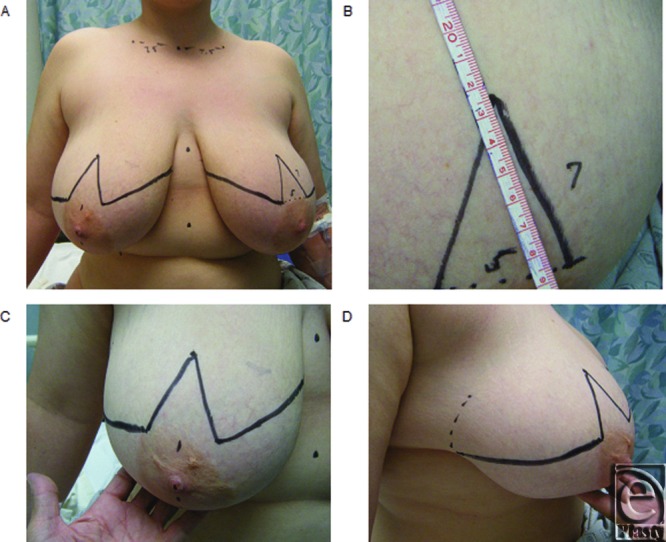
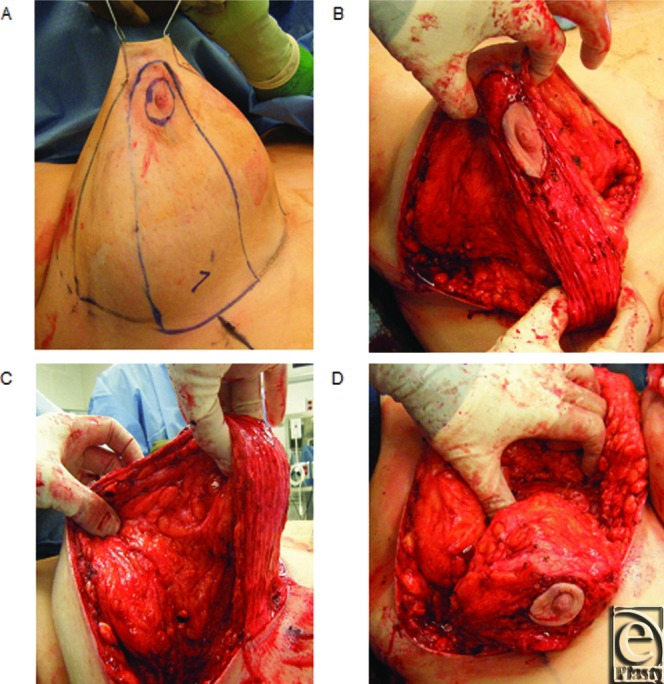
Objective: Gigantomastia, or excessive breast hypertrophy, which is broadly defined as macromastia requiring a surgical reduction of more than 1500 g of breast tissue per breast, poses a unique problem to the reconstructive surgeon. Various procedures have been described for reduction mammoplasty with specific skin incisions, patterns of breast parenchymal resection, and blood supply to the nipple-areolar complex; however, not all of these techniques can be directly applied in the setting of gigantomastia. We outline a simplified method for preoperative evaluation and operative technique, which has been optimized for the management of gigantomastia.
Methods: A retrospective chart review of patients who have undergone reduction mammoplasty from 2006 to 2011 by a single surgeon at the University of Virginia was performed. Patients were subdivided based on weight of breast tissue resection into 2 groups: macromastia (<1500 g resection per breast) and gigantomastia (>1500 g resection per breast). Endpoints including patient demographics, operative techniques, and complication rates were recorded.
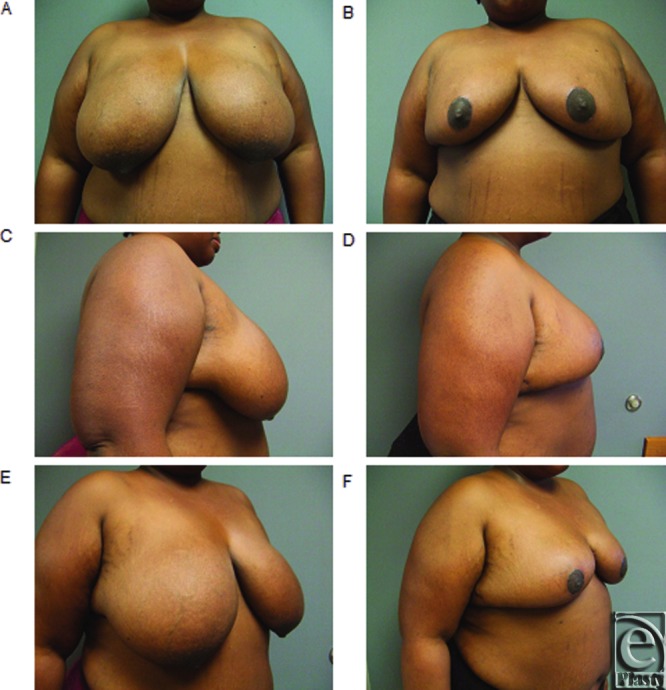
Results: The mean resection weights in the macromastia and gigantomastia groups, respectively, were 681 g ± 283 g and 2554 g ± 421 g. There were no differences in major complications between the 2 groups. The rate of free nipple graft utilization was not significantly different between the 2 groups.
Conclusions: Our surgical approach to gigantomastia has advantages when applied to extremely large-volume breast reduction and provides both esthetic and reproducible results. The preoperative assessment and operative techniques described herein have been adapted to the management of gigantomastia to reduce the rates of surgical complications.
Keywords: breast reconstruction; gigantomastia; macromastia; operative techniques; reduction mammoplasty.
Figures

References
-
- Kalliainen LK, Committee AHP. ASPS clinical practice guideline summary on reduction mammaplasty. Plast Reconstr Surg. 2012;130:785–9. - PubMed
-
- Hammond DC, Loffredo M. Breast reduction. Plast Reconstr Surg. 2012;129:829e–39e. - PubMed
-
- Scholz T, Diedrichson J, Olbrisch RR, et al. Cost analysis of conservative versus operative therapy of macromastia [in German] Handchir, Mikrochir Plast Chir. 2008;40:100–4. - PubMed
-
- DeFazio MV, Fan KL, Avashia YJ, et al. Inferior pedicle breast reduction: a retrospective review of technical modifications influencing patient safety, operative efficiency, and postoperative outcomes. Am J Surg. 2012;204:e7–e14. - PubMed
-
- Roje Z, Roje Z, Milosevic M, et al. Current trends in breast reduction. Collegium Antropologicum. 2012;36:657–68. - PubMed
LinkOut - more resources
Full Text Sources