


doi: 10.1186/2041-2223-4-22.
DNA fingerprinting in forensics: past, present, future
Affiliations
- PMID: 24245688
- PMCID: PMC3831584
- DOI: 10.1186/2041-2223-4-22
Item in Clipboard
DNA fingerprinting in forensics: past, present, future
Investig Genet.
.
Abstract
DNA fingerprinting, one of the great discoveries of the late 20th century, has revolutionized forensic investigations. This review briefly recapitulates 30 years of progress in forensic DNA analysis which helps to convict criminals, exonerate the wrongly accused, and identify victims of crime, disasters, and war. Current standard methods based on short tandem repeats (STRs) as well as lineage markers (Y chromosome, mitochondrial DNA) are covered and applications are illustrated by casework examples. Benefits and risks of expanding forensic DNA databases are discussed and we ask what the future holds for forensic DNA fingerprinting.
Figures

Cover of one of the first issues of
Fingerprint News
from 1990.
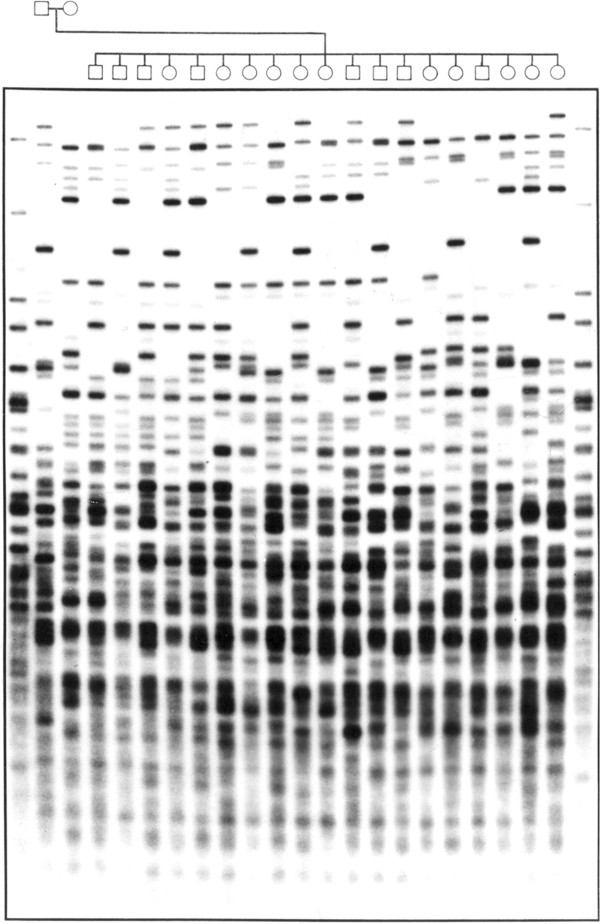
Multilocus DNA Fingerprint from a large family probed with the oligonucleotide (GTG)
5
(
Courtesy of Peter Nürnberg, Cologne Center for Genomics, Germany
).
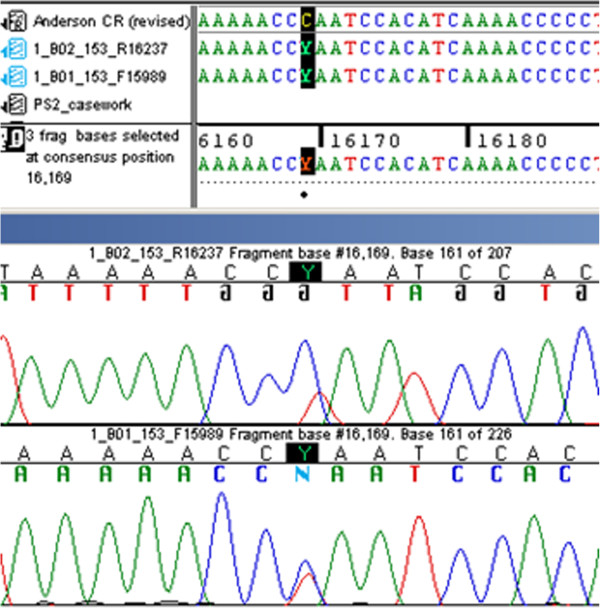
Screenshot of the 16169 C/T heteroplasmy present in Tsar Nicholas II using both forward and reverse sequencing primers (
Courtesy of Michael Coble, National Institute of Standards and Technology, Gaithersburg, USA
).
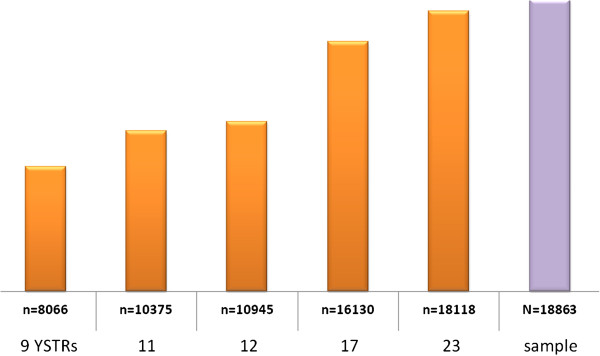
Correlation between the number of analyzed Y-STRs and the number of different haplotypes detected in a global population sample of 18,863 23-locus haplotypes.
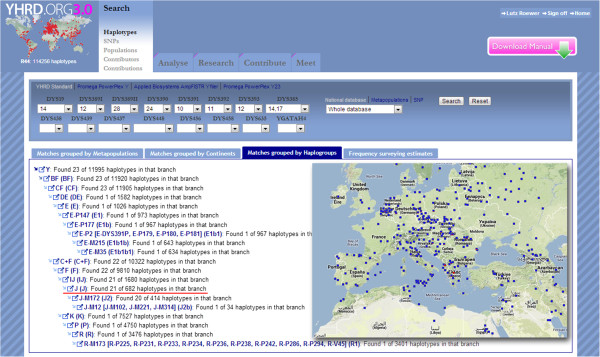
Screenshot from the YHRD depicting the radiation of a 9-locus haplotype belonging to haplogroup J in Southern Europe.
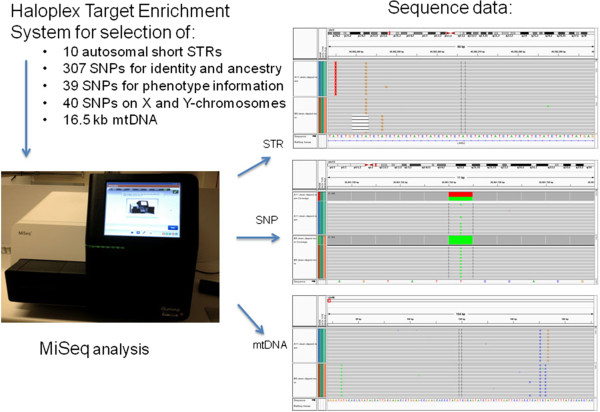
Schematic overview of Haloplex targeting and NGS analysis of a large number of markers simultaneously. Sequence data are shown for samples from two individuals and the D3S1358 STR marker, the rs1335873 SNP marker, and a part of the HVII region of mtDNA (Courtesy of Marie Allen, Uppsala University, Sweden).
References
-
- Doyle AC. A study in scarlet, Beeton’s Christmas Annual. London, New York and Melbourne: Ward, Lock & Co; 1887.
-
- University of Leicester Bulletin Supplement August/September 2004.
-
- Jeffreys AJ. Foreword. Fingerprint News. 1989;1:1.
LinkOut - more resources
Full Text Sources
Other Literature Sources
Miscellaneous
