


Prohibitin expression is associated with high grade breast cancer but is not a driver of amplification at 17q21.33
- PMID: 24247619
- PMCID: PMC7595251
- DOI: 10.1097/PAT.0000000000000004
Prohibitin expression is associated with high grade breast cancer but is not a driver of amplification at 17q21.33
Abstract
Aims: In a study of ductal carcinoma in situ of the breast, we identified five genes at chromosome 17q21.33 that were over-expressed in high grade cases, and showed a correlation between expression and gene copy number. The aim of this study was to investigate potential drivers of genomic amplification at 17q21.33.
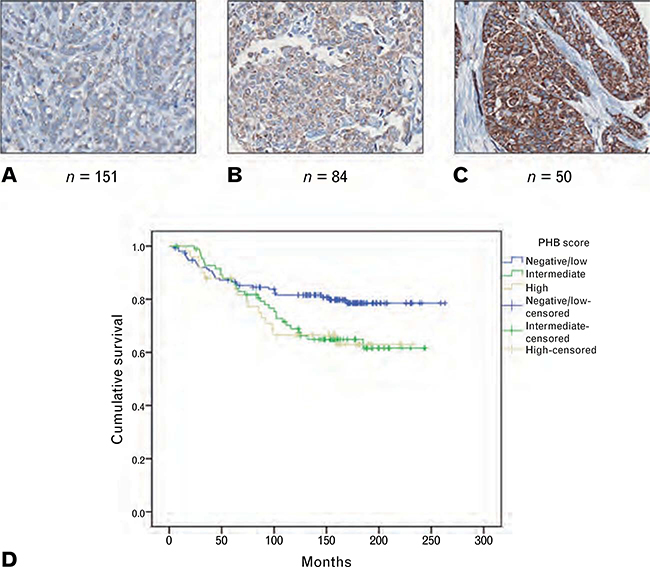
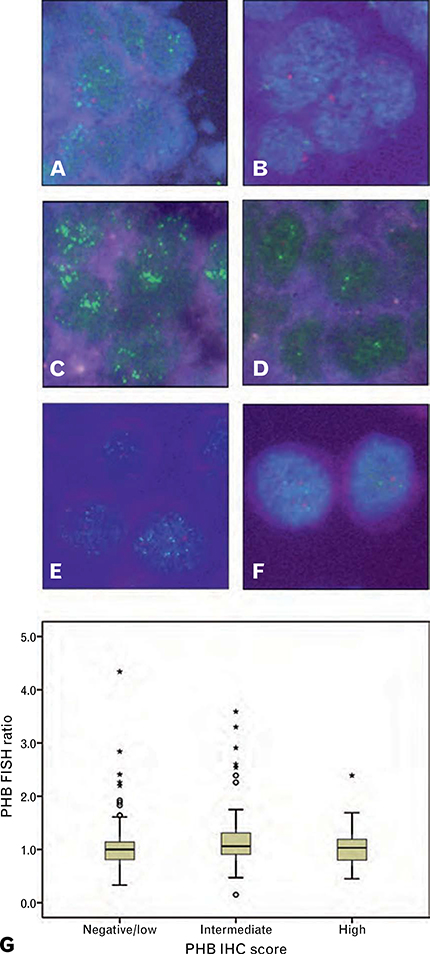
Methods: Analysis of high resolution comparative genomic hybridisation and published data specified a minimum region of amplification at 17q21.33. Prohibitin (PHB) expression was examined by immunohistochemistry in 285 invasive breast cancers. Gene copy number was examined by fluorescence in situ hybridisation.
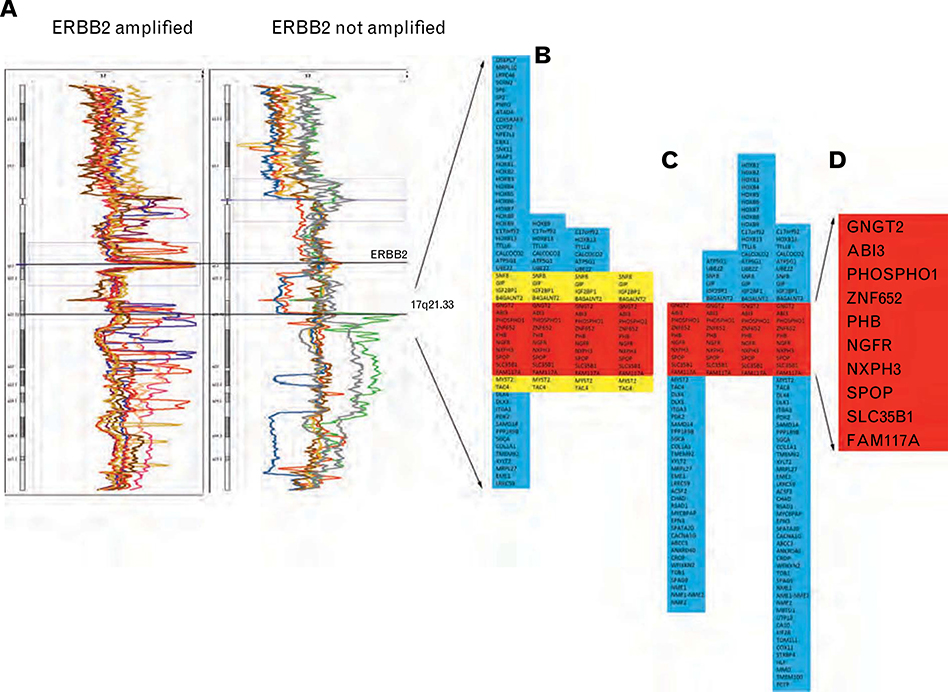
Results: The minimum region of amplification at 17q21.33 included ten genes with PHB selected as a candidate driver. Increased PHB expression was associated with higher grade breast cancer and poorer survival. Amplification of PHB was detected in 13 of 235 cases (5.5%) but was not associated with PHB expression. PHB amplification was most common in the ERBB2+ breast cancer subtype, although high expression was most prevalent in basal-like and luminal B cancers.
Conclusions: Amplification at 17q21.33 is a recurrent feature of breast cancer that forms part of a 'firestorm' pattern of genomic aberration. PHB is not a driver of amplification, however PHB may contribute to high grade breast cancer.
Figures
References
-
- Orsetti B, Nugoli M, Cervera N, et al. Genomic and expression profiling of chromosome 17 in breast cancer reveals complex patterns of alterations and novel candidate genes. Cancer Res 2004; 64: 6453–60. - PubMed
-
- Andre F, Job B, Dessen P, et al. Molecular characterization of breast cancer with high-resolution oligonucleotide comparative genomic hybridization array. Clin Cancer Res 2009; 15: 441–51. - PubMed
-
- Natrajan R, Lambros MB, Rodriguez-Pinilla SM, et al. Tiling path genomic profiling of grade 3 invasive ductal breast cancers. Clin Cancer Res 2009; 15: 2711–22. - PubMed
Publication types
MeSH terms
Substances
Grants and funding
LinkOut - more resources
Full Text Sources
Other Literature Sources
Medical
Molecular Biology Databases
Research Materials
Miscellaneous
