Minimally invasive aortic valve replacement surgery through lower half sternotomy
- PMID: 24251024
- PMCID: PMC3831833
- DOI: 10.3978/j.issn.2072-1439.2013.09.22
Minimally invasive aortic valve replacement surgery through lower half sternotomy
Abstract
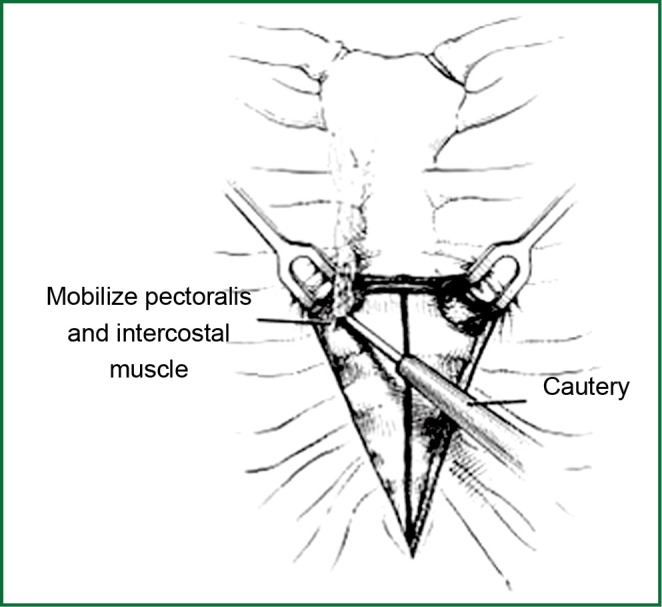
Less invasive approaches to aortic valve surgery frequently rely upon the development of new technology and instrumentation. While not suitable for every patient requiring an aortic valve procedure, these less invasive operations can offer certain clinical benefits and are becoming an important part of the modern cardiothoracic surgeon's skillset. A lower partial sternotomy approach provides excellent visualization of the operative field, efficient execution of the operation and many of the benefits of minimally invasive surgery. Importantly, the lower partial sternotomy requires no new or unusual instruments and presents a familiar view to the surgeon. The technique, therefore, lends itself well to being adapted and utilized quickly with a potentially shorter "learning curve" for maximal surgical flexibility and patient benefit.
Keywords: Aortic valve replacement; lower partial sternotomy; minimally invasive surgery.
Figures

References
-
- Svensson LG, Atik FA, Cosgrove DM, et al. Minimally invasive versus conventional mitral valve surgery: a propensity-matched comparison. J Thorac Cardiovasc Surg 2010;139:926-32.e1-2. - PubMed
-
- Hsiao CY, Ou-Yang CP, Huang CH. Less invasive cardiac surgery via partial sternotomy. J Chin Med Assoc 2012;75:630-4 - PubMed
-
- Arom KV, Emery RW, Kshettry VR, et al. Comparison between port-access and less invasive valve surgery. Ann Thorac Surg 1999;68:1525-8 - PubMed
-
- Cosgrove DM, 3rd, Sabik JF. Minimally invasive approach for aortic valve operations. Ann Thorac Surg 1996;62:596-7 - PubMed
Publication types
LinkOut - more resources
Full Text Sources