


Intrinsic functional connectivity of the brain swallowing network during subliminal esophageal acid stimulation
- PMID: 24251873
- PMCID: PMC3864683
- DOI: 10.1111/nmo.12238
Intrinsic functional connectivity of the brain swallowing network during subliminal esophageal acid stimulation
Abstract
Background: Intrinsic synchronous fluctuations of the functional magnetic resonance imaging signal are indicative of the underlying 'functional connectivity' (FC) and serve as a technique to study dynamics of the neuronal networks of the human brain. Earlier studies have characterized the functional connectivity of a distributed network of brain regions involved in swallowing, called brain swallowing network (BSN). The potential modulatory effect of esophageal afferent signals on the BSN, however, has not been systematically studied.
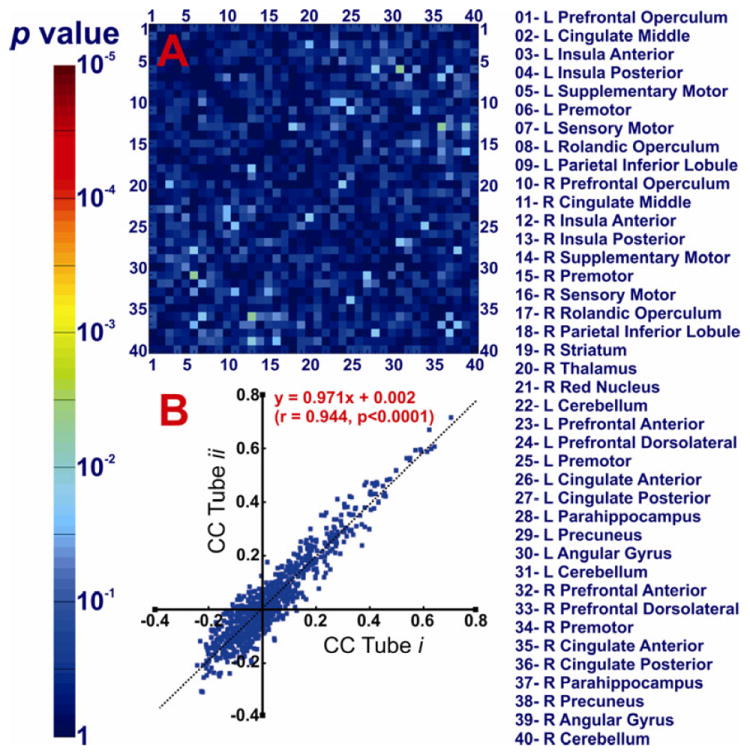
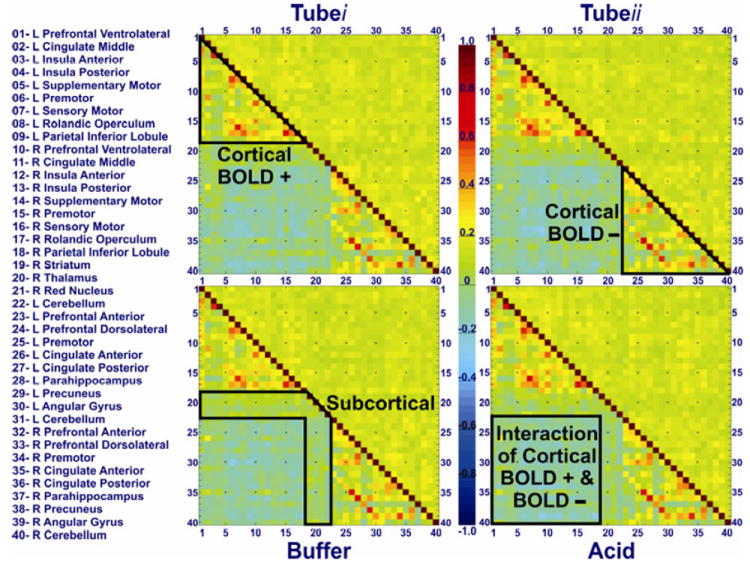
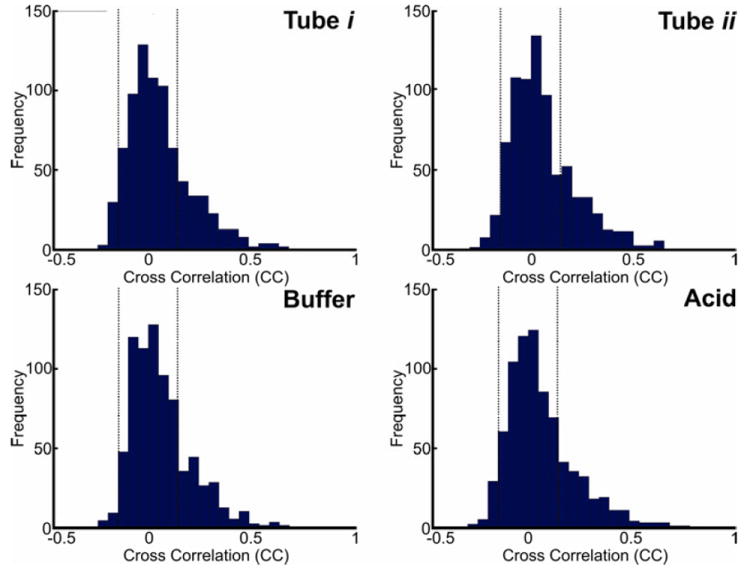
Methods: Fourteen healthy volunteers underwent steady state functional magnetic resonance imaging across three conditions: (i) transnasal catheter placed in the esophagus without infusion; (ii) buffer solution infused at 1 mL/min; and (iii) acidic solution infused at 1 mL/min. Data were preprocessed according to the standard FC analysis pipeline. We determined the correlation coefficient values of pairs of brain regions involved in swallowing and calculated average group FC matrices across conditions. Effects of subliminal esophageal acidification and nasopharyngeal intubation were determined.
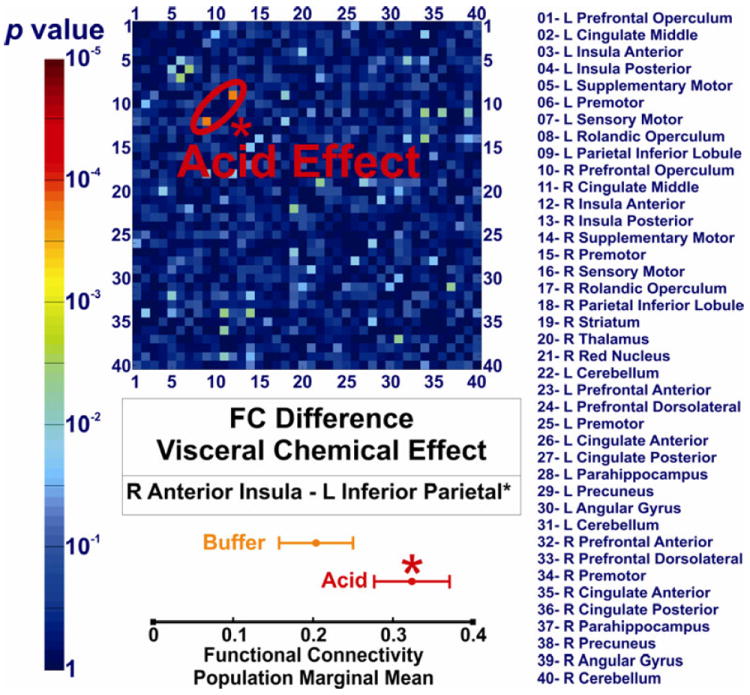
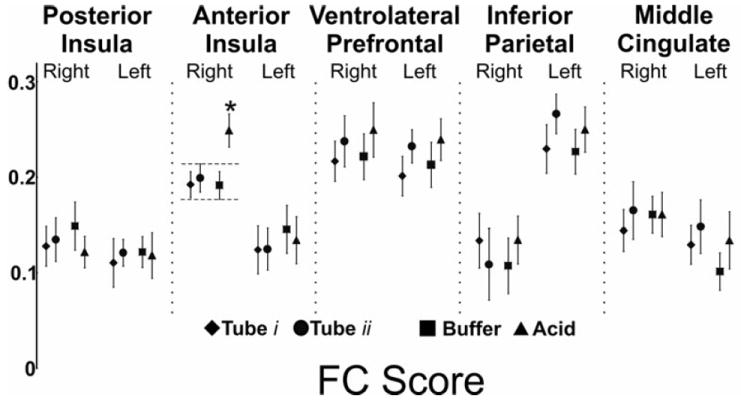
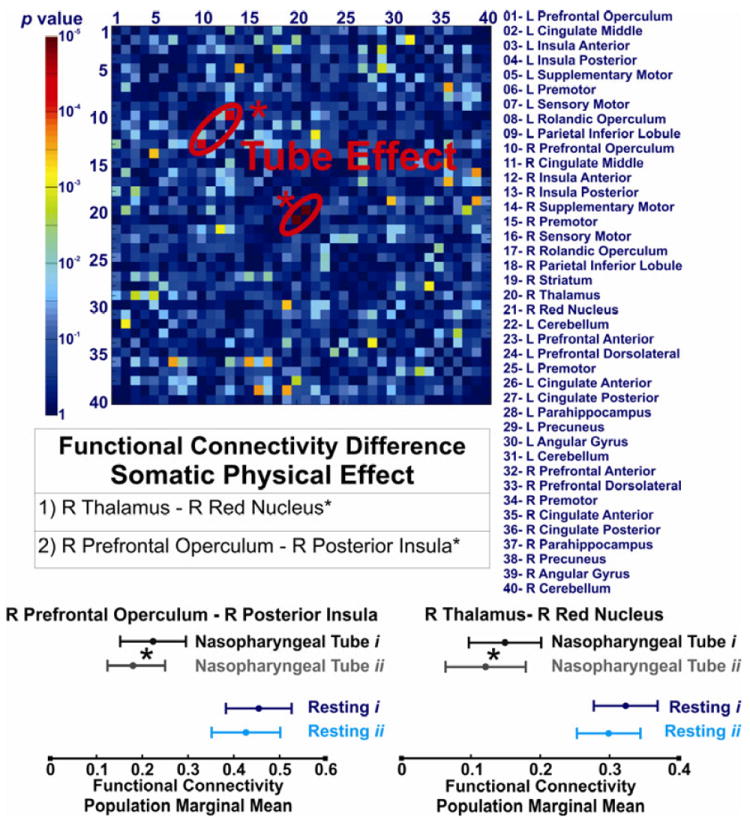
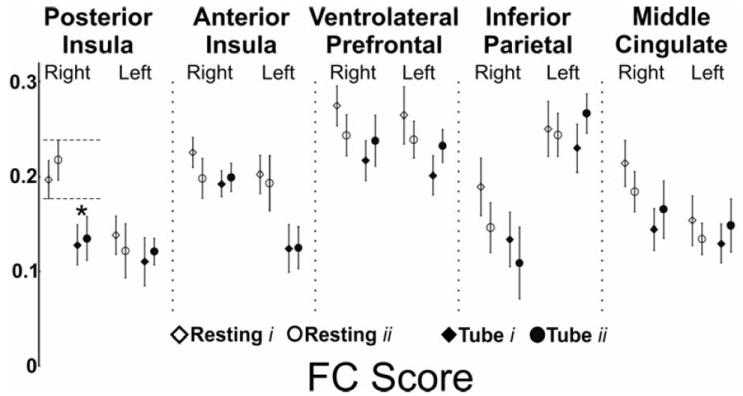
Key results: Subliminal esophageal acid stimulation augmented the overall FC of the right anterior insula and specifically the FC to the left inferior parietal lobule. Conscious stimulation by nasopharyngeal intubation reduced the overall FC of the right posterior insula, particularly the FC to the right prefrontal operculum.
Conclusions & inferences: The FC of BSN is amenable to modulation by sensory input. The modulatory effect of sensory pharyngoesophageal stimulation on BSN is mainly mediated through changes in the FC of the insula. The alteration induced by subliminal visceral esophageal acid stimulation is in different insular connections compared with that of conscious somatic pharyngeal stimulation.
Keywords: buffer; cortical swallowing network; default mode network; negative BOLD; resting connectivity.
© 2013 John Wiley & Sons Ltd.
Conflict of interest statement
The authors have no conflict of interest to disclose.
Figures
References
-
- Hamdy S, Mikulis DJ, Crawley A, Xue S, Lau H, Henry S, Diamant NE. Cortical activation during human volitional swallowing: an event-related fMRI study. Am J Physiol. 1999;277:G219–25. - PubMed
-
- Kern M, Birn R, Jaradeh S, Jesmanowicz A, Cox R, Hyde J, Shaker R. Swallow-related cerebral cortical activity maps are not specific to deglutition. Am J Physiol Gastrointest Liver Physiol. 2001;280:G531–8. - PubMed
-
- Martin RE, Goodyear BG, Gati JS, Menon RS. Cerebral cortical representation of automatic and volitional swallowing in humans. J Neurophysiol. 2001;85:938–50. - PubMed
Publication types
MeSH terms
Substances
Grants and funding
LinkOut - more resources
Full Text Sources
Other Literature Sources
