


Geographical differentiation in floral traits across the distribution range of the Patagonian oil-secreting Calceolaria polyrhiza: do pollinators matter?
- PMID: 24252281
- PMCID: PMC3890392
- DOI: 10.1093/aob/mct239
Geographical differentiation in floral traits across the distribution range of the Patagonian oil-secreting Calceolaria polyrhiza: do pollinators matter?
Abstract
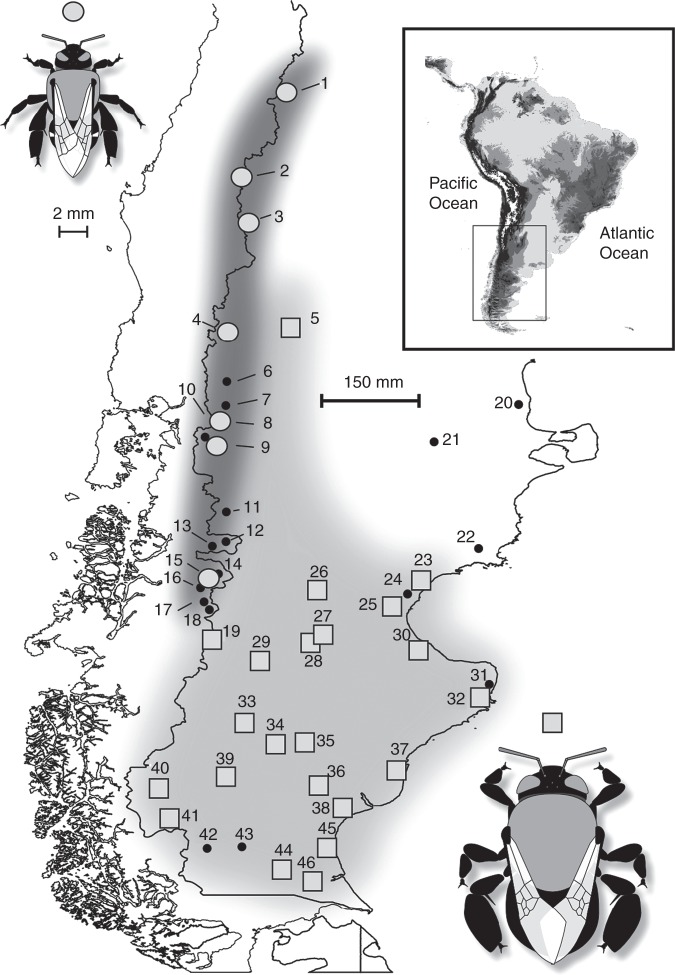
Background and aims: The underlying evolutionary processes of pollinator-driven floral diversification are still poorly understood. According to the Grant-Stebbins model speciation begins with adaptive local differentiation in the response to spatial heterogeneity in pollinators. Although this crucial process links the micro- and macroevolution of floral adaptation, it has received little attention. In this study geographical phenotypic variation was investigated in Patagonian Calceolaria polyrhiza and its pollinators, two oil-collecting bee species that differ in body size and geographical distribution.
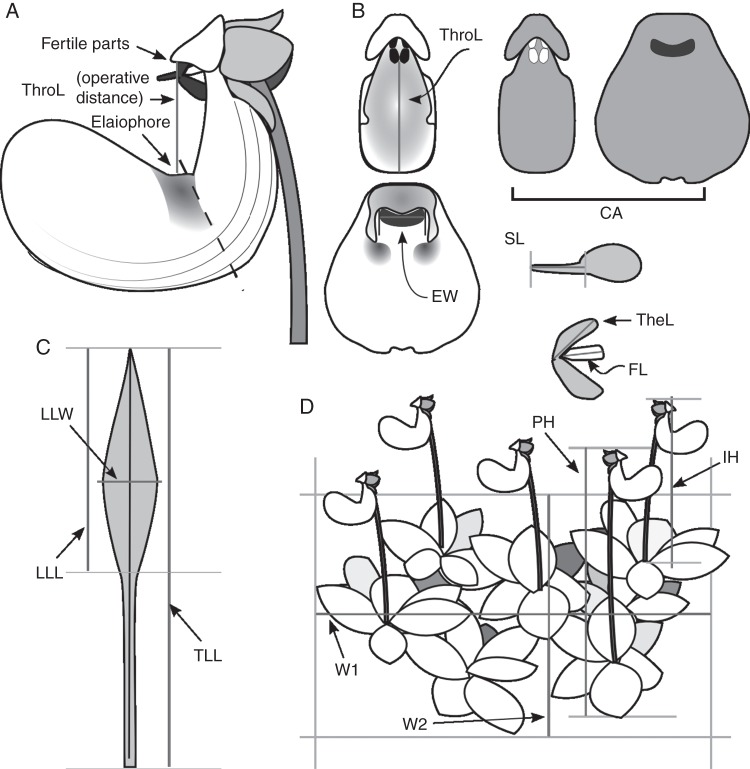
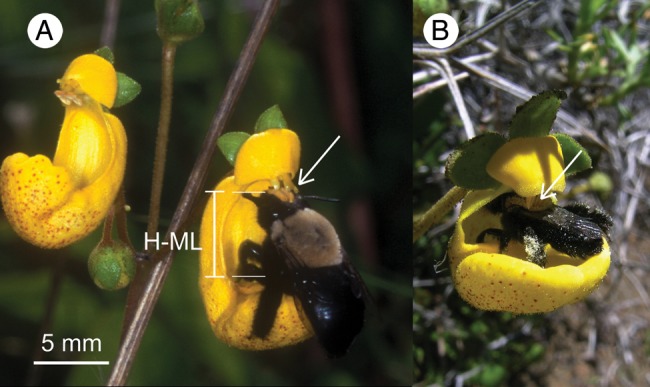
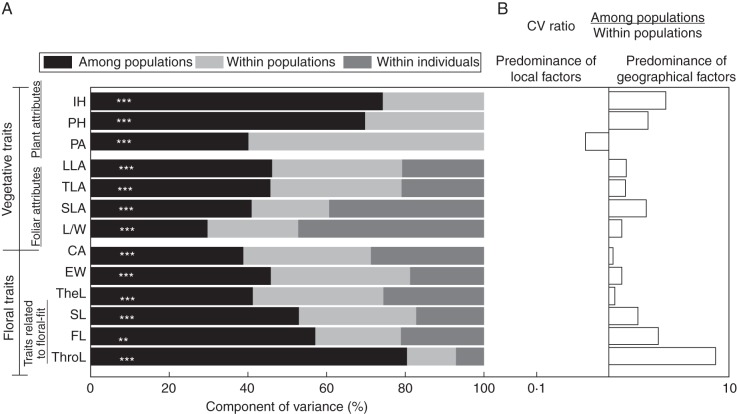
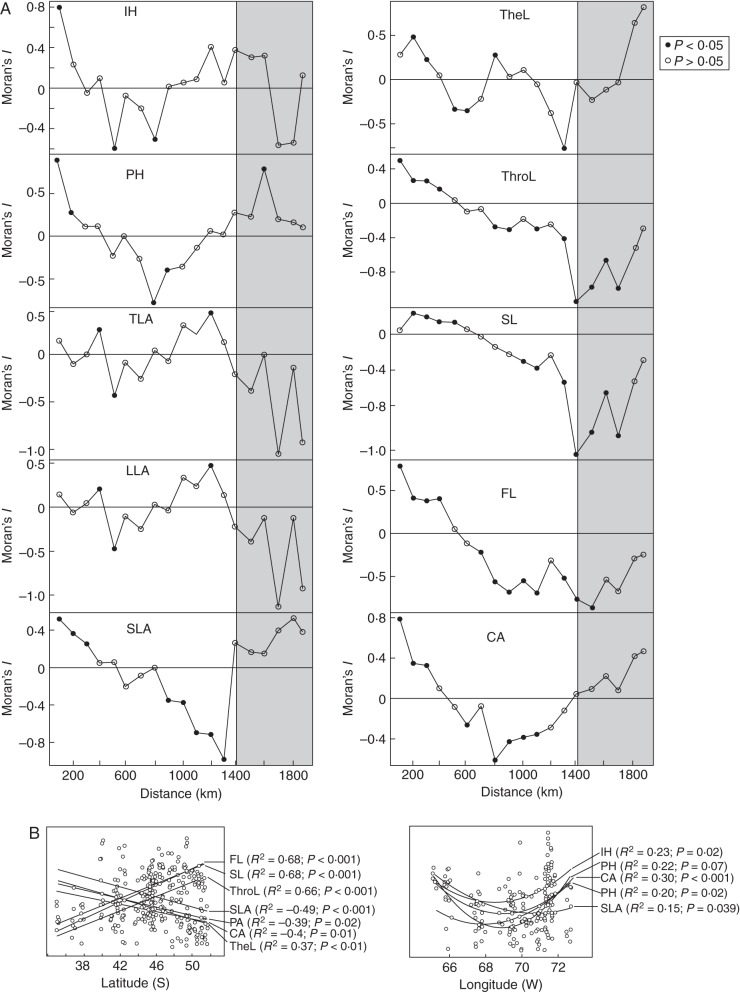
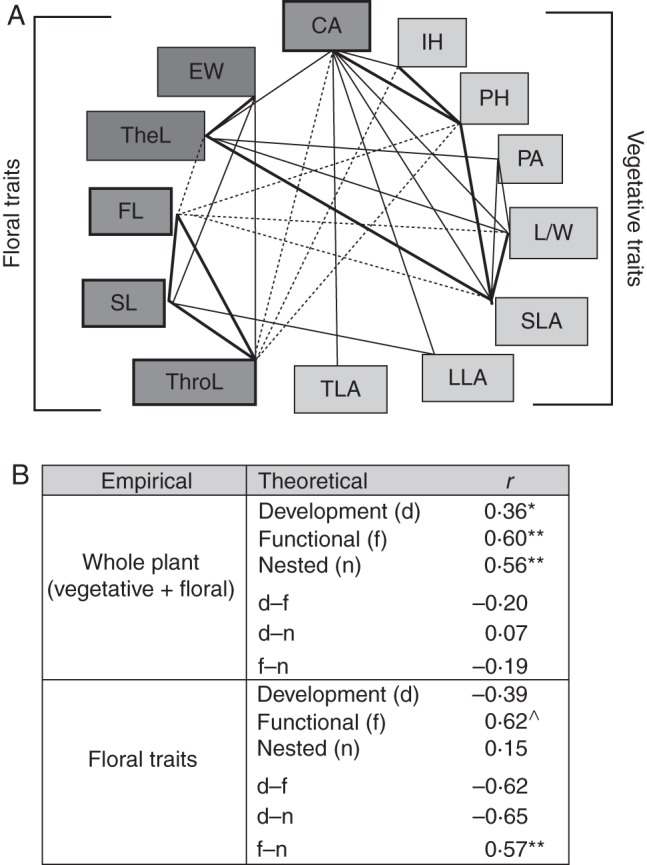
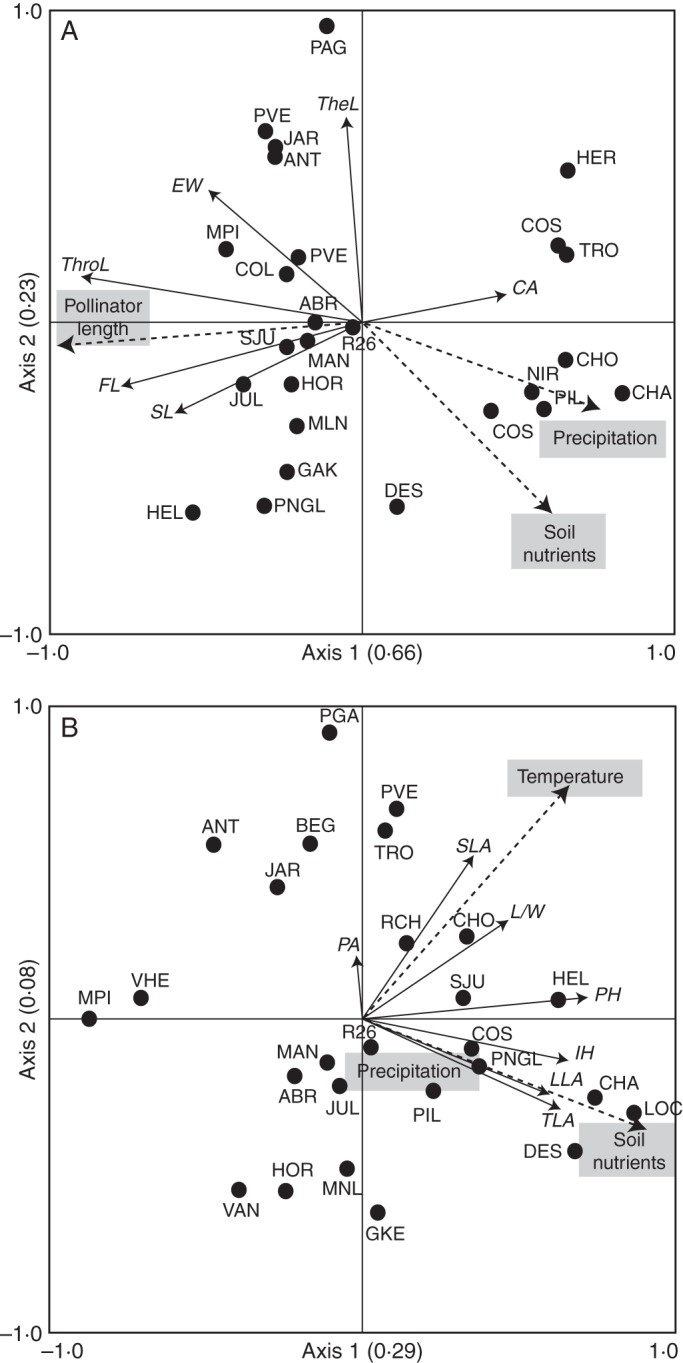
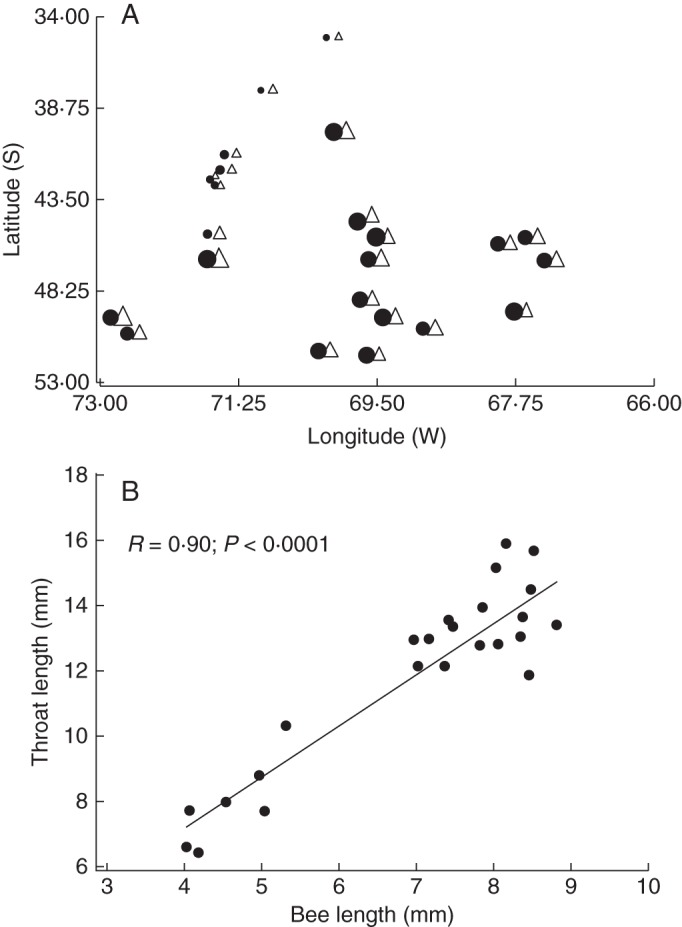
Methods: Patterns of phenotypic variation were examined together with their relationships with pollinators and abiotic factors. Six floral and seven vegetative traits were measured in 45 populations distributed across the entire species range. Climatic and edaphic parameters were determined for 25 selected sites, 2-16 bees per site of the most frequent pollinator species were captured, and a critical flower-bee mechanical fitting trait involved in effective pollination was measured. Geographical patterns of phenotypic and environmental variation were examined using uni- and multivariate analyses. Decoupled geographical variation between corolla area and floral traits related to the mechanical fit of pollinators was explored using a Mantel test.
Key results: The body length of pollinators and the floral traits related to mechanical fit were strongly correlated with each other. Geographical variation of the mechanical-fit-related traits was decoupled from variation in corolla size; the latter had a geographical pattern consistent with that of the vegetative traits and was mainly affected by climatic gradients.
Conclusions: The results are consistent with pollinators playing a key role in shaping floral phenotype at a geographical scale and promoting the differentiation of two floral ecotypes. The relationship between the critical floral-fit-related trait and bee length remained significant even in models that included various environmental variables and an allometric predictor (corolla area). The abiotic environment also has an important role, mainly affecting floral size. Decoupled geographical variation between floral mechanical-fit-related traits and floral size would represent a strategy to maintain plant-pollinator phenotypic matching in this environmentally heterogeneous area.
Keywords: Abiotic environmental gradients; Calceolaria; Patagonia; bee morphology; floral ecotypes; geographical range; local adaptation; oil-collecting bees; oil-offering flowers; phenotypic covariance; specialized pollination; speciation; vegetative morphology.
Figures
References
-
- Anderson B, Johnson SD. The geographical mosaic of coevolution in a plant–pollinator mutualism. Evolution. 2008;62:220–225. - PubMed
-
- Anderson B, Johnson SD. Geographical covariation and local convergence of flower depth in a guild of fly-pollinated plants. New Phytologist. 2009;182:533–40. - PubMed
-
- Armbruster WS. Estimating and testing adaptive surfaces: the morphology and pollination of Dalechampia blossoms. American Naturalist. 1990;135:14–31.
-
- Armbruster WS. Multilevel analysis of morphometric data from natural plant populations: insights into ontogenetic, genetic, and selective correlations in Dalechampia scandens. Evolution. 1991;45:1229–1244. - PubMed
-
- Armbruster WS, Di Stilio VS, Tuxill JD, Flores TC, Velásquez Runk JL. Covariance and decoupling of floral and vegetative traits in nine Neotropical plants: a re-evaluation of Berg's correlation-pleiades concept. American Journal of Botany. 1999;86:39–55. - PubMed
Publication types
MeSH terms
Substances
LinkOut - more resources
Full Text Sources
Other Literature Sources
