


Mutational and structural analysis of the tandem zinc finger domain of tristetraprolin
- PMID: 24253039
- PMCID: PMC3879578
- DOI: 10.1074/jbc.M113.466326
Mutational and structural analysis of the tandem zinc finger domain of tristetraprolin
Abstract
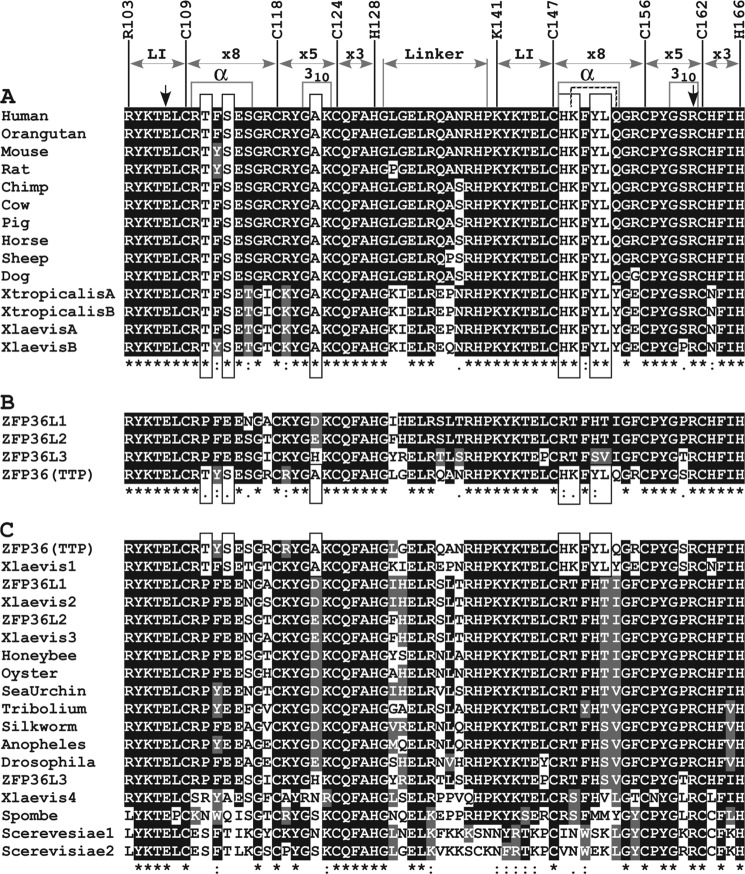
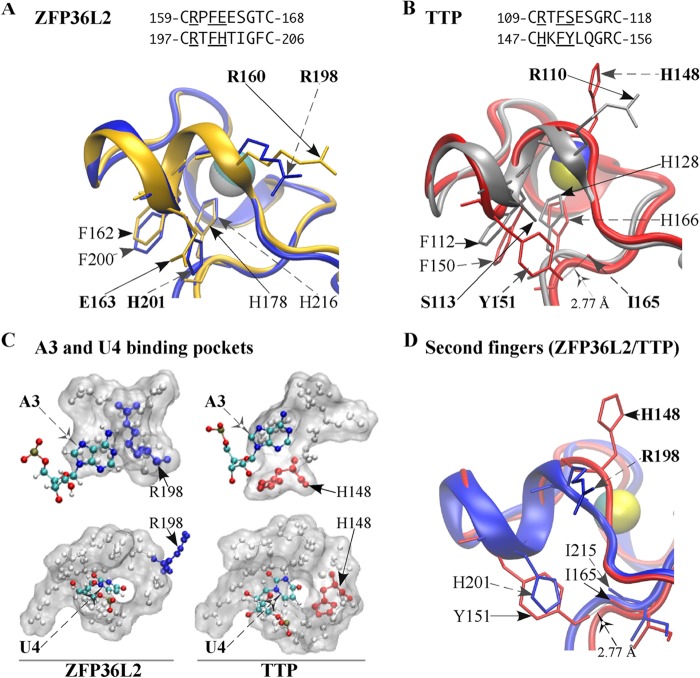
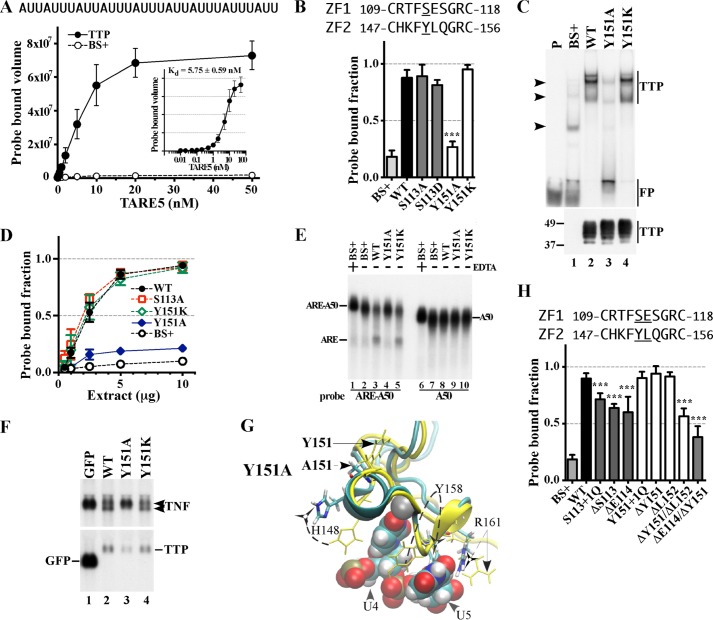
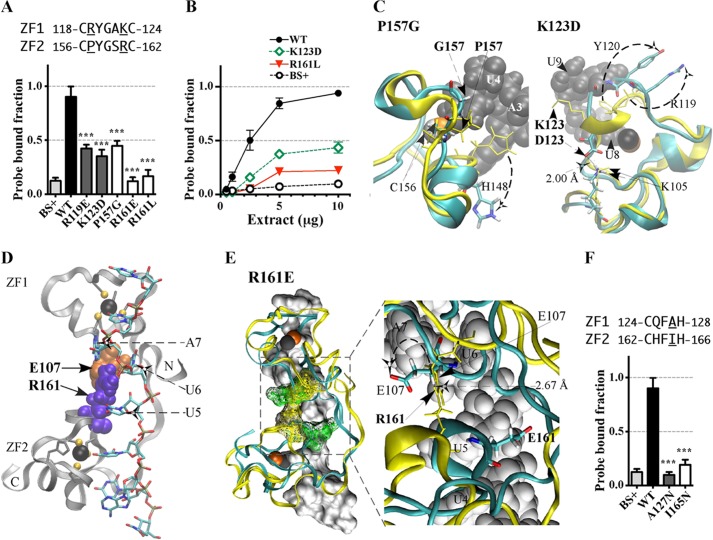
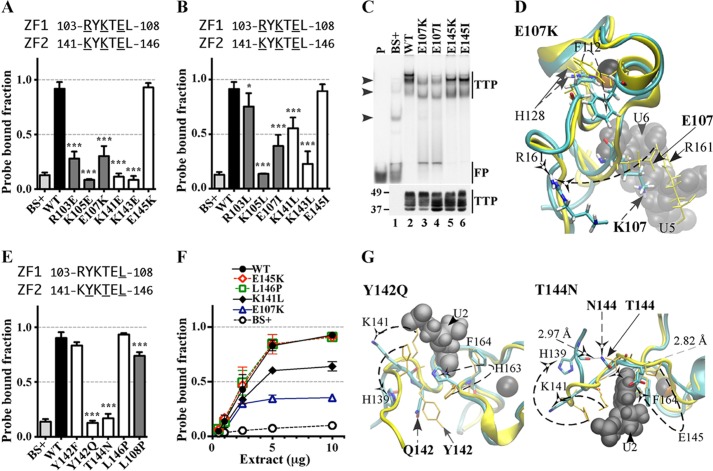
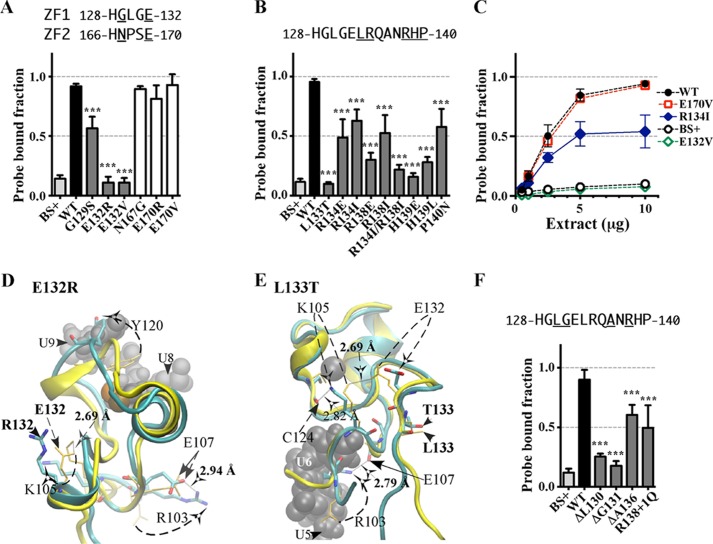
Tristetraprolin (TTP), the best known member of a class of tandem (R/K)YKTELCX8CX5CX3H zinc finger proteins, can destabilize target mRNAs by first binding to AU-rich elements (AREs) in their 3'-untranslated regions (UTRs) and subsequently promoting deadenylation and ultimate destruction of those mRNAs. This study sought to determine the roles of selected amino acids in the RNA binding domain, known as the tandem zinc finger (TZF) domain, in the ability of the full-length protein to bind to AREs within the tumor necrosis factor α (TNF) mRNA 3'-UTR. Within the CX8C region of the TZF domain, mutation of some of the residues specific to TTP, not found in other members of the TTP protein family, resulted in decreased binding to RNA as well as inhibited mRNA deadenylation and decay. Evaluation of simulation solution models revealed a distinct structure in the second zinc finger of TTP that was induced by the presence of these TTP-specific residues. In addition, mutations within the lead-in sequences preceding the first C of highly conserved residues within the CX5C or CX3H regions or within the linker region between the two fingers also perturbed both RNA binding and the simulation model of the TZF domain in complex with RNA. We conclude that, although the majority of conserved residues within the TZF domain of TTP are required for productive binding, not all residues at sequence-equivalent positions in the two zinc fingers of the TZF domain of TTP are functionally equivalent.
Keywords: AU-rich Elements; Cytokine; Inflammation; RNA Turnover; RNA-Protein Interaction; RNA-binding Protein; Tumor Necrosis Factor (TNF).
Figures
References
-
- Lai W. S., Stumpo D. J., Blackshear P. J. (1990) Rapid insulin-stimulated accumulation of an mRNA encoding a proline-rich protein. J. Biol. Chem. 265, 16556–16563 - PubMed
-
- Heximer S. P., Forsdyke D. R. (1993) A human putative lymphocyte G0/G1 switch gene homologous to a rodent gene encoding a zinc-binding potential transcription factor. DNA Cell Biol. 12, 73–88 - PubMed
-
- Ma Q., Herschman H. R. (1991) A corrected sequence for the predicted protein from the mitogen-inducible TIS11 primary response gene. Oncogene 6, 1277–1278 - PubMed
-
- DuBois R. N., McLane M. W., Ryder K., Lau L. F., Nathans D. (1990) A growth factor-inducible nuclear protein with a novel cysteine/histidine repetitive sequence. J. Biol. Chem. 265, 19185–19191 - PubMed
Publication types
MeSH terms
Substances
Grants and funding
LinkOut - more resources
Full Text Sources
Other Literature Sources
