


Heavy rainfall events and diarrhea incidence: the role of social and environmental factors
- PMID: 24256618
- PMCID: PMC3895100
- DOI: 10.1093/aje/kwt279
Heavy rainfall events and diarrhea incidence: the role of social and environmental factors
Abstract
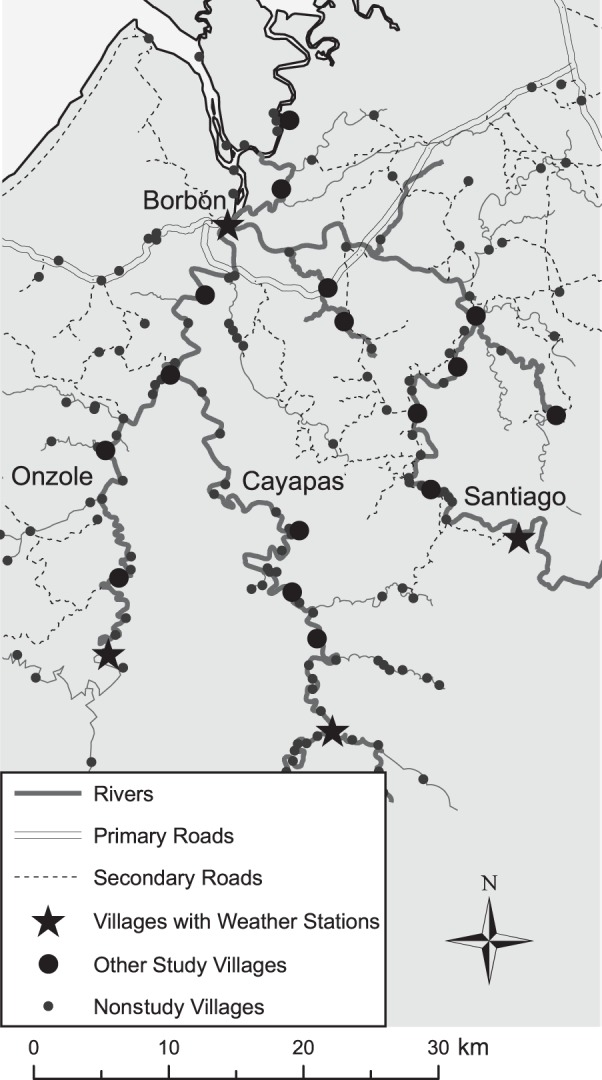
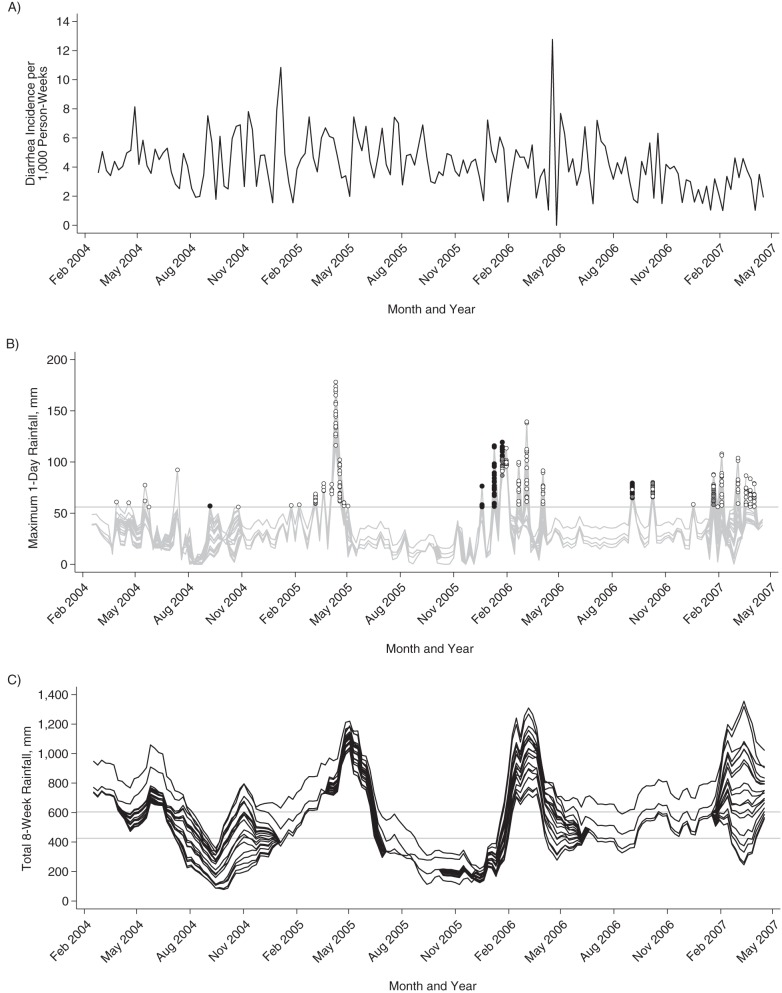
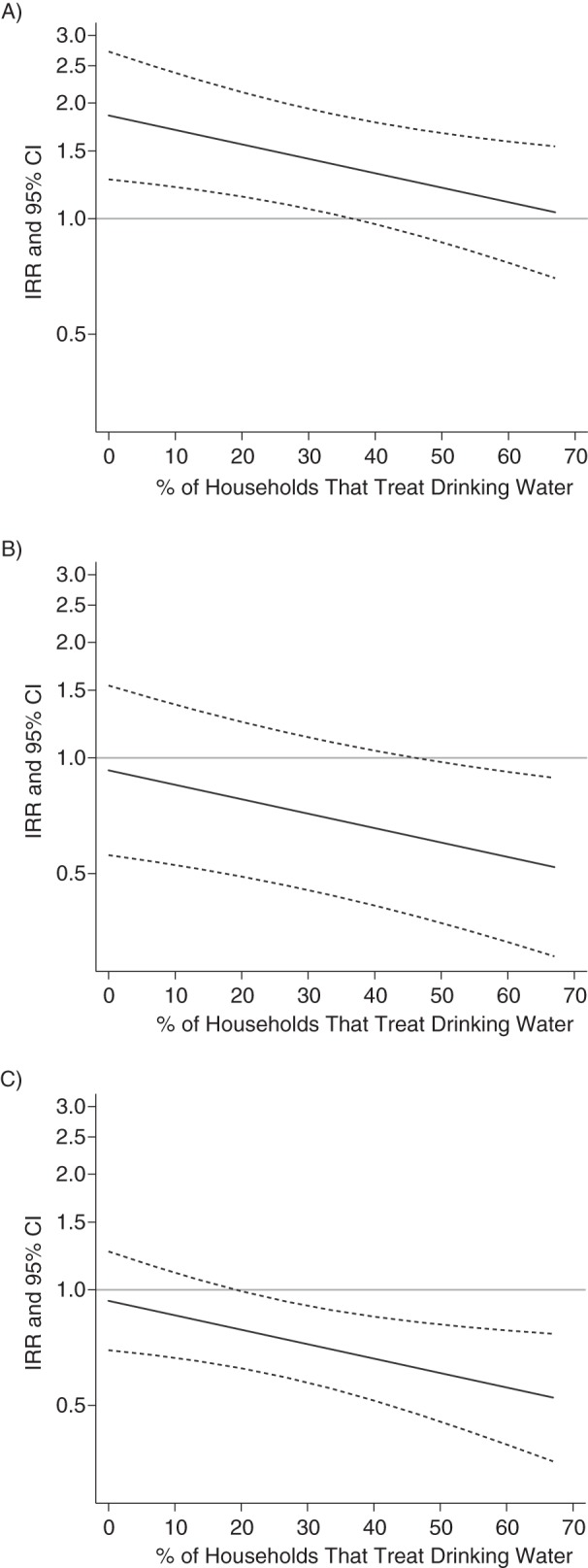
The impact of heavy rainfall events on waterborne diarrheal diseases is uncertain. We conducted weekly, active surveillance for diarrhea in 19 villages in Ecuador from February 2004 to April 2007 in order to evaluate whether biophysical and social factors modify vulnerability to heavy rainfall events. A heavy rainfall event was defined as 24-hour rainfall exceeding the 90th percentile value (56 mm) in a given 7-day period within the study period. Mixed-effects Poisson regression was used to test the hypothesis that rainfall in the prior 8 weeks, water and sanitation conditions, and social cohesion modified the relationship between heavy rainfall events and diarrhea incidence. Heavy rainfall events were associated with increased diarrhea incidence following dry periods (incidence rate ratio = 1.39, 95% confidence interval: 1.03, 1.87) and decreased diarrhea incidence following wet periods (incidence rate ratio = 0.74, 95% confidence interval: 0.59, 0.92). Drinking water treatment reduced the deleterious impacts of heavy rainfall events following dry periods. Sanitation, hygiene, and social cohesion did not modify the relationship between heavy rainfall events and diarrhea. Heavy rainfall events appear to affect diarrhea incidence through contamination of drinking water, and they present the greatest health risks following periods of low rainfall. Interventions designed to increase drinking water treatment may reduce climate vulnerability.
Keywords: Ecuador; climate; diarrhea; heavy rainfall events; rain; social vulnerability; water treatment.
Figures
References
-
- Portier CJ, Thigpen Tart K, Carter SR, et al. A Human Health Perspective on Climate Change: A Report Outlining the Research Needs on the Human Health Effects of Climate Change. Research Triangle Park, NC: Environmental Health Perspectives/National Institute of Environmental Health Sciences; 2010.
-
- Intergovernmental Panel on Climate Change. Climate Change 2007: Impacts, Adaptation and Vulnerability. Contribution of Working Group II to the Fourth Assessment Report of the Intergovernmental Panel on Climate Change. Cambridge, United Kingdom: Cambridge University Press; 2007.
-
- Milojevic A, Armstrong B, Hashizume M, et al. Health effects of flooding in rural Bangladesh. Epidemiology. 2012;23(1):107–115. - PubMed
Publication types
MeSH terms
Substances
Grants and funding
LinkOut - more resources
Full Text Sources
Other Literature Sources
Medical
Miscellaneous
