


Intestinal microbiome of poultry and its interaction with host and diet
- PMID: 24256702
- PMCID: PMC4049927
- DOI: 10.4161/gmic.26945
Intestinal microbiome of poultry and its interaction with host and diet
Abstract
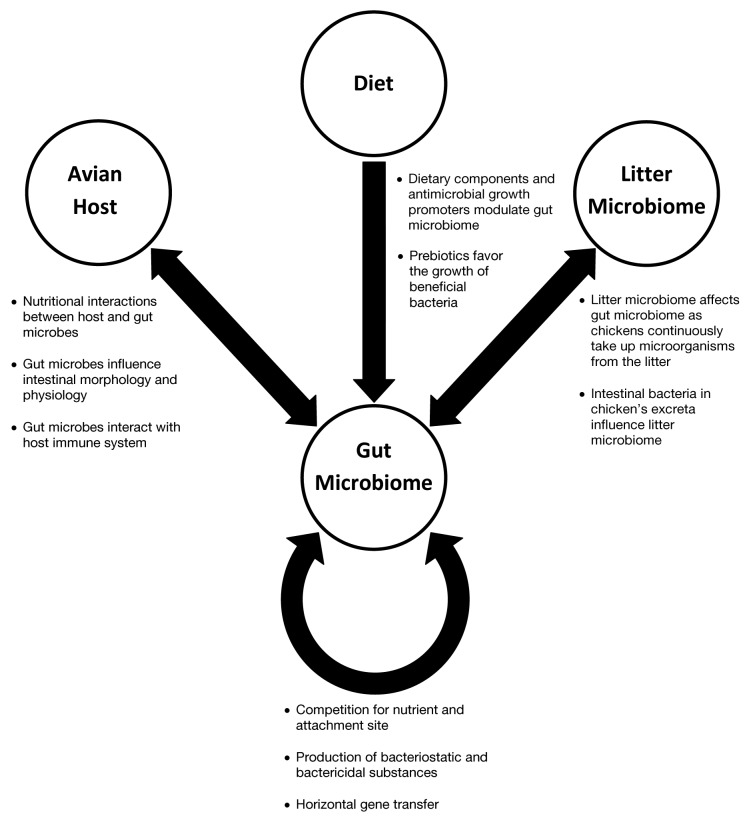
The gastrointestinal (GI) tract of poultry is densely populated with microorganisms which closely and intensively interact with the host and ingested feed. The gut microbiome benefits the host by providing nutrients from otherwise poorly utilized dietary substrates and modulating the development and function of the digestive and immune system. In return, the host provides a permissive habitat and nutrients for bacterial colonization and growth. Gut microbiome can be affected by diet, and different dietary interventions are used by poultry producers to enhance bird growth and reduce risk of enteric infection by pathogens. There also exist extensive interactions among members of the gut microbiome. A comprehensive understanding of these interactions will help develop new dietary or managerial interventions that can enhance bird growth, maximize host feed utilization, and protect birds from enteric diseases caused by pathogenic bacteria.
Keywords: AGPs; gut microbiome; interaction; nutrition; poultry; prebiotics; probiotics.
Figures
References
Publication types
MeSH terms
LinkOut - more resources
Full Text Sources
Other Literature Sources
