. 2014 Jan 2;505(7481):103-7.
doi: 10.1038/nature12729. Epub 2013 Nov 20.

Antibacterial membrane attack by a pore-forming intestinal C-type lectin

Affiliations

Antibacterial membrane attack by a pore-forming intestinal C-type lectin

Sohini Mukherjee et al. Nature. .

Abstract

Human body-surface epithelia coexist in close association with complex bacterial communities and are protected by a variety of antibacterial proteins. C-type lectins of the RegIII family are bactericidal proteins that limit direct contact between bacteria and the intestinal epithelium and thus promote tolerance to the intestinal microbiota. RegIII lectins recognize their bacterial targets by binding peptidoglycan carbohydrate, but the mechanism by which they kill bacteria is unknown. Here we elucidate the mechanistic basis for RegIII bactericidal activity. We show that human RegIIIα (also known as HIP/PAP) binds membrane phospholipids and kills bacteria by forming a hexameric membrane-permeabilizing oligomeric pore. We derive a three-dimensional model of the RegIIIα pore by docking the RegIIIα crystal structure into a cryo-electron microscopic map of the pore complex, and show that the model accords with experimentally determined properties of the pore. Lipopolysaccharide inhibits RegIIIα pore-forming activity, explaining why RegIIIα is bactericidal for Gram-positive but not Gram-negative bacteria. Our findings identify C-type lectins as mediators of membrane attack in the mucosal immune system, and provide detailed insight into an antibacterial mechanism that promotes mutualism with the resident microbiota.


Figures

Extended Data Figure 1
Extended Data Figure 1. Model of RegIIIα bactericidal function
An overall model that incorporates both the peptidoglycan and lipid-binding functions of hRegIIIα is depicted. Combining our current and previous findings, we propose that hRegIIIα recognizes and kills its bacterial targets in two distinct steps. First, hRegIIIα is secreted from epithelial cells as a soluble monomer that recognizes Gram-positive bacteria by binding to peptidoglycan carbohydrate via an EPN motif located in the long loop region,. Second, hRegIIIα kills bacteria by oligomerizing in the bacterial membrane to form a hexameric membrane-penetrating pore that is predicted to induce uncontrolled ion efflux with subsequent osmotic lysis. The inhibitory N-terminus of pro-hRegIIIα hinders lipid binding and consequently suppresses pore formation until it is removed by trypsin after secretion into the intestinal lumen. We propose that the inhibitory N-terminal peptide evolved in order to minimize collateral damage from the hRegIIIα pore-forming activity during hRegIIIα storage in the membrane-bound secretory granules of epithelial cells. In support of this idea, we found that hRegIIIα damages mammalian cell membranes and that the N-terminal prosegment limits this toxicity (Fig. 4d,e).
Extended Data Figure 2
Extended Data Figure 2. Characterization of hRegIIIα membrane permeabilization activity
a,b, Impact of NaCl concentration on hRegIIIα membrane permeabilization activity. a, 10 μM hRegIIIα was added to liposomes (100 μM lipid) in the presence of varying NaCl concentrations. Representative results are shown. b, Averaged results from three independent replicates of the experiment shown in a. c, pro-hRegIIIα does not inhibit hRegIIIα bactericidal activity. 10 μM of purified recombinant pro-hRegIIIα, hRegIIIα, or a combination of the two was added to ∼105 CFU of Listeria monocytogenes for 2 hours at 37°C. Surviving bacteria were quantified by dilution plating.
Extended Data Figure 3
Extended Data Figure 3. hRegIIIα forms a transmembrane pore
Analysis of hRegIIIα conductance in lipid bilayers. The trace of a typical single channel recording gave rise to the event histogram shown here. At -80 mV, there was a short latency before the first opening event, which led to the base line current of -6.5 pA at -80 mV. The baseline current was subtracted so that the baseline corresponds to a peak at 0 pA. Once we assigned two basic peaks at -53 pA and -81 pA as two independent opening events (i1 and i2), all the other major peaks in the histogram are linear combinations of these two basic events (as labeled). The data therefore suggested two different scenarios. One is that there are three pores, and each pore has two different conducting states, which may reflect the flexible diameter of the pore. The other is that i1 and i2 reflect two different pores that have different diameters, and that there are at least five different channels in the membrane in order to produce the observed histogram. This second scenario correlates with the observed variability in helical symmetry. With the idea of variability and protein dynamics in mind, it is likely that the two types of pores may interconvert with each other in the membrane. From the basic events, we estimated the pore diameters by applying the Nernst-Planck equation. In the experimental conditions, our recording chambers had 150 mM K+, 25 mM Na+, 215 mM Cl-, 20 mM Mg2+, and 10 mM MES pH 5.5 in the cis side, and 20 mM K+, 25 mM Na+, 45 mM Cl-, and 10 mM MES pH 5.5 in the trans side. The reversal potential (EK, ENa, ECl, and EMES) for each ion could be calculated (EK= 50.9 mV, ENa = 0 mV= EMES, and ECl = -39.5 mV). In the trans side, there is a trace amount of Mg2+ (∼10 μM), which gives a reversal potential EMg of 92 mV. Our dye leakage assay showed that the pore was open at Vmem = 0 mV transmembrane potential, ruling out significant voltage-dependent gating of the hRegIIIα channel. Based on the ion replacement studies we did for different ions, we estimated the relative permeability of different ions to be: PK = PNa = 1.0; PCl = 0.85; PMES = 0.73 and PMg = 0.66. The measured relative permeation rates showed that the pore has very weak cation-selectivity, and favors K+/Na+ over Mg2+ due to the charge density difference. Under the same assumption, the average conductance (<g>) of the two basic opening events (i1 and i2) could be calculated as the following: <g>=iPion(VmemEion) The two calculated conductance levels of 100 pS and 152 pS were then entered into the Nernst-Planck equation for electrodiffusion and gave rise to an approximate estimate of the pore diameter of 12 and 14 Å respectively, which is in good agreement with the observed pore size in the reconstructed 3D structure of the pore (Fig. 3b). A more rigorous calculation of the ion flux is possible with a high-resolution picture of the potential profile, but is beyond the scope of this paper.
Extended Data Figure 4
Extended Data Figure 4. Analysis of liposome-associated hRegIIIα by electron microscopy (EM)
a, Negative staining EM controls lacking hRegIIIα or liposomes are shown. b-d, hRegIIIα pore complexes assemble into filaments. b, hRegIIIα forms filaments in the presence of lipid vesicles. 20 μM hRegIIIα was incubated for 2 or 20 minutes with unilamellar vesicles composed of PC/PS (85%:15%). Samples were visualized by transmission electron microscopy. Grids were stained with anti-RegIII antibody, to confirm that the filaments were composed of hRegIIIα. Filamentation required membranes, as no filaments were observed in the absence of liposomes. Arrows indicate examples of filaments in each image. c, 20 μM hRegIIIα carrying a mutation near the C-terminus [C-terminal sequence: FTD (wild-type)→VH (mutant)] was incubated for 20 minutes with unilamellar vesicles and visualized by cryoEM and negative-staining EM. The results demonstrate that the VH mutant retains the ability to form pores in lipid bilayers but cannot form filaments. A comparison of the wild-type and mutated C-terminus is shown below. d, Quantification of filament formation by 20 μM pro-hRegIIIα, wild-type (wt) and C-terminal mutant (VH) hRegIIIα in the presence of vesicles. Results are representative of counts from three different areas. nd, not detected. The results show that pro-hRegIIIα, which cannot form pores, also cannot assemble into filaments.
Extended Data Figure 5
Extended Data Figure 5. Filament formation inhibits hRegIIIα membrane toxicity
Here we examined the functional properties of the hRegIIIα VH mutant carrying a mutation near the C-terminus [C-terminal sequence: FTD (wild-type)→VH(mutant)], thus truncating the protein near the C-terminus. The VH mutant lacks the ability to form filaments but retains the ability to form pores. In accordance with its pore-forming activity, the hRegIIIα VH mutant retained membrane toxicity against liposomes and live bacteria. In fact, membrane toxicity was modestly enhanced in the hRegIIIα VH mutant, suggesting that trapping of the pore complexes in filaments inhibits their membrane permeabilizing activity. This function contrasts with that of human α-defensin-6 filaments, which directly trap bacteria in “nanonets”. a, 1.0 μM wild-type (wt) and hRegIIIα (VH) mutant was added to 10 μM CF-loaded liposomes and dye release was monitored. The detergent octylglucoside (OG) was added at the end of the experiment to disrupt remaining liposomes. b, Initial rate of liposome dye release (10 μM lipid) as a function of wild-type and mutant hRegIIIα concentration. c, 5.0 μM wild-type or hRegIIIα (VH) mutant was assayed for membrane disruptive activity toward whole bacteria using the SYTOX uptake assay described in Fig. 1. Assays were performed in triplicate. Error bars, ±SD; ***, p<0.001.
Extended Data Figure 6
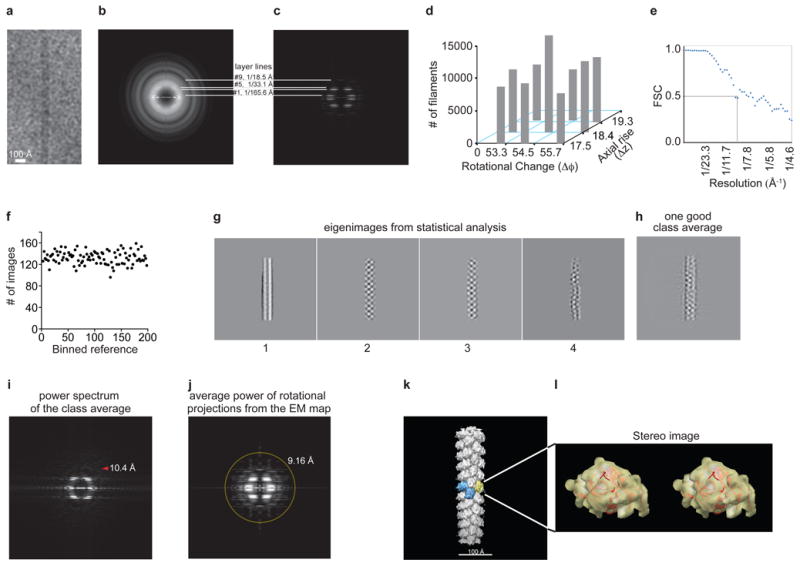
Extended Data Figure 6. CryoEM reconstruction of the hRegIIIα filament structure
a, Raw image of a single filament. b,c, Comparison of the average power spectrum of cryoEM images of individual short helical segments, b, and the average power spectrum, c, from the projections of the 3D reconstruction at evenly sampled rotation angles around the helical axis. Layer lines 1, 5 and 9 were labeled, and layer line 4 was clearly visible. d, Symmetry variability (Δφ and Δz) in the cryoEM dataset. The reconstruction from the aligned images was imposed with symmetry parameters that vary around the center pair (Δφ=54.5° and Δz=18.4 Å), and the experimental dataset was classified into nine bins by projection matching. The populations in these classes were exhibited in a 3D histoplot. Even though the central bin is the most populated, the distribution is approximately flat. e, FSC calculated from the same two independent volumes but windowed in the same boxes. The strong symmetry in the two volumes led to the FSC ∼0.2 at the Nyquist frequency. The first fast drop of FSC curve to 0.5 was elected to give a conservative estimate of resolution. f, Number of the filament images aligned with each reference projection from the 3D model in the last round of refinement. The projections from the 3D model evenly sampled the orientation space. As expected, the distribution is fairly flat. g-j, Statistical analyses of the hRegIIIα filament structure. g, First four eigenimages from the multivariate statistical analysis of the centered filaments in the dataset that were padded to 320 pixels in size. The second and third images lack the symmetry around the central line, suggesting the parity is odd. The fourth image shows the significant bending of the filaments, a major limiting factor for us in reaching a better resolution in our reconstruction. h, A good class average after the multivariate statistical analysis and hierarchical classification. i, Square root of calculated power spectrum. The tip of the red arrowhead points at 10.4 Å. j, The layer lines in the average power spectrum of the rotational projections from the final reconstruction without symmetry imposition extend isotropically to ∼9.2 Å (yellow circle), and further along the vertical direction (helical axis). k,l, Docking of the hRegIIIα crystal structure into the cryoEM map. k, The 3D reconstruction from IHRSR of the images in the central bin, d, with a hexameric pore highlighted. l, Stereo image showing docking of the RegIIIα crystal structure in the cryoEM density map of one subunit out of the reconstruction.
Extended Data Figure 7
Extended Data Figure 7. Crystal structure of bactericidally-active hRegIIIα
a, Table showing data collection and refinement statistics for the active hRegIIIα crystal structure. b, Crystallographic B-factor map of the active hRegIIIα structure showing areas of conformational flexibility. Red=greater flexibility.
Extended Data Figure 8
Extended Data Figure 8. hRegIIIα mutagenesis
a, Mutagenesis of K93 with conservative amino acid substitutions (R and H) does not alter membrane toxicity of hRegIIIα. 5 μM of wild-type, K93R mutant, or K93H mutant hRegIIIα was added to 100 μM CF-loaded liposomes and dye release was monitored. These mutants retain membrane toxicity, in contrast to K93A (Fig. 3e), suggesting the importance of positive charges at these sites. b, Filamentation of hRegIIIα mutants (K93A and E114Q) correlates with membrane toxicity. 20 μM hRegIIIα K93A (left panel) or E114Q (right panel) was incubated for 20 minutes with unilamellar vesicles and visualized by negative-staining EM. The results demonstrate that the non-toxic E114Q mutant, unlike the toxic K93A mutant, assembles into filaments.
Extended Data Figure 9
Extended Data Figure 9. Computational modeling of hRegIIIα insertion into membranes
a, Top down view of the numeric grid and complex boundary used in the elasticity calculations to represent the upper leaflet. The protein complex occupies the white space in the center, and the membrane-protein contact curve is the red-white boundary. The membrane is modeled in all non-white regions. The rectangular grid for the elasticity solver is shown here colored by the membrane bending energy density (red is high bending energy and blue is low bending energy). This calculation corresponds to the membrane bending shown in Fig. 3g. b-d, Numeric convergence of the model. b, Convergence of the elastostatic energy. In all panels, percent error was calculated as 100·|(E(n) − E(nmax))/E(nmax)|, where E(n) = energy calculated with n grid points, and nmax = maximum number of grid points used. The elastic energy converges smoothly as n increases, and we used n = 400 in both the x and y directions for all calculations in the main text, which gives a 5% error. c, Convergence of the electrostatic energy. Percent error of the dipole charge-protein interaction energy (diamonds), protein solvation energy (squares), anionic lipid charge-protein interaction energy (circles) and the total electrostatic energy (triangles) are shown as a function of the grid discretization. A value of n = 161 was used for the calculations discussed in the main text resulting in a total electrostatic error of 2.5%. d, Convergence of the non-polar energy. A discretization of n = 100 points was used for the calculations reported in the main text, and this has a very small error on the order of 0.1%. Values used for calculations in the main text are indicated by *. e,f, Electrostatic potential of the hRegIIIα pore complex. e, In-plane view. The Poisson-Boltzmann equation was solved using APBS after embedding the complex in a low dielectric region mimicking the lipid bilayer. The low dielectric membrane region is deformed corresponding with the lowest energy shape predicted by our physics-based computational model. Positive (blue) isocontours of the electrostatic potential are drawn at +5 kcal/mol/e. f, Out-of-plane view. All details are identical to those in panel a. Both positive (blue) and negative (red) isocontours of the electrostatic potential are drawn at ±5 kcal/mol/e. g, Table showing bilayer material properties used in the modeling calculations. h, Table showing model parameters.
Extended Data Figure 10
Extended Data Figure 10. Modeling of hRegIIIα-membrane interactions
a, hRegIIIα pore complex model shown from the side. R166 is located near the water-membrane interface, suggesting that it is positioned to interact with the phospholipid headgroups, while R39 is predicted to be exposed to aqueous solvent. Membrane boundaries predicted from the computational calculations are indicated. b, 5 μM of wild-type, R166A mutant, or R39A mutant hRegIIIα was added to 100 μM CF-loaded liposomes and dye release was monitored. The experimental results are consistent with the position of these residues relative to the membrane interface in the model.
Figure 1
Figure 1. hRegIIIα permeabilizes the bacterial membrane
(a) Listeria monocytogeneswas treated with 25 μM hRegIIIα, pro-hRegIIIα, or BSA or left untreated, and bacterial uptake of SYTOX Green was measured. Results are representative of three independent experiments, and are expressed as a percentage of maximum SYTOX uptake in the presence of 0.2% SDS. (b) SYTOX Green uptake by L. monocytogenes in the presence of increasing hRegIIIα concentrations. Assays were performed in triplicate. Means±SEM are plotted. (c) Carboxyfluorescein (CF)-loaded liposomes (10 μM lipid; 85% PC/15% PS) were treated with 1 μM hRegIIIα. 1.0% octylglucoside (OG) was added towards the end to disrupt remaining liposomes. Dye efflux is expressed as percentage of maximal release by detergent. Results are representative of five independent experiments. (d) 10 μM hRegIIIα was added to CF-loaded liposomes (100 μM lipid;100% PC, 100% PS or 85% PC:15% PS), and dyeefflux was monitored over time. Representative results are shown. (e) Averaged results from three independent replicates of the experiment shown in (d). ns, not significant; **, p<0.01; ***, p<0.001. (f) Initial rate of liposome dye efflux (100 μM lipid) as a function of hRegIIIα and pro-hRegIIIα concentration. Results are representative of three independent experiments. *, p<0.05; **, p<0.01. (g) Intrinsic Trp fluorescence of 1 μM hRegIIIα was measured in the presence of increasing lipid concentrations. (h) Trp fluorescence of 1 μM hRegIIIα and pro-hRegIIIα as a function of lipid concentration. (i) Intrinsic Trp fluorescence of 1 μM hRegIIIα was measured in the presence of liposomes (100 μM lipid) of varying lipid composition. (j) 5.0 μM hRegIIIα or pro-hRegIIIα was added to liposomes (100 μM lipid) incorporating 5% dansyl-PE and dansyl fluorescence was monitored. Assays were performed in triplicate. (k) FRET efficiency as a function of hRegIIIα and pro-hRegIIIα concentration. Assays were performed in triplicate. Means±SEM are plotted.
Figure 2
Figure 2. hRegIIIα forms a transmembrane pore
(a) hRegIIIα-dependent current flow across a planar lipid bilayer is depicted as a function of time. No current was observed prior to the application of a voltage across the membrane. Upon the application of -80 mV, inward current was observed, and returning to zero membrane potential diminished the current because the measured reverse potential was -4.0 mV. The current trace is representative of multiple independent experiments. (b) Liposomes loaded with FITC-Dextran 10 (FD10), FITC-Dextran 4 (FD4), or carboxyfluorescein (CF) were treated with 5.0 μM hRegIIIα and dye release was monitored over time. 1% OG (octylglucoside) was added to disrupt the liposomes towards the end of the experiment. (c) Negative-stain electron microscopy (EM) images of hRegIIIα in the presence of lipid bilayers. An individual hRegIIIα pore particle is shown in the right hand panel. (d) hRegIIIα (100 μM) in the presence or absence of liposomes (1 mM lipid) was cross-linked with 5 mM 1-ethyl-3-[3-dimethylaminopropyl]carbodiimide hydrochloride (EDC). Cross-linked complexes were solubilized in detergent, resolved by size exclusion chromatography, and analyzed by Western blotting with anti-RegIII antibody. The predicted mobilities of hRegIIIα dimers, tetramers, and hexamers were calculated from the mobility of the monomer following cross-linking in the absence of liposomes (right panel).
Figure 3
Figure 3. Structural model of the hRegIIIα pore complex
(a) Top and side view of the cryoEM reconstruction of the hRegIIIα filament. (b) Top and side view of the cryoEM map of the hRegIIIα hexameric complex at a nominal 9.2 Å resolution. (c) Ribbon representation of the crystal structure of active monomeric hRegIIIα (PDB code 4MTH), aligned with the pro-hRegIIIα structure (PDB code 1UV0). The first 10 residues of the N-terminal prosegment are disordered and are therefore missing from the structure; these residues have been depicted as a dashed red line. Side chains in the loop encompassing amino acids 93-99 (KSIGNSY) are shown as sticks. (d) Stereo diagram showing docking of the active hRegIIIα crystal structure into the cryoEM density map. The docked structures are alternately colored blue and cyan to aid in visualization of the individual subunits. The positions of K93 and E114 are indicated. (e) 5 μM of wild-type, K93A mutant, or E114Q mutant hRegIIIα was added to 100 μM CF-loaded liposomes and dye efflu xwas monitored. (f) 1 μM wild-type or K93A mutant hRegIIIα was assayed for membrane disruption in bacteria using the SYTOX uptake assay described in Fig. 1. Assays were performed in triplicate and results are expressed relative to wild-type hRegIIIα. Error bars, ±SEM; **, p<0.01. (g) Most energetically stable membrane configuration around the embedded hexamer. The upper membrane boundary (gray surface) bends down to expose large charged portions of the protein to water, while the lower membrane boundary (gray surface) exhibits minor deflections. The region between the upper and lower boundaries is a water inaccessible region composed of the high-dielectric headgroups and the low-dielectric core. A stretch of hydrophobic residues (yellow) is in the center of the membrane, while charged (basic in blue and acidic in red) and polar (green) residues are near the upper and lower membrane boundaries in the high-dielectric headgroup region. (h) Using the configuration in (g), we added negatively charged point charges to the headgroup regions to model addition of PS lipids (red dots in the inset model). At low values, the total insertion energy for the wild-type protein is positive indicating a lack of stability, but above 10 negatively-charged lipids, the hexamer is stabilized in the membrane (black curve). The optimal lipid configuration is indicated by *. The insertion energy for the K93A mutant is in red. Inset: top down view; red dots=PS lipids, blue=R and K residues, white dots=uncharged lipid positions.
Figure 4
Figure 4. Regulation of hRegIIIα pore formation
(a-c) hRegIIIα pore formation is inhibited by lipopolysaccharide. (a) 10 μM hRegIIIα was added to liposomes composed of lipids from an E. coli total lipid extract or from PC/PS as a control. (b) 10 μM hRegIIIα was added to liposomes (100 μM lipid) in the presence of varying LPS concentrations. (c) 10 μM hRegIIIα was added to ∼104 cfu of log phase L. monocytogenes in the presence of varying LPS concentrations. The assay was carried out at 37°C for 2 hours, and surviving bacteria were quantified by dilution plating. Assays were done in triplicate. Results in a-care representative of two independent experiments. (d-e) The hRegIIIα N-terminal prosegment limits toxicity toward mammalian cells. (d) hRegIIIα was added to MODE-K cells and cytotoxicity was determined by quantifying lactate dehydrogenase (LDH) release. LDH activity was assessed by spectrophotometric detection of an enzymatic product of LDH at 492 nm. (e) 10 μM hRegIIIα or pro-hRegIIIα was added to MODE-K cells and LDH release was quantified. Maximum LDH release was determined by treating cells with NP-40 detergent.

References

    1. Cash HL, Whitham CV, Behrendt CL, Hooper LV. Symbiotic bacteria direct expression of an intestinal bactericidal lectin. Science. 2006;313:1126–1130. - PMC - PubMed
    1. Vaishnava S, et al. The antibacterial lectin RegIIIγ promotes the spatial segregation of microbiota and host in the intestine. Science. 2011;334:255–258. - PMC - PubMed
    1. Lehotzky RE, et al. Molecular basis for peptidoglycan recognition by a bactericidal lectin. Proc Natl Acad Sci U S A. 2010;107:7722–7727. - PMC - PubMed
    1. Mukherjee S, et al. Regulation of C-type lectin antimicrobial activity by a flexible N-terminal prosegment. J Biol Chem. 2009;284:4881–4888. - PMC - PubMed
    1. Zasloff M. Antimicrobial peptides of multicellular organisms. Nature. 2002;415:389–395. - PubMed

Publication types

MeSH terms

Associated data